
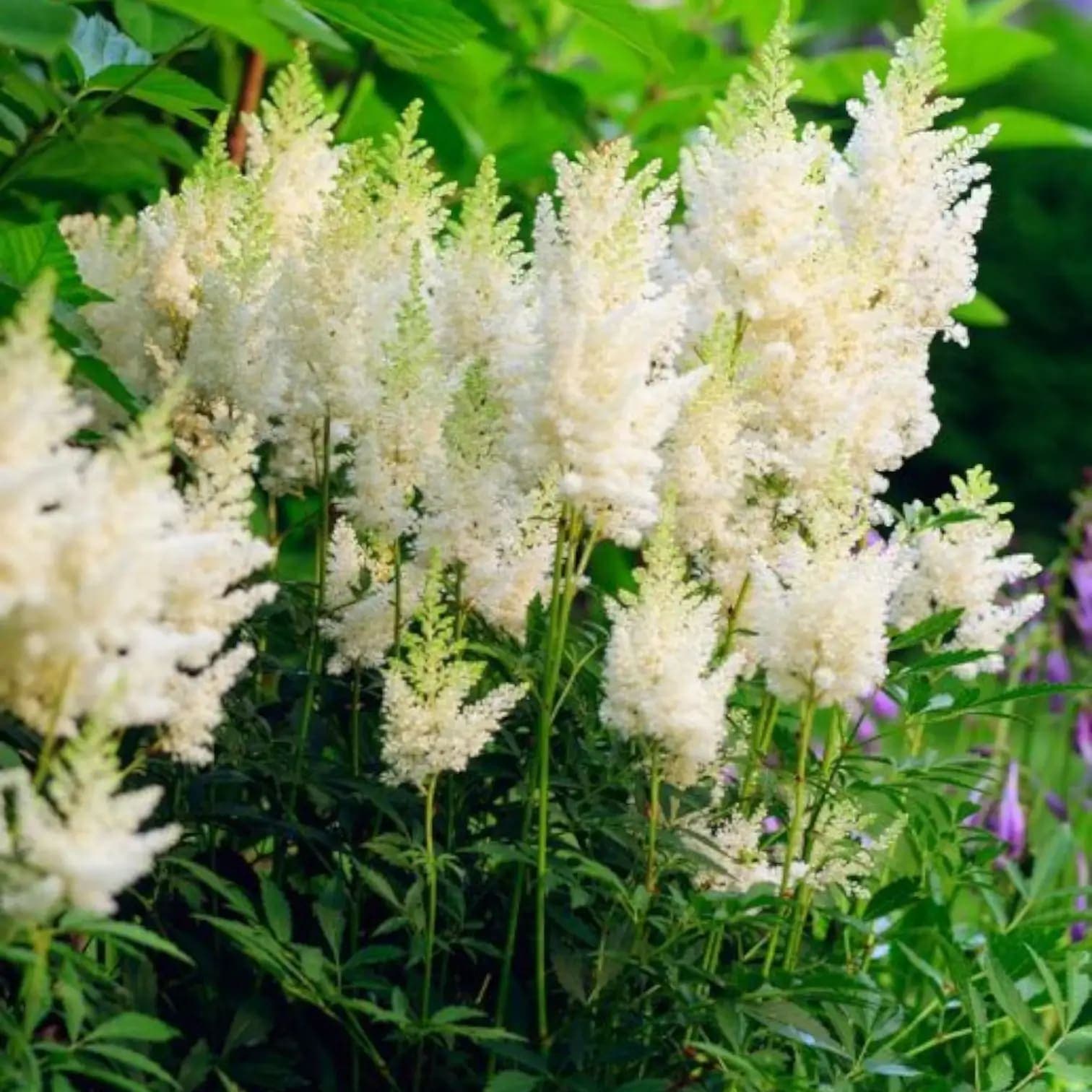
Astilbe × arendsii 'Astary White'
9,66 €
Livré chez vous par Jardiplants, un service Renoday.
Description
Astilbe ‘Astary White’ at a glance Astilbe × arendsii ‘Astary White’ is a dwarf, mound-forming astilbe with slender stems topped by dense, frothy white flower panicles. The foliage stays glossy and finely divided, so the plant looks crisp even when it is not in flower. It fits gardens where you want the astilbe effect close to paths, at the front of borders, or in patio containers that still need a proper summer display. In open ground, expect roughly 30-40 cm in height and a similar spread when the clump is settled. As with many perennials, containers keep the plant a little smaller and slower than the same plant grown in the border. Seasonal look and flowering window New shoots rise in spring and quickly form a neat tuft of divided leaves. Flower stems follow, with white plumes typically appearing from June into August depending on temperature and soil moisture. After flowering, the plant stays leafy, providing a low, green base until autumn. In winter it dies back and rests below ground, then returns from the crown in spring. Where it fits outdoors ‘Astary White’ suits dappled shade, woodland-style planting, and the edges of moisture-holding borders. The white plumes lift darker planting schemes and also work in lighter, green-on-green areas where you want flower texture with a calm colour palette. It is also a strong candidate for waterside planting, provided the site has good rooting depth and stays evenly moist through summer. Front-of-border clumps: place it where stems can be appreciated up close. Shaded patio pots: Moist edging: use along paths, steps, or the side of a terrace where watering is easy. Soil and moisture that keep the clump lush This cultivar performs best in clay or loam that holds moisture, with enough structure for air around the roots. A generous organic mulch helps buffer summer heat and supports steady root moisture. In lighter soils, improving the planting zone with composted organic matter helps the clump build strongly from spring onwards. Astilbe growth depends heavily on consistent moisture. When the soil swings between very wet and very dry, flowering reduces and leaf edges can crisp. A simple routine of regular watering during dry spells and a mulch layer is usually enough for a stable, full clump. Light and exposure Partial shade is the sweet spot: bright enough for good flowering, shaded enough that the soil stays cooler and the foliage stays fresh. Morning sun with afternoon shade works well. Sheltered positions also help the plumes stay upright and clean after summer rain. Planting steps for long-term vigour Plant in spring or early autumn so roots can settle before the next heat or frost cycle. Prepare a broad planting area, especially in clay, and set the crown at the same depth as in the pot. Spacing: plan around 40 cm between plants for tidy clumps that still knit together over time. Soil prep: mix in compost to boost moisture holding and improve structure. Mulch: apply a light mulch after planting to reduce surface drying. Watering in year one: keep moisture steady while the root system expands. Seasonal care: feeding, cutting back, division Astilbe grows from rhizomes and appreciates a steady supply of nutrients and lighter feeding. A top-dressing of compost in spring usually covers what it needs in the border. In containers, a slow-release feed at the start of the season supports longer flowering and strong foliage. After flowering, stems can be removed for a tidier look, or left to dry if you enjoy the texture. Once growth has finished for the year, cut the clump back to low stubs; fresh shoots rise from the base the following spring. In late winter to early spring, clear any remaining dry stems before new shoots lift. During dry spells, water deeply so moisture reaches the full root zone; a mulch layer helps keep the crown cooler and reduces surface drying. Every three to four years, division keeps the plant vigorous. Lift the clump, split into sections with healthy buds, and replant the youngest, strongest pieces. Older, woody sections can be discarded. Planting partners and design notes White astilbe works well as a “light catch” in shade, especially when it sits in front of darker foliage or next to broad-leaved perennials. It also pairs naturally with grasses and sedges around water features where the soil stays evenly moist. If you want a more modern look, repeat several small clumps in a line along a path so the plumes create a low, rhythmic summer edge. Growing Astilbe ‘Astary White’ in pots Choose a pot with real volume and reliable drainage. Astilbe roots value moisture, yet they also need oxygen around the root zone. A moisture-holding mix with added structure is ideal, and a surface mulch layer helps slow evaporation. Pot size: larger pots reduce watering swings and support fuller bloom. Watering: keep the mix evenly moist during active growth and flowering. Placement: bright shade keeps the pot cooler through summer. Winter: the plant dies back; the main winter risk is repeated freeze-thaw in small pots. Protection: group pots together and place them in a sheltered spot to reduce exposure. Common hiccups and quick fixes Astilbe setbacks often track moisture swings and heat. When leaf edges brown, a steadier watering rhythm and a mulch layer usually improves the next flush of growth. Vine weevil can be an issue in containers; checking the potting mix and using appropriate biological controls helps when damage appears. Powdery mildew can show up in warm, still conditions; better air movement and steady moisture support healthier foliage.