
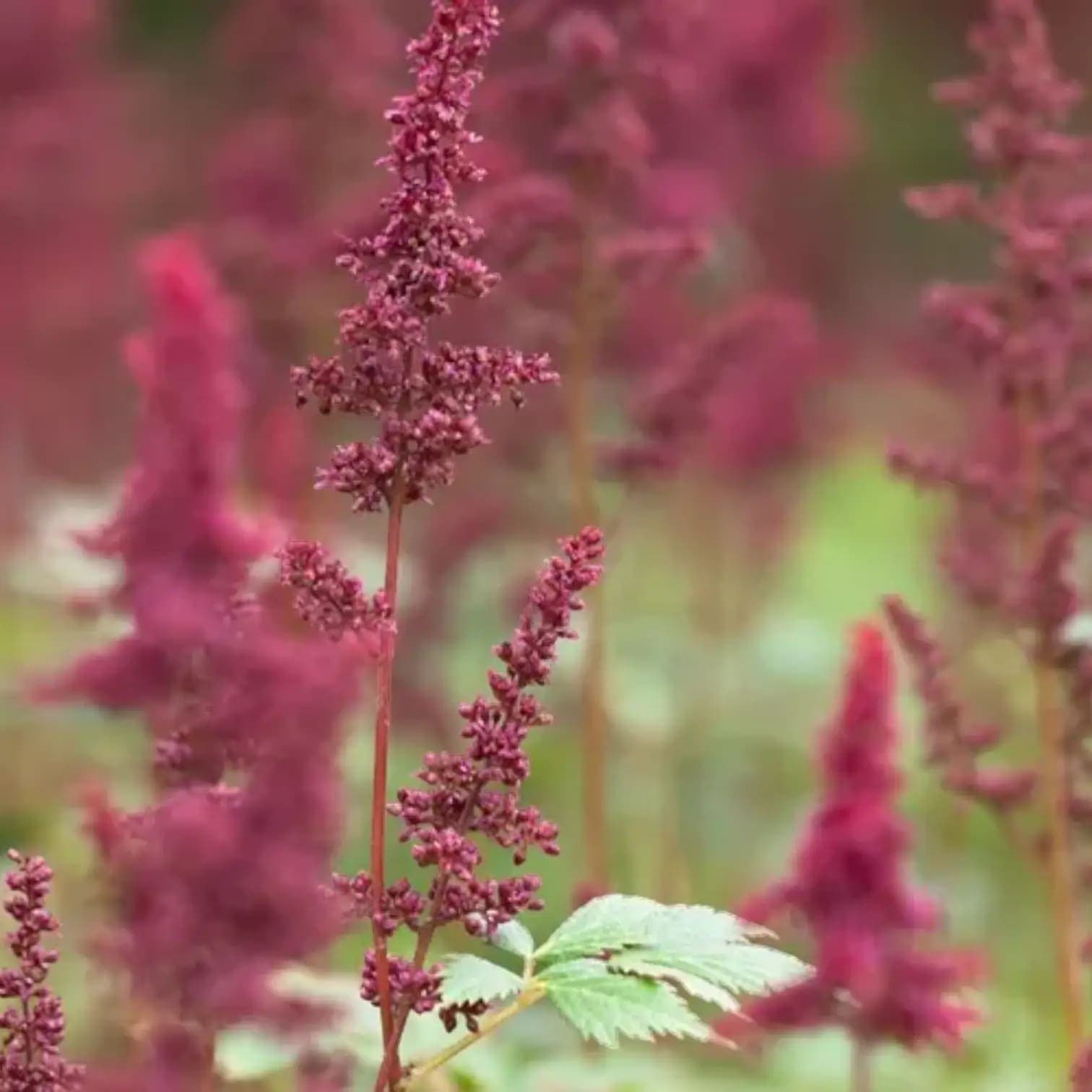
Astilbe × arendsii 'Fanal'
9,66 €
Livré chez vous par Jardiplants, un service Renoday.
Description
Colour and form of Astilbe ‘Fanal’ Astilbe × arendsii ‘Fanal’ is a red-flowering astilbe with dark stems and narrow, dense plumes that rise above divided foliage. The flowers sit clearly above the leaves, so the clump keeps a defined outline in mixed planting. In early summer, the colour is deep and saturated, and the foliage often carries a subtle reddish tint that echoes the blooms. The flowering stems are commonly around 60-90 cm, and the mature clump usually sits in the 30-50 cm range for spread. In a container the same plant stays smaller and develops more slowly, especially in its first seasons. Flowering season and overall habit Growth begins in spring as new shoots push up from the crown and form a compact tuft. In early summer, strong stems rise and carry the flower plumes well above the leaves. The plumes can stay decorative for weeks, then gradually fade. Through the rest of summer and into autumn the plant remains a leafy clump, then dies back in winter and rests below ground until spring. Where it works best outdoors ‘Fanal’ fits partial shade borders, planting near water, and any bed where the soil stays reliably moist through summer. It is also suited to larger patio pots placed in bright shade. Sheltered spots help the flower stems remain clean after rain and reduce stress during hot spells. Border rhythm: repeat clumps to create a red accent line through shade. Waterside planting: use along ponds and rills where moisture stays steady. Courtyard pots: place in bright shade for lush foliage and early-summer bloom. Soil structure and summer moisture Astilbe thrives in clay or loam that holds moisture, with enough structure for air around the roots. A planting pocket enriched with compost supports strong leaf growth and longer flowering. In lighter soils, adding organic matter and keeping a mulch layer reduces evaporation and buffers soil temperature. Moisture consistency is the biggest driver of performance. Even moisture through the flowering period supports longer-lasting plumes and cleaner foliage. In warm weather, irrigation and mulch are often the difference between a plant that looks full and one that finishes early. Light, shade patterns, and exposure Partial shade suits ‘Fanal’ well. Dappled shade keeps the root zone cooler and helps the plant hold its fresh look in summer. Morning sun with afternoon shade is a reliable pattern. Indirect light also works, particularly when the soil stays moisture-retentive. Planting and establishment Plant in spring or early autumn so roots can settle before the next heat or frost cycle. Set the crown level with the surrounding soil and water thoroughly after planting. A broad planting area helps roots expand, especially in heavier soils where structure improves gradually. Spacing: allow about 50 cm per clump for mature spread. Soil prep: mix compost into the planting zone for moisture holding and structure. Mulch: apply a composted mulch after planting to protect the surface from drying. First season watering: keep soil evenly moist while the root system expands. Feeding and routine care through the season In borders, a spring top-dressing of compost is usually enough. If the soil is lean, a balanced granular feed in spring supports the season’s stems and foliage. In pots, a slow-release fertiliser applied in spring keeps growth steady and supports flowering through early summer. After flowering, stems can be removed for a tidier clump, or left to dry if you enjoy the texture. The plant remains leafy through the rest of summer and into autumn, then dies back naturally. Division and long-term vigour After a few years, astilbe clumps can become crowded. Division every three to four years keeps the plant vigorous. Lift the clump in late winter or early spring, split into pieces with healthy buds, and replant the strongest sections into refreshed soil. This also provides extra plants for repeating the colour elsewhere. Cut flowers and dried stems ‘Fanal’ is useful for cutting when plumes are fully coloured and the tiny flowers are open. Stems can also be left on the plant and allowed to dry for a softer, late-season texture. In both cases, the foliage clump remains the main feature once flowering passes. Boggy sites and waterside planting This astilbe also copes with boggy ground where moisture stays high for long periods, which makes it a natural choice around ponds and along stream edges. In those settings, planting into a stable, humus-rich layer helps the crown sit firmly and reduces movement through winter. In pots, use a mix with structure and reliable drainage so water can move through the container while the root zone still stays evenly moist. Winter rest and spring cleanup Once the top growth finishes for the year, cut stems back to low stubs and clear away old leaves. Fresh shoots rise from the crown in spring. In colder areas, insulating the pot wall and keeping the container out of harsh wind supports a more even start to the next season. Container planting for Astilbe ‘Fanal’ Choose a pot with enough volume that moisture remains stable through warm weather. A moisture-holding mix with added structure supports healthy roots. In containers, the key points are steady watering during active growth and a sheltered winter position that reduces freeze-thaw stress. Pot volume: larger pots support taller flowering stems and fuller foliage. Drainage: drainage holes and a structured mix keep roots oxygenated. Summer watering: consistent moisture is essential while stems are forming. Winter care: group containers together and protect the pot wall in prolonged cold. Pests and diseases worth noticing Vine weevil can affect container-grown plants by feeding on roots. Monitoring the potting mix and using suitable controls helps if growth weakens. Powdery mildew can appear during warm spells with still air; steady moisture, good spacing, and airflow support healthier foliage.