
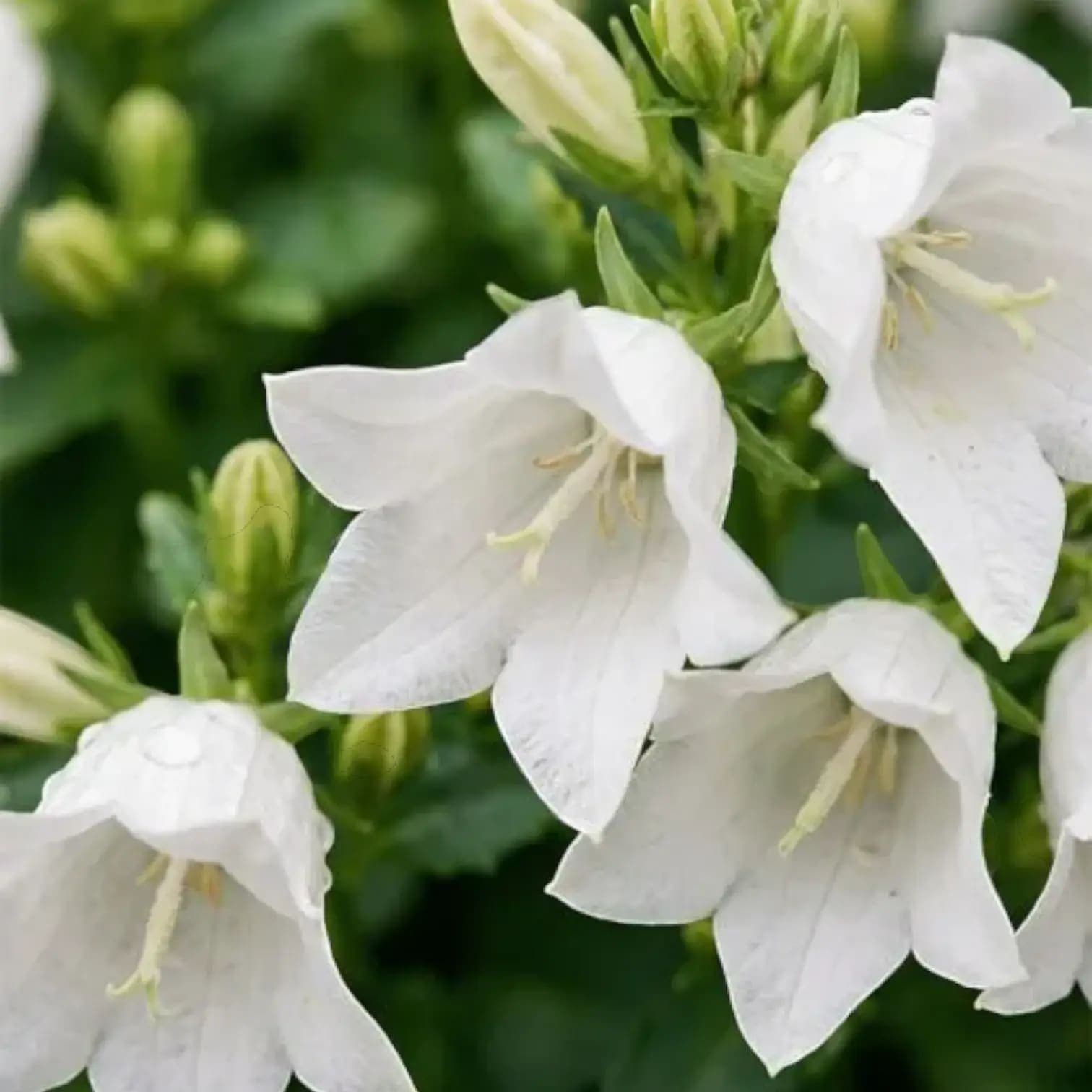
Campanula carpatica 'Weisse Clips'
8,28 €
Livré chez vous par Jardiplants, un service Renoday.
Description
Campanula carpatica 'Weisse Clips' for clean white bellflower drifts Campanula carpatica 'Weisse Clips' is a compact bellflower that holds its flowers neatly above a low green mound. The blooms open upward and look like bright, simple cups from a distance, then as delicate bells up close. White flowers make this cultivar useful in mixed borders, especially where pale tones need a calm, repeating accent through summer. Plants usually remain around 15-20 cm tall and spread gradually to about 30-60 cm. In containers, the habit stays tighter and the flowering stems sit closer together, creating a dense cushion effect. Flowering window and how to extend it 'Weisse Clips' flowers during summer and can continue into early autumn when conditions stay mild. Removing spent flowers regularly keeps the plant looking sharp and supports continued bud production. After the main flush, a light shear of the flowering stems encourages fresh foliage and can bring a smaller second wave of bloom. Placement: sun, light shade, and visual impact Full sun supports abundant flowering, while part shade keeps foliage fresh in hot summers and can help white flowers stay clean and bright. Use it at the front of borders, in gravel gardens, or in raised beds and troughs where the mound is easy to appreciate. White bells also pair well with blue and violet perennials and with grey foliage plants such as artemisia, santolina, or small grasses. Soil and pH flexibility Campanula carpatica grows in chalk, loam, and sandy soils, and it accepts a wide pH range from acid through neutral to alkaline. The practical requirement is a soil structure that supplies moisture during summer growth while draining reliably after rain. A gritty planting pocket suits rock gardens; a loam-based border with added compost suits mixed perennial beds. Planting and first-season care Plant in spring or early autumn. Set the crown level with the surrounding soil, firm gently, and water in well. During the first season, steady moisture supports root expansion and improves flowering the following year. A fine gravel top-dressing around the crown keeps stems clean, reduces splash, and helps water move away from the plant in winter. Watering logic for borders and pots In borders, established plants appreciate deep watering during extended dry spells, especially while buds are forming. Watering less often but more thoroughly supports deeper rooting and keeps growth steady. In pots and troughs, check moisture more frequently. Water until the container is evenly moist, then allow the top layer to begin drying before the next watering. Container culture keeps plants smaller and slower than open ground, which is useful when you want a compact mound that stays proportionate in a small space. Winter performance: keeping crowns airy Campanula carpatica performs well across much of northern Europe. Winter success relies on crowns that sit in oxygen-rich soil, with rainwater draining away between weather systems. Raised edges, gravel, and mineral structure support this. In pots, place containers on feet or a free-draining surface so water clears quickly. Troubleshooting signals Gaps in the cushion: Often linked to drought stress; deeper watering and a little extra organic matter in light soils support recovery. Reduced flowering: Light shade or competition from nearby plants can lower bud count; a brighter position improves performance. Nibbled new growth: Slugs and snails can graze young leaves; regular checks protect spring growth. Leaf spots in humid weather: Space plants for airflow and remove affected stems during tidy-up. Weak growth after wet winters: A sharper-draining planting pocket and gravel around the crown improve survival and spring vigour. Design uses Use Campanula carpatica 'Weisse Clips' to brighten gravel gardens, rockeries, and the front of borders. It also shines in troughs and patio pots where the white flowers can illuminate planting schemes well into late summer. Feeding and soil refresh For a long flowering season, 'Weisse Clips' appreciates modest fertility. In borders, a thin layer of compost around the plant in spring supports steady growth without forcing soft stems. In containers, a low-strength balanced feed in late spring can maintain bud production during a long summer display. After flowering, a light feed paired with the post-bloom shear supports fresh foliage. Container mix notes for troughs and pots A trough mix for Campanula carpatica works best when it holds moisture yet stays open. Combine a loam-based compost with added grit or fine gravel so water moves through freely. A gravel top-dressing keeps the crown airy, reduces splash, and gives the planting a clean finish. Where pots sit under eaves or on balconies, check moisture more often, as rain may not reach the root zone consistently. Propagation and long-term maintenance Plants can be raised from seed, and basal cuttings taken in spring also root well. After a few seasons, the mound can be refreshed by lifting and replanting vigorous outer sections in early spring. This renewal step keeps the centre dense and supports strong flowering year after year, especially in small spaces where plants are expected to look neat from every angle. Seasonal rhythm at a glance Spring: Fresh leaf growth builds the cushion; keep moisture steady as stems start to rise. Summer: Main flowering season; deadhead regularly and water deeply during hot spells. Early autumn: A light second bloom can follow the summer tidy-up; reduce feeding and allow growth to firm. Late autumn to winter: Foliage dies back; crowns appreciate open, draining soil and a gravel top-dressing.