
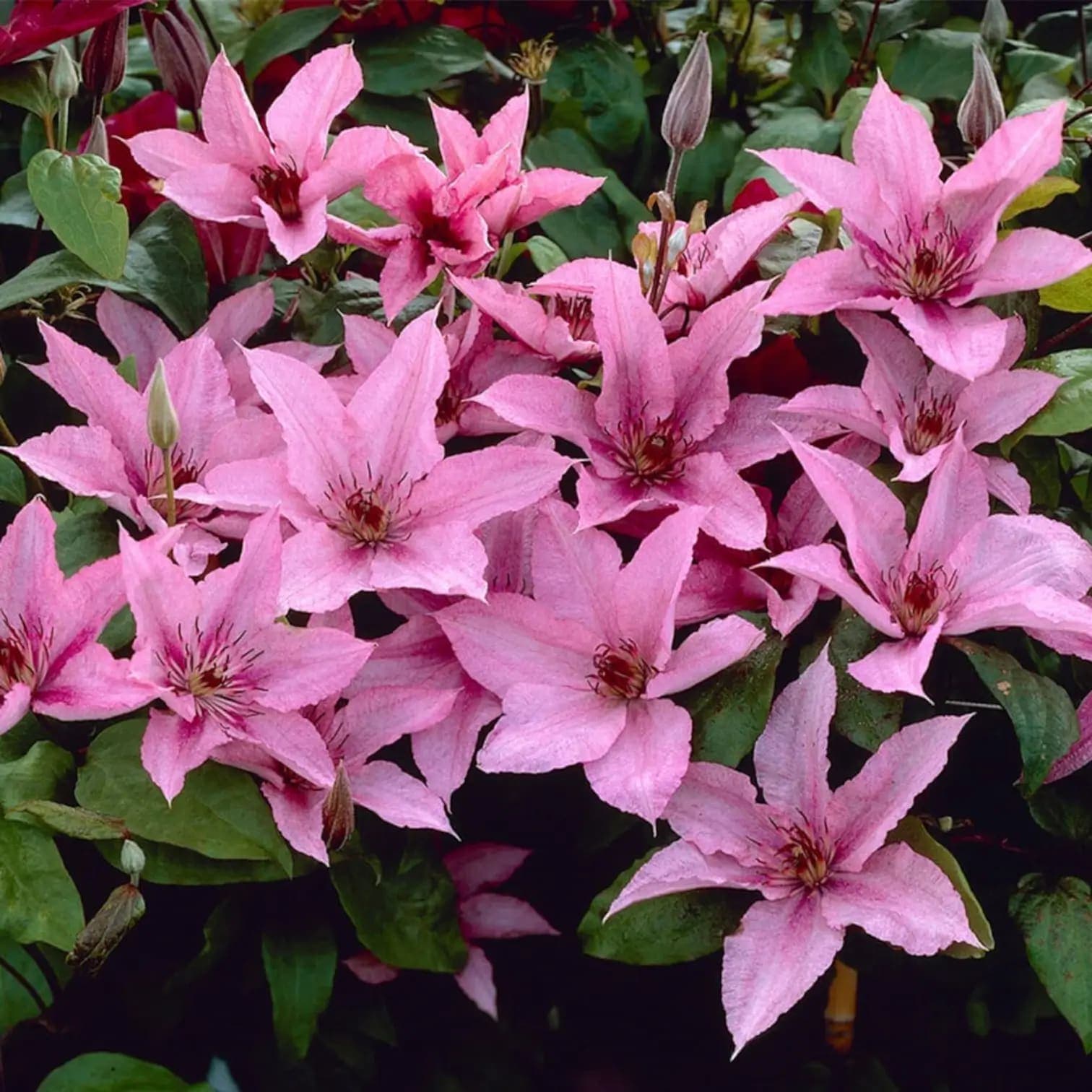
Clematis 'Hagley Hybrid'
15,18 €
Livré chez vous par Jardiplants, un service Renoday.
Description
Shell-pink flowers that suit part shade Clematis ‘Hagley Hybrid’ is a late large-flowered clematis with generous, shell-pink blooms that open through summer and can continue into early autumn. Flowers are typically 10-15 cm across, with a gentle, pearly tone that pairs well with stone, timber, and dark foliage. The plant climbs by twisting leaf stalks around slim supports, then fills in with a steady framework of stems and mid-green leaves. Ultimate size is usually 1.5-2.5 m tall and about 1-1.5 m wide. In open ground it can make a full column on a trellis; in a pot, growth stays smaller and slower than in open ground, which makes it easier to keep within balcony and patio proportions. Choosing the right position This cultivar is happiest in part shade, which helps the soft pink tones stay fresh-looking in summer. Bright light is still important for strong flowering, so think of morning sun with afternoon shade, or a lightly shaded wall where the plant receives good ambient light without the full heat load of midday sun. Give the root area a cool, shaded base. A mulch layer and nearby low planting helps keep moisture steady and moderates summer temperature swings around the crown. If the plant is trained over a warm wall, the base benefits from extra mulch and reliable watering during hot spells. Soil that keeps buds and stems moving Plant in deep, fertile soil that holds moisture while draining freely. A moisture-retentive, well-drained structure is the goal: compost or well-rotted organic matter improves water buffering and supports consistent growth, while a crumbly texture prevents compaction. Clematis ‘Hagley Hybrid’ tolerates a wide pH range (acid, neutral, or alkaline), so structure and moisture are the deciding factors. When planting near a wall, place the root ball away from the base so it is not trapped in a dry rain shadow. A steady moisture reserve at root level is one of the strongest predictors of repeat flowering later in the season. Planting, training, and spacing Set up your support first: trellis, wires, or an obelisk. The plant will climb as soon as stems can reach something slender to grip, so gentle tying-in early helps create a neat framework. For a wall, spreading stems outward into a fan distributes flowering over a wider area and prevents a dense knot at the top. Space plants according to ultimate spread. With a typical spread up to 1.5 m, give the plant enough room to widen without competing heavily with neighbouring shrubs. In mixed borders, low perennials at the base can double as root-zone shade. Feeding and watering rhythm Feed in spring with a balanced slow-release fertiliser and refresh the mulch with compost. As the season progresses, steady moisture is the key: buds form on the strong new stems produced each year, and a plant that cycles between very dry and very wet often pauses or drops buds. A deep soak that reaches the full root zone supports a more even growth pace. In containers, nutrients and moisture move through faster. A soil-based mix plus a measured feed schedule keeps the plant productive without pushing weak, floppy growth. If water runs straight through a pot, it is usually a sign the compost has shrunk or become hydrophobic; re-wetting slowly and top-dressing with fresh compost restores buffering. Pruning group 3: simple annual reset ‘Hagley Hybrid’ is pruning group 3, which means it flowers on the current season’s growth. In late winter to early spring, cut stems back to a pair of strong buds above the base. This produces vigorous new shoots that carry the summer display, and it keeps flowers developing lower down, keeping the display balanced along the support. After the first big flush, a light tidy and tying-in keeps stems organised and reduces wind-rock, especially on exposed fences. The main structure is created by the yearly regrowth, so the goal is a strong, well-placed framework each season. Growing Clematis ‘Hagley Hybrid’ in a container Container culture suits this cultivar well. Choose a deep, stable pot and a soil-based compost so the root run holds moisture and nutrients. An obelisk or small trellis gives the stems something to grip, and regular tying-in keeps the plant evenly distributed. A stable, weighted pot reduces rocking in wind, which helps new shoots extend without snapping. Watering is the main difference between pots and open ground. In summer, the top layer can dry quickly; a thorough watering that re-wets the full depth of the pot supports steady growth and bud formation. A mulch layer on the surface helps reduce rapid drying and keeps the root zone cooler. In winter, a sheltered corner plus a wrapped pot protects the root ball from repeated freeze-thaw cycles. Common issues and quick fixes Clematis wilt can occasionally strike during warm, fast growth. Planting a little deeper and encouraging multiple shoots from the base improves recovery potential. Aphids can cluster on soft new growth, especially in sheltered corners; rinsing with water and promoting beneficial insects usually keeps pressure low. Powdery mildew is more likely when the plant is dry-stressed or airless, so consistent watering and a lightly thinned framework are the simplest preventatives. Clematis sap can irritate skin. Gloves are a sensible habit for pruning and tying-in, especially when trimming fresh growth. Pick Clematis ‘Hagley Hybrid’ for a soft pink summer climber that thrives in bright part shade. Train it neatly, prune hard once a year, and it will repay with a long season of flowers.