
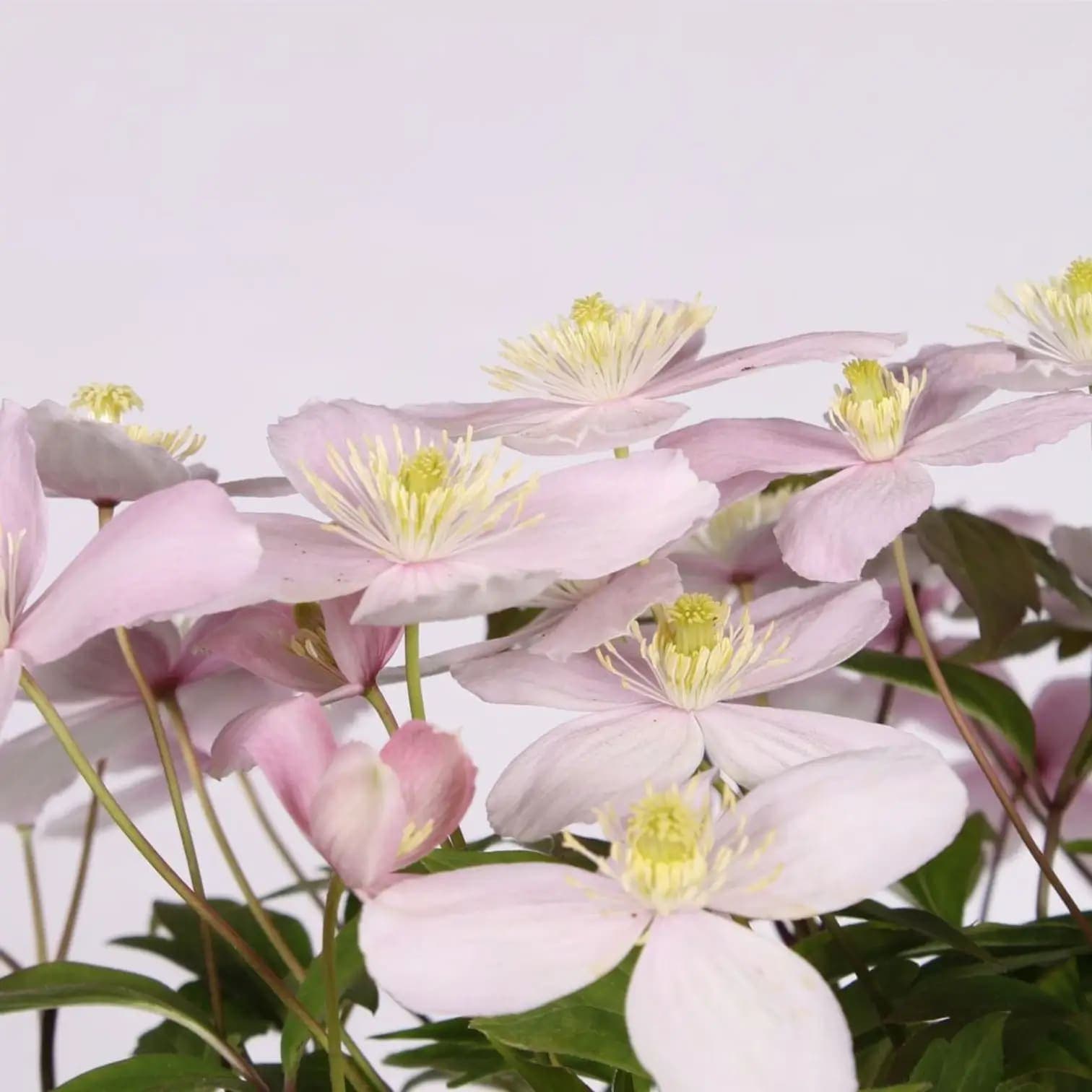
Clematis montana 'Rubens'
16,56 €
Livré chez vous par Jardiplants, un service Renoday.
Description
Fast spring coverage with a soft pink haze Clematis montana ‘Rubens’ is a vigorous Montana Group clematis that can turn a fence or pergola into a spring feature in a short time. In late spring to early summer, masses of small, four-petalled flowers open in soft pink, often with a light fragrance. New foliage frequently starts with a bronze tint before settling into green, which adds an extra seasonal layer even before flowering begins. Given space, this clematis can reach 8-12 m in height and 4-8 m in spread. It is built for bigger structures and for scrambling through shrubs and small trees. In containers, growth stays smaller and slower than in open ground, though Montana types still have energy and need a substantial pot and a strong support. At a glance Flowering: Late spring to early summer Flower colour: Soft pink, often lightly scented Eventual size: 8-12 m tall, 4-8 m wide Light: Sun to part shade Soil: Moisture-retentive, well-drained; pH tolerant Pruning group: Group 1 After flowering, silky seedheads may appear, and the leafy canopy continues as a green screen through summer. A later light trim after flowering keeps growth neat and prevents the plant from becoming too dense. Where it fits in a garden plan Sun to part shade suits Clematis montana ‘Rubens’. It can flower well in bright shade, which makes it useful on cooler walls and in woodland-edge planting where many climbers struggle. In full sun, consistent moisture at the root zone helps the plant maintain a lush canopy through summer. Because it becomes a large plant, think first about the structure it will occupy: pergolas, sturdy trellis panels, long fences, and mature shrubs are all good matches. Choose supports that can carry weight once the plant is established and in full leaf. A run of tensioned wires is rarely enough on its own; a rigid trellis or pergola beam gives better long-term security. Soil, moisture, and pH Montana clematis grow best in deep, fertile soil that holds moisture while draining freely. Work compost or well-rotted organic matter through the planting area to improve structure and water buffering. A moisture-retentive, well-drained profile supports strong growth without waterlogging the crown. This plant is tolerant of a wide pH range, from acid through neutral to alkaline. In practice, steady moisture and good structure matter more than chasing a specific pH. Mulch around the base to keep the root zone cooler and to reduce summer moisture loss. Planting depth and establishing a framework Plant the crown slightly below the final soil level and firm in well. Early in the plant’s life, focus on establishing a framework of stems first, then let height come with time. Tie young shoots to the support so they spread out and cover the structure evenly. Once the plant has multiple anchored stems, it can fill space quickly. Spacing is important because mature plants broaden over time. Plan for a spread up to about 8 m in open ground. If the plant is intended to scramble into a shrub, choose a host with an open habit and enough light above its canopy. Plant on the windward side so growth is naturally pressed onto the host structure as stems extend. Pruning group 1: timing that protects next year’s bloom Clematis montana ‘Rubens’ is pruning group 1, flowering on the previous season’s growth. Pruning happens after flowering: shorten overlong stems, thin congested areas, and remove damaged growth. This keeps the plant within bounds while preserving the framework that carries the next spring display. If the plant has outgrown its space, staged reduction over two or three seasons is gentler than one heavy cut. The goal is a strong framework of well-placed stems that can flower freely each spring. Watering, feeding, and seasonal care During the first year, consistent moisture is key while roots establish. Once settled, the plant is more resilient, yet it still performs best with an evenly moist root zone during prolonged dry spells. Feed in spring with a balanced fertiliser and refresh the mulch with compost. Montana clematis are energetic, and a fertile root zone helps support both flowering and vigorous leafy growth. Hardiness is strong for Montana types, yet a sheltered root zone still improves long-term performance. A thick mulch buffers winter temperature swings and keeps spring growth more even. Containers, size control, and winter reality Growing Montana clematis in a container is possible when the aim is to control size or when garden soil is not available. Choose a large, heavy pot and a strong obelisk or trellis. In containers, growth stays smaller and slower than in open ground, and watering becomes the main maintenance task through summer. Container roots cool faster than ground soil in winter, so a sheltered corner and some pot insulation helps keep the root ball stable through cold snaps. Keeping the compost lightly moist through winter supports fine roots ready for spring growth. Problem patterns Aphids can appear on soft new tips, especially in sheltered sites; water sprays and beneficial insects usually keep colonies manageable. Powdery mildew is most common when the plant is dry-stressed and crowded, so consistent moisture and selective thinning after flowering supports healthier growth. Clematis sap can irritate skin, so gloves are a sensible habit for pruning and tying-in. Clematis montana ‘Rubens’ is a big-structure climber for gardeners who want a dramatic spring curtain of flowers. Give it a strong support, prune after flowering, and let it build a long-lived framework.