
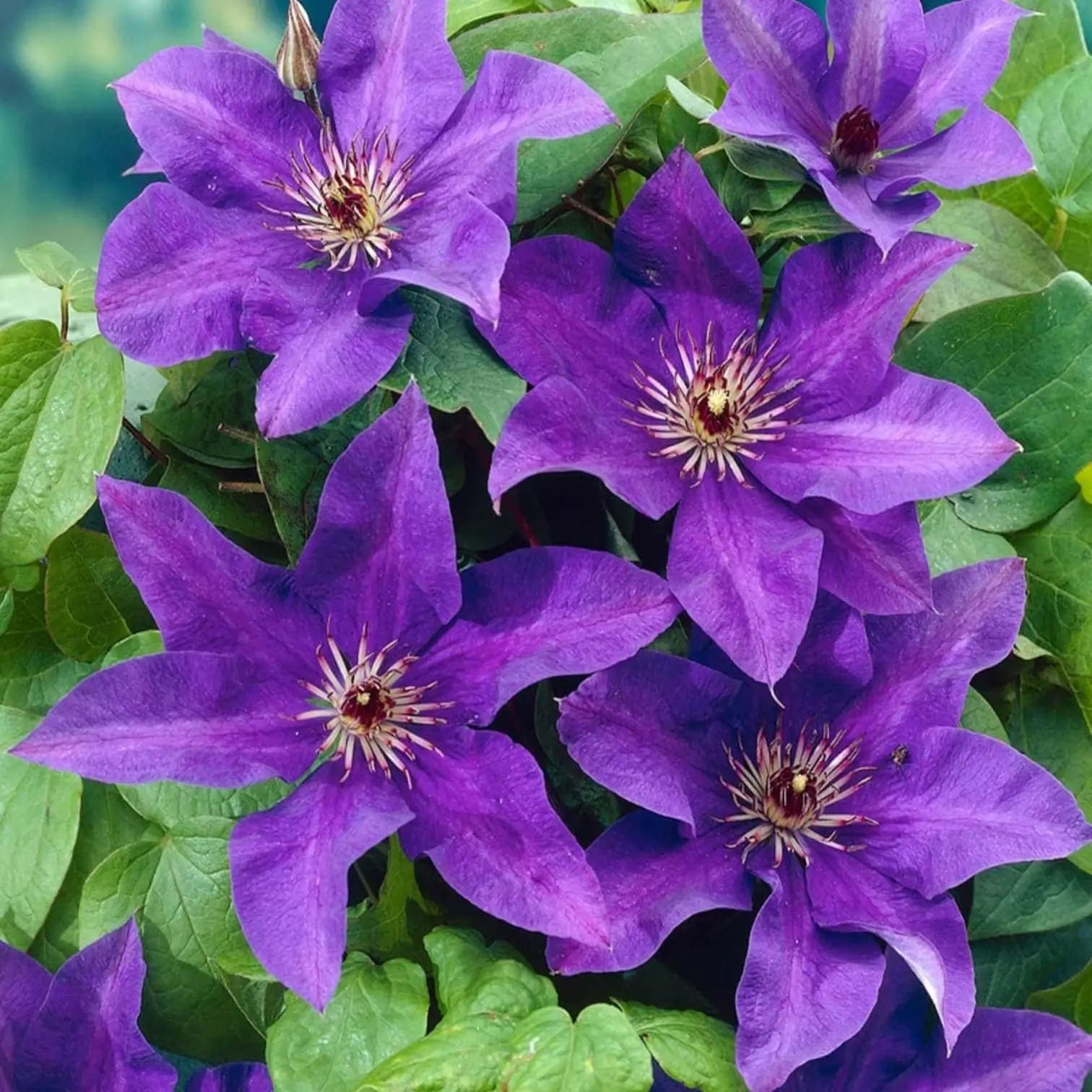
Clematis 'The President'
16,56 €
Livré chez vous par Jardiplants, un service Renoday.
Description
Violet-blue flowers with real presence Clematis ‘The President’ is an early large-flowered clematis valued for rich violet-blue blooms that open in early summer and often return later in the season. The flowers are broad and open-faced, so the colour shows clearly against pale walls, timber, and mixed planting. After flowering, decorative seedheads can follow, adding a softer texture on the support. It combines well with climbing roses when the clematis is trained slightly in front on its own wires, so each plant has space and light. The clear colour also works with silver foliage and pale grasses. Growth is medium and controlled: around 1.5-2.5 m tall with an ultimate spread of 0.5-1 m. That makes it easy to use on a trellis near a patio or doorway without the plant overwhelming the space. In containers, growth stays smaller and slower than in open ground, and the plant can be kept as a compact vertical accent. At a glance Flowering window: Early summer with a frequent repeat later Flower colour: Violet-blue with a luminous sheen Eventual size: Around 1.5-2.5 m tall, 0.5-1 m wide Light: Sun to part shade Soil: Moisture-retentive, well-drained; neutral to alkaline pH Pruning group: Group 2 Where to plant for steady flowering Sun to part shade is a good fit. Bright light supports strong bloom, and light shade during the hottest part of the day can help keep the plant hydrated and comfortable. As with most clematis, the base benefits from being cooler than the top: mulch around the crown and let low planting shade the soil surface. For wall planting, set the root ball away from the base so rainfall reaches the roots. A spot that stays evenly moist, with fewer swings between extremes, supports repeat flowering later in the summer. Sheltered positioning also helps protect large flowers from tearing in strong winds. Soil, drainage, and planting depth Deep, fertile soil with a moisture-retentive yet well-drained structure suits Clematis ‘The President’. Compost or well-rotted organic matter improves water buffering and supports steady growth. This cultivar prefers neutral to alkaline conditions, so structure and moisture matter more than chasing a precise pH number. Plant the crown slightly below the final soil level to encourage shoots from below ground. That produces a fuller plant and provides extra resilience if a stem is damaged. Finish with a broad mulch circle and refresh it as it breaks down. Support options and training style Clematis climbs by twisting leaf stalks, which means it grips best onto thin wires, mesh, or trellis bars. On a wall, a fan of horizontal wires is easy to manage and helps distribute flowering across the surface. On an obelisk, guiding stems in a spiral keeps the plant balanced and reduces tangles. With a mature spread up to about 1 m, this clematis can also be trained through an open shrub, provided the clematis can reach light above the canopy. The shrub then gives a natural framework and the clematis adds seasonal flower colour. Underplanting with low perennials keeps the base shaded and makes the whole planting look more finished. Pruning group 2: keeping early and repeat bloom ‘The President’ belongs to pruning group 2. In late winter, remove dead stems and shorten remaining shoots to a pair of strong buds to tidy and encourage branching. This preserves older wood that carries the earliest flowers. After the first flush, a lighter trim and re-tying can support a later repeat and keeps the framework neat. If the plant has become tall and bare at the base, lowering the framework gradually over two seasons often brings flowering back down without losing an entire year of bloom. Aim for several healthy stems emerging from near the base, then train them outwards to cover the support evenly. Watering, feeding, and container notes Even moisture supports bud formation. Deep watering during dry spells is especially useful for wall-trained plants and for container culture. Feed in spring with a balanced slow-release fertiliser and refresh the mulch with compost. In pots, nutrients wash through faster, so a measured feed schedule helps maintain flowering through the long season. Choose a deep container and a soil-based compost for pot growing. A stable, weighted pot reduces wind-rock on the support, and insulation in winter helps keep the root ball steady during repeated cold snaps. Even though this clematis is very hardy, containers experience sharper temperature swings than ground soil. In autumn, foliage yellows and drops as the plant enters dormancy. The framework remains in place on the support, and buds sit on mature stems ready for the next season. In very cold, exposed sites, a sheltered position and a thick mulch protect the crown, while container plants benefit from being moved against a wall where temperatures fluctuate less. Problems you might see Clematis wilt can occur during warm, rapid growth. Planting a little deeper encourages multiple shoots from the base and improves recovery potential. Aphids can collect on soft tips; rinsing with water and encouraging beneficial insects often keeps numbers low. Powdery mildew is most common when the plant is dry-stressed or crowded, so consistent watering and a lightly thinned framework support healthier growth. Clematis sap can irritate skin, so gloves are a sensible habit for pruning and tying-in. Clematis ‘The President’ is a strong choice for saturated blue-purple colour on a manageable climber. Give it a cool base, a simple support, and a group 2 pruning rhythm.