
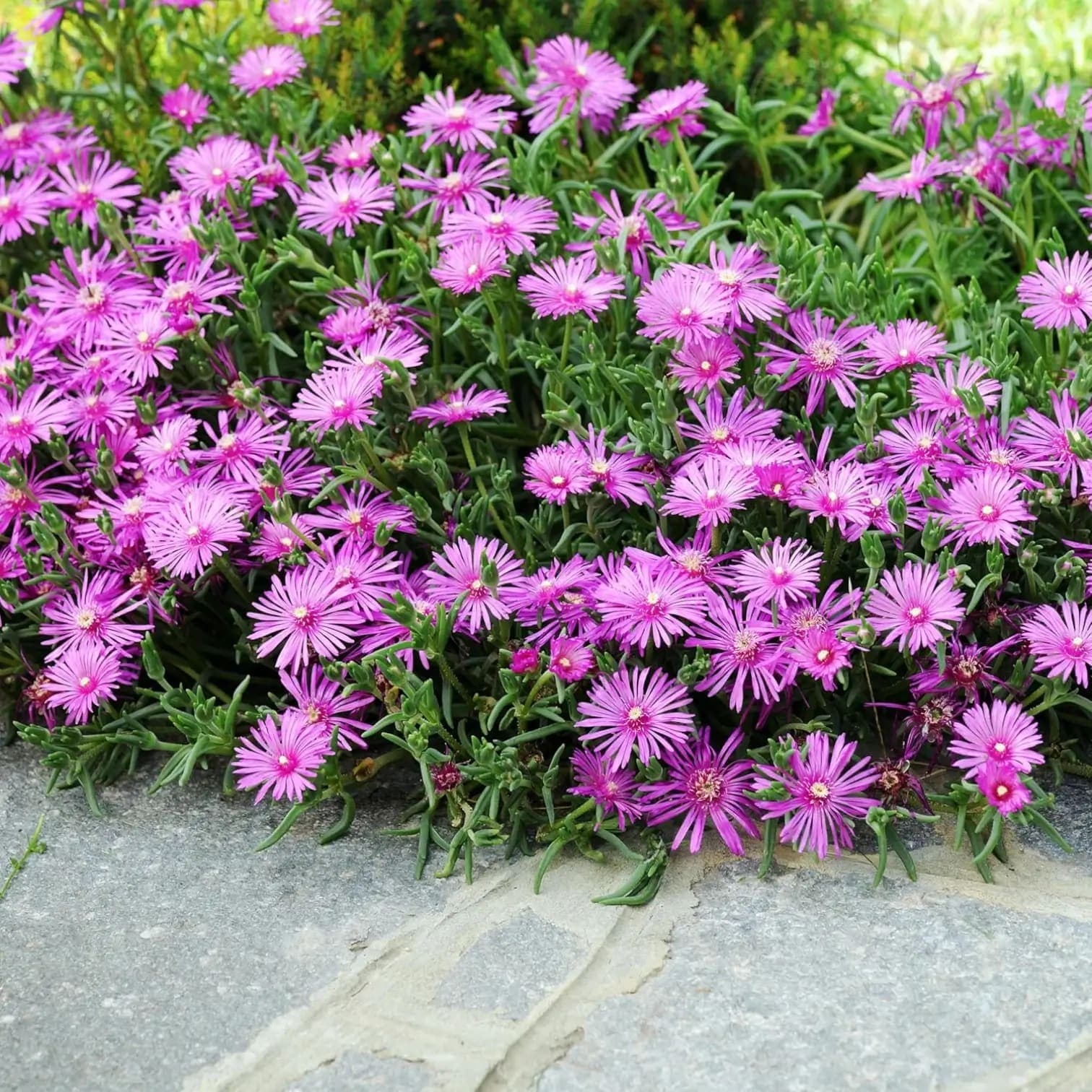
Delosperma cooperi 'Table Mountain'
13,80 €
Livré chez vous par Jardiplants, un service Renoday.
Description
Delosperma cooperi 'Table Mountain' for sunny gravel edges and dry containers Delosperma cooperi 'Table Mountain' is a low, spreading ice plant with fleshy evergreen leaves and bright magenta-pink flowers that open in sunny weather. It is built for heat, light and drainage. The plant forms a flat, succulent mat that can soften the edge of a raised bed, spill gently across a stone trough, or knit into a dry gravel pocket where many softer perennials would become too lush. This is a plant for precise placement. Delosperma cooperi 'Table Mountain' gives its best display when the crown sits warm and dry, the roots have air around them, and winter rain can pass through the planting mix quickly. In the right position, it offers long summer colour from a very low mound and keeps a tidy, ground-hugging outline for small sunny spaces. How Delosperma cooperi 'Table Mountain' grows Delosperma cooperi 'Table Mountain' is a mat-forming succulent perennial. The stems creep outward and carry narrow, fleshy leaves that store water. Flowers are daisy-like, vivid and weather-responsive, opening widely in strong light and closing during dull or wet conditions. Mature plants usually remain very low, around 5-10 cm tall, with a spread around 40-60 cm where conditions are suitable. In containers, Delosperma cooperi 'Table Mountain' stays smaller and grows more slowly than plants in open ground, especially when the pot is shallow or exposed. That can be useful for troughs and bowls, because the plant keeps its carpet-like habit without overwhelming companion plants. Use the widest practical container so the stems can travel across the surface. Light, soil and drainage Full sun is central to good growth. Delosperma cooperi 'Table Mountain' suits open positions with heat around the planting surface, such as gravel gardens, sunny rock gardens, raised troughs, dry walls and south-facing beds. Dense shade creates softer growth and weaker flowering, so site it where light reaches the crown for most of the day. Drainage matters more than soil richness. A gritty, sharply drained mix supports firm growth and reduces winter loss. In open ground, raised positions, slopes, gravel mulch and mineral soil all help. In pots, use a low-organic, gritty mix with excellent drainage holes. Heavy compost-rich mixes stay wet for too long around succulent roots. Light: full sun and warmth. Soil: gritty, sharply drained and lean. Moisture: light watering during rooting, modest watering after establishment. Height: usually around 5-10 cm. Spread: around 40-60 cm in suitable conditions. Watering Delosperma cooperi 'Table Mountain' Water new plants lightly but consistently until roots move into the surrounding mix. Once established, Delosperma cooperi 'Table Mountain' prefers a drier rhythm. In open ground, rain is often enough after the first season if drainage is right. In hot containers, water thoroughly, then let the mix dry well before watering again. For pots, water when the top 40-50% of the pot depth feels dry. This deeper drying cue suits succulent growth and helps keep the crown firm. Check troughs more often during heat, because shallow containers can swing from wet to dry quickly. Good watering gives roots a full drink, followed by air and a dry recovery period. Seasonal care and pruning Delosperma cooperi 'Table Mountain' needs very little pruning. In spring, remove dead or weather-marked pieces once new growth is visible. Trim only enough to restore the carpet edge or clear older stems from a container rim. Strong hard cuts can leave a low succulent mat looking bare for longer, so small, clean tidying works best. Flowering usually runs through summer, often extending into early autumn in warm, sunny weather. Evergreen foliage can take on stronger tones in cold conditions. Winter survival is strongest where the root area stays open, gritty and raised above waterlogged soil. In colder regions, containers can be moved against a wall or placed under rain shelter while still receiving light and airflow. Where Delosperma cooperi 'Table Mountain' fits in planting Use Delosperma cooperi 'Table Mountain' where low height is useful: between stones, along the front of a raised border, in gravel pockets, in sunny bowls, or on the lip of a container. It pairs well with other plants that enjoy mineral soil and strong light, such as small grasses, hardy herbs, sedums and compact Mediterranean-style perennials. Use the plant's texture as an early care signal. Soft growth, dull colour and weak flowering usually point to low light or an overly rich, damp root zone. Patchy winter collapse often follows cold wet soil around the crown. Sparse growth in containers can mean the plant has dried through repeatedly before rooting. Correct the site, drainage and watering rhythm first, and Delosperma cooperi 'Table Mountain' usually returns to a firm, compact mat in active growth. Where Delosperma cooperi 'Table Mountain' settles best This ice plant is strongest in places where the soil surface dries quickly after rain. A raised bed, stone trough, sunny wall edge or gravel slope gives the crown more warmth and keeps moisture moving away from the fleshy stems. In heavier gardens, lift the planting area with mineral material and keep organic matter modest. The root zone should hold enough moisture for establishment, then drain freely so the plant can return to its firm, compact habit. For containers, use a shallow bowl, trough or alpine-style planter with a gritty mineral mix and open drainage holes. Water when the upper 30-40% of the pot depth feels dry, then let the mix breathe again before the next watering. Containers keep plants smaller and slower than open ground, which suits Delosperma cooperi 'Table Mountain' well in small sunny displays. Seasonal detail for a tidy ice plant After the main flowering period, trim any loose stems that extend beyond the edge of the planting area. This keeps the mat even and encourages fresh shoots close to the crown. In spring, remove weather-damaged pieces once growth restarts, then refresh the surface with grit if rain has moved material away from the crown.