
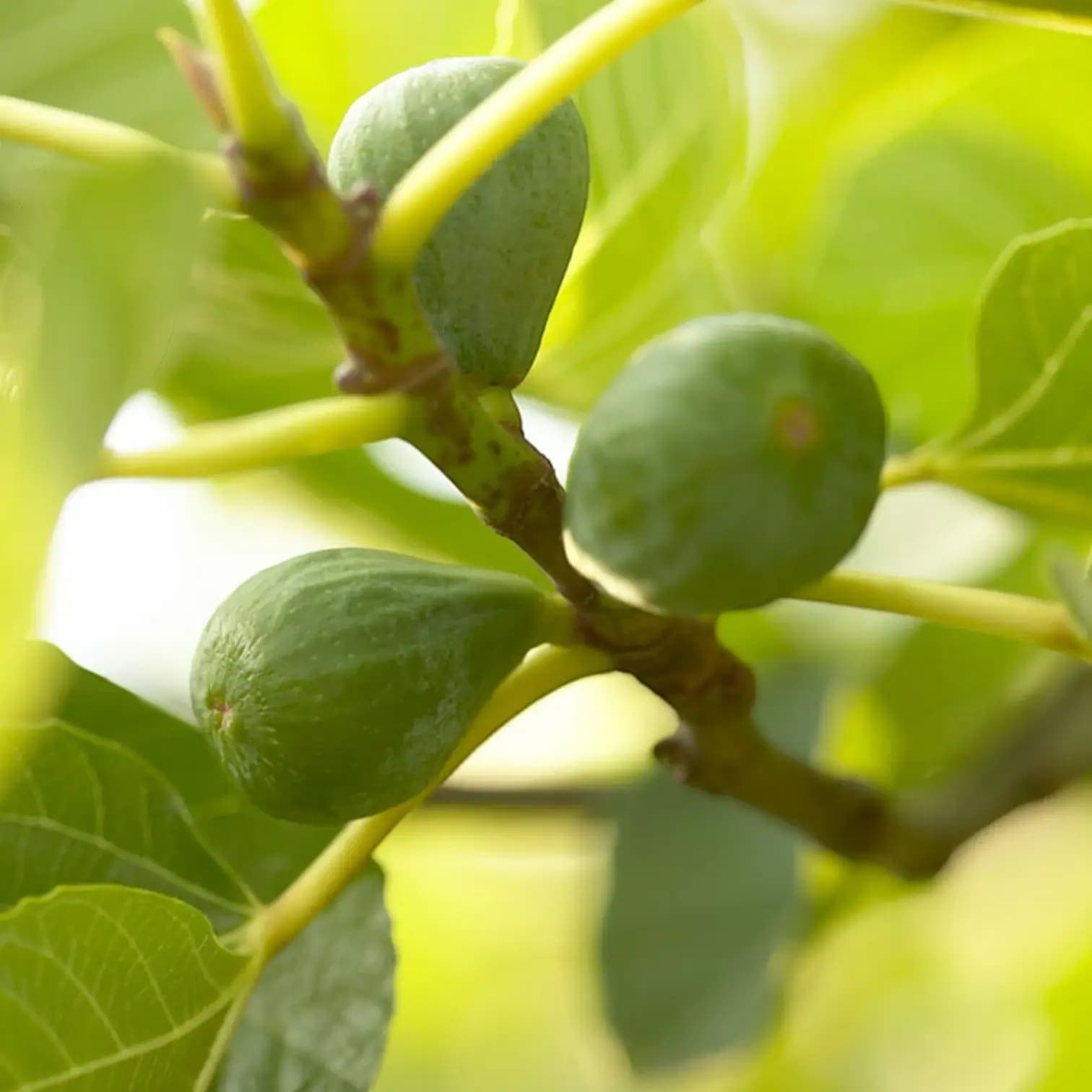
Ficus carica 'Brown Turkey'
13,80 €
Livré chez vous par Jardiplants, un service Renoday.
Description
Ficus carica 'Brown Turkey': productive fig for warm walls and large containers Why Ficus carica 'Brown Turkey' suits edible outdoor planting Ficus carica 'Brown Turkey' is one of the most useful figs for European gardens because it combines an edible crop with a strong ornamental outline. Large hand-shaped leaves give immediate summer volume, while pear-shaped brown-purple figs bring a clear harvest goal from late summer into early autumn where heat and shelter are good. It is self-fertile, so a single plant can crop, and that matters for smaller patios, courtyards and sunny wall positions where space is limited. This is a deciduous fruiting shrub or small tree with a Mediterranean feel, but it needs a realistic site. A warm wall, south-facing courtyard or sheltered terrace gives the ripening wood and fruit more stored heat. In open windy gardens it can still grow, yet fruit quality is usually strongest where the plant receives full sun and protection from cold wind. The plant is also attractive before any harvest arrives, because young plants quickly build a broad leafy frame. Size, habit and training style for Ficus carica 'Brown Turkey' Unrestricted Ficus carica 'Brown Turkey' can reach around 5 m high with about 3 m spread, so it should be planned as a long-term woody plant. In real gardens it is often trained flatter and smaller, especially against walls. Fan training lets light reach the shoots, makes ripe figs easier to pick and keeps the plant from occupying too much border space. A bush shape is also possible where there is room around the plant for access and pruning. Containers keep Ficus carica 'Brown Turkey' smaller and slower than open ground, especially when the pot limits root extension. That size control can help fruiting, because very free root growth often pushes the plant into leafy expansion. Use a broad, stable container with drainage holes and enough root volume for steady summer growth. For open-ground planting aimed at fruit, root restriction with paving slabs or a buried open-bottom pot can keep growth balanced and the plant easier to manage. Open ground size: usually planned around 300 cm spread for spacing and access. Wall training: useful where warmth, harvest access and size control matter. Container culture: best in a large, heavy pot with steady summer watering. Growth habit: woody, deciduous and broad with strong seasonal leaf display. Site, soil and watering for Ficus carica 'Brown Turkey' Full sun is the key condition for Ficus carica 'Brown Turkey'. The soil should be moderately fertile, moisture-retentive and well drained, with regular watering during hot spells while fruit is swelling. Dryness during fruit development can lead to fruit drop or small crops, while saturated winter soil can weaken roots. A mulch over the root area helps even out moisture, especially around wall-trained plants where rain may miss the soil directly below eaves. For pots, water when the upper 20 to 30% of the pot depth has dried, then soak the rootball fully until water drains through. In hot weather a fruiting fig in a container may need frequent watering because the restricted root zone dries quickly. Feeding should stay balanced: too much nitrogen produces plenty of soft leafy growth with less useful fruiting wood. A fruit-focused feed during active growth supports cropping without pushing excessive soft leafy growth. Pruning, fruiting and seasonal rhythm Ficus carica 'Brown Turkey' benefits from pruning in spring once hard frost risk has passed. Remove dead, damaged and weak shoots, then thin crowded stems so sun reaches the framework. In summer, shorten vigorous new shoots to around five or six leaves when they have made enough extension. This keeps light moving through the plant and encourages a compact framework with fruiting potential. In many European gardens, the smallest pea-sized fruitlets that remain on the plant in autumn are the ones with the best chance of ripening the following season. Larger late fruits often fail to mature before cold weather. A sheltered plant may carry those small fruitlets through winter, especially with protection in colder districts. Harvest ripe figs gently when the neck softens and the fruit begins to hang downward. Common patterns to watch on Ficus carica 'Brown Turkey' Poor ripening usually points to a site that lacks heat, an overlarge leafy framework, or uneven watering during fruit swelling. Frost damage appears as blackened or collapsed shoot tips after cold spells; trim those sections back in spring. Yellowing lower leaves during drought often mean the plant is short of water, particularly in pots and wall positions. Milky sap from cuts can irritate skin, and contact followed by strong sunlight can cause sensitivity, so gloves are sensible when pruning. Ficus carica 'Brown Turkey' is a good choice when the garden has a warm wall, a large container, or an edible planting area where one self-fertile plant needs to work hard visually and practically. Give it sun, shelter, drainage and a clear pruning rhythm, and it can become a long-lived edible feature with a clear harvest role. Planting partners and placement Ficus carica 'Brown Turkey' works best when the whole planting space supports ripening. Heat-storing paving, brick, stone or a pale wall can all help the microclimate, while low Mediterranean herbs at the base keep the area useful without shading the fig. In a large container, it pairs well visually with gravel mulch and simple underplanting that leaves watering access clear. If fruit is the main aim, plan training early: young shoots are easy to guide, while older wood is slower to redirect. Best results come from a sunny, sheltered outdoor space where this long-lived edible can stay in place and build a permanent framework. It is less suited to temporary balcony experiments because the pot, winter position and pruning routine need consistency. With that settled, Ficus carica 'Brown Turkey' offers generous summer leaves, a strong architectural shape and the satisfaction of home-grown figs from one self-fertile plant.