
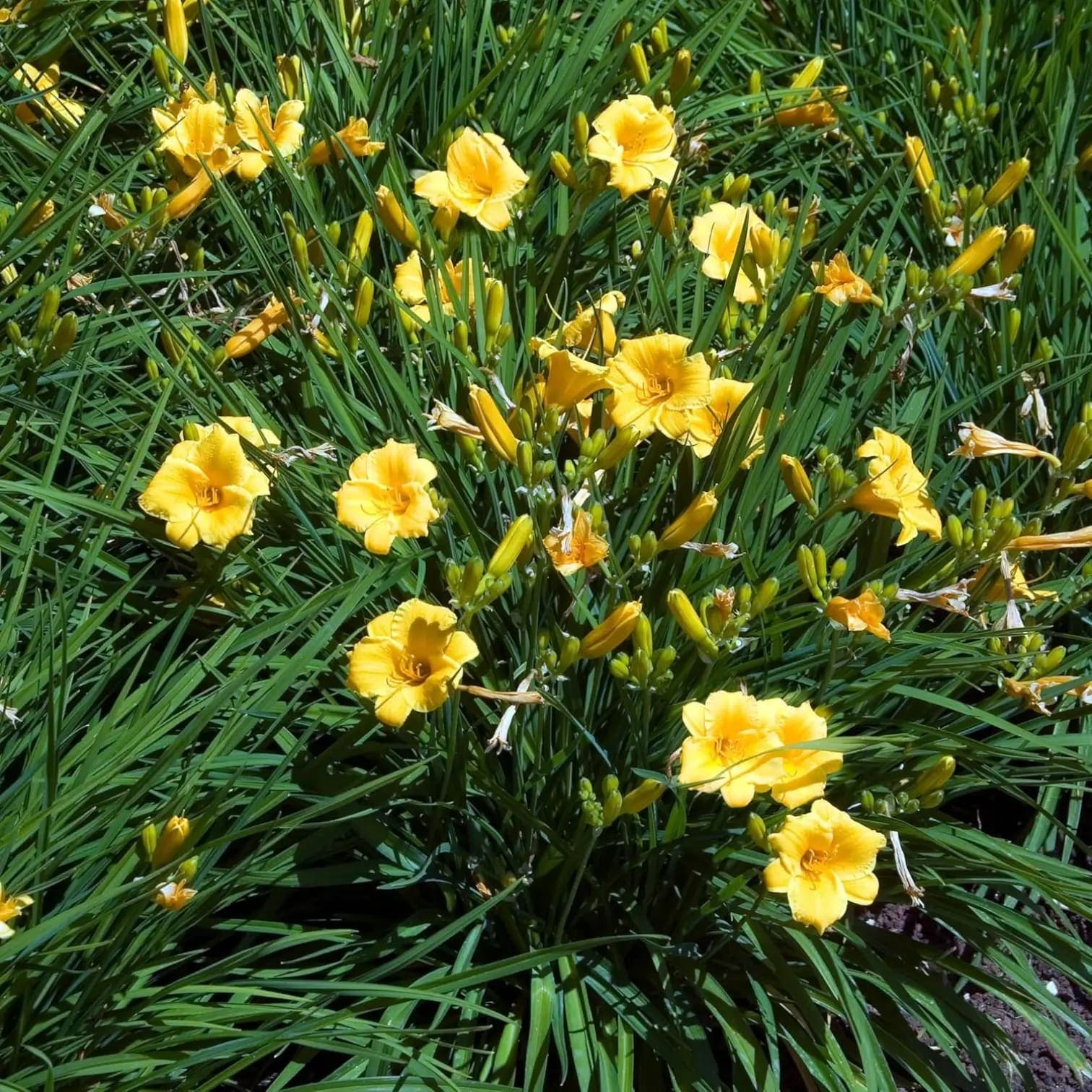
Hemerocallis 'Stella de Oro'
15,18 €
Livré chez vous par Jardiplants, un service Renoday.
Description
Hemerocallis 'Stella de Oro' - golden daylily colour over a tidy clump Hemerocallis 'Stella de Oro' is a reliable border perennial that builds into a strong clump over time. The strappy foliage forms a tidy mound, then flower stems rise above it through summer. Sun increases flowering, while part shade can help the foliage stay fresher in very hot sites. Even moisture gives the best performance, especially in the weeks leading up to flowering. Dividing older clumps restores vigour when flowering starts to slow. Because this plant is a set of 3 plants, it suits the way daylilies look best: in repeated clumps. Three plants spaced along a border edge or threaded through a mixed bed give a fuller, planned result in typical garden conditions. Habit, size, and seasonal look The foliage forms a dense mound that stays present through the growing season, even between flower waves. Stems rise above the leaves and carry several buds, which is why the plant can keep flowering over time. In autumn the leaves yellow and die back; in spring, fresh growth emerges from the crown. Habit: clump-forming perennial with arching, strap-like leaves and upright flower stems. Flower colour: golden yellow with a warm tone that stays clear from a distance. Flowering style: many buds opening in succession, giving a long display when moisture and feeding are steady. Seasonal behaviour: herbaceous - foliage dies back in cold weather and regrows in spring. Light, soil, and moisture Full sun brings the heaviest flowering, but Hemerocallis 'Stella de Oro' also performs in light shade, especially where afternoons are hot and reflective. The key is a root zone that drains freely yet holds enough moisture to support bud formation through summer. Light: full sun for maximum flowers; light shade acceptable, especially in warm gardens. Soil: reasonably fertile, humus-rich ground that drains well; waterlogged sites cause decline. Moisture: consistent while establishing; deep watering during prolonged drought supports flowering. Planting and establishing the set of 3 Daylilies settle quickly when planted at the same depth as in the pot and watered in thoroughly. Space the three plants so each clump has room to expand; the foliage mounds will broaden over time and can eventually meet if planted closer. A light mulch helps conserve moisture without smothering the crown. In the first season, steady moisture is the priority. A modest feed can help once roots are active, but steady moisture and sun decide performance. Once the root system has spread, the plant becomes more tolerant - but flowers are always the first thing to drop when the root zone dries hard during hot spells. Deadheading, cutting back, and division Removing spent blooms keeps the clump looking tidy, but it is not essential for plant health. What matters more is clearing old stems and tired foliage when the season changes. In autumn, foliage can be cut back once it yellows; in milder areas, leaving it until late winter gives a little extra crown protection. If flowering becomes noticeably weaker after a few years, the clump is often crowded. Lifting and dividing restores vigour: split the crown into sections, replant the strongest pieces, and water well until re-established. Container growing Hemerocallis 'Stella de Oro' can be grown in larger containers where the root zone stays evenly moist but never waterlogged. A wide pot suits the clump-forming habit and reduces summer drying swings. In winter, drainage is still the priority: cold, saturated compost can damage crowns. Pot choice: wider containers suit clumps and reduce tipping; make sure drainage holes are generous. Mix: free-draining but moisture-retentive enough for summer bud formation. Heavy, airless compost is a common reason plants stall or fail. Watering: soak thoroughly, then allow the upper part of the mix to dry before watering again. What usually goes wrong Most problems are straightforward once the basics are clear: daylilies flower best with sun and a root zone that stays evenly moist during active growth. Few flowers: not enough sun, or the clump is old and crowded - division usually fixes it. Bud drop in heat: drought stress; deep watering reaches the root zone. Light watering tends to stay near the surface, and it dries before it can support deeper roots. Soft growth and leaf yellowing: soil staying wet for too long; improve drainage and reduce irrigation. Marked leaves: can follow persistent wet foliage; open airflow and watering at soil level reduces pressure. Design notes Golden daylily colour lifts darker plantings and sits well with blues, purples, and silver foliage. The foliage mound also fills space cleanly, so it serves as a repeating border plant even when it is between flower waves. With three plants, it is easy to build a small rhythm: place clumps at intervals along a path, or group them in a triangle to make one fuller statement without crowding neighbouring perennials. Feeding and soil improvement Daylilies are not heavy feeders, but they do respond to a root zone that stays open and moderately fertile. In poor, sandy soils, adding organic matter helps the plant hold moisture long enough to keep buds forming. In very rich soils, the plant will still grow, but the main gains come from stable moisture and light. Crowded growth can trap moisture; airflow and a clean cut back keep leaves healthier. Seasonal checklist A simple seasonal rhythm keeps the clump looking fresh without constant fuss. The goal is a clean crown in spring and enough moisture in summer to keep buds developing. Early spring: remove old leaves and stems so new growth comes through cleanly. Late spring to summer: water deeply in dry spells; remove spent stems if tidiness matters. Late summer: keep moisture steady during heat; this is when bud drop happens if the root zone dries hard. Autumn to winter: cut back yellowing foliage, or leave until late winter in colder, wetter gardens and clear just before growth starts. Pests and diseases to watch Hemerocallis 'Stella de Oro' is generally robust, but a few issues show up reliably in gardens. Most are cosmetic and can be managed with simple hygiene and site fit. Slugs and snails: can nibble young shoots and buds; pressure is highest in damp, sheltered corners. Aphids: sometimes gather on flower stems; strong plants in open air usually outgrow minor infestations. Leaf streak and spotting: more likely where foliage stays wet and crowded; spacing and airflow help. Crown rot: linked to waterlogged soil or pots standing in water; drainage is the main fix. If the clump is sited well and watered deeply during hot dry spells, it tends to stay steady as a long-flowering border perennial. The set of 3 plants makes it easy to repeat that reliability across a bed. Repeated clumps give the planting a fuller rhythm, and division keeps each crown productive over time. When flowering fades or growth stalls, the root zone is the most common cause. Compaction and winter wet are common reasons spring regrowth is thin, and flowering shortens. Container scale and moisture cues for Hemerocallis 'Stella de Oro' Compared with open ground, containers tend to hold plants to a smaller, steadier pace. In pots, water when the top 30-40% of the pot depth feels dry during active growth, then soak the root ball fully. Bud count is strongest when the clump has steady moisture during warm weather.