
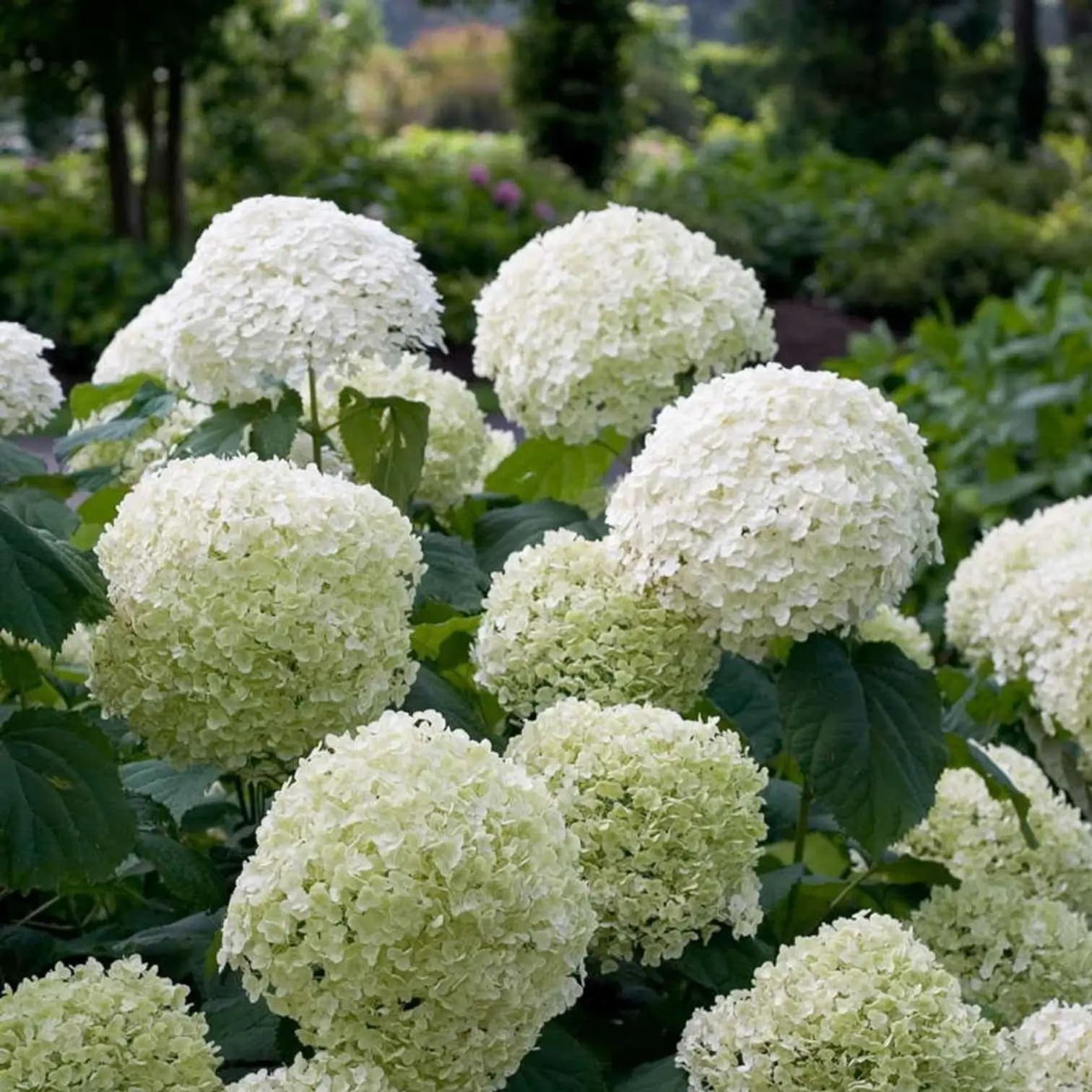
Hydrangea arborescens 'Strong Annabelle'
52,44 €
Livré chez vous par Jardiplants, un service Renoday.
Description
Hydrangea arborescens 'Strong Annabelle' - big white blooms on sturdy stems, mid-summer onwards Hydrangea arborescens 'Strong Annabelle' is valued for reliable summer flowering, even after colder winters. It blooms on new growth, so flowering is less tied to overwintered buds. Moisture through summer keeps the foliage lush and supports larger flower heads. A spring cut back produces strong new shoots and a tidy shrub outline. If stems flop, it often links back to rich soil and shade pushing softer growth. Flowering season and what makes it reliable Smooth hydrangeas flower on new wood (current-season growth). That one trait makes them dependable: even if winter is harsh, the plant can still produce flowers from fresh stems. Flowering: typically from July into September (timing shifts with local climate). Flower heads: large, rounded clusters that are visible from a distance. Colour: opens greenish-white, then settles into clean white as the display develops. Light, soil, and moisture Hydrangea arborescens 'Strong Annabelle' is flexible about light, but steady moisture is essential for big flower heads. The ideal is humus-rich soil that holds water evenly while still draining freely - waterlogged winter soil and baked-dry summer soil both cause problems. Light: sun to partial shade. In full sun, plan for a higher watering demand. Soil: humus-rich and well-structured; improve sandy soils with organic matter and heavy soils with better structure and drainage. Moisture: keep moisture steady in summer; mulch helps reduce stress swings. Planting and establishment Plant into a wide, improved area. Cold, wet soil around roots can slow growth and cause dieback. Water in deeply and keep the first season steady so roots spread beyond the original pot ball. Mulch to stabilise moisture, keeping mulch away from the stems. Deep watering during dry spells builds a stronger, drought-resilient root system. In containers, choose a large pot and watch moisture closely - pots dry faster than beds. Pruning options: tailoring the flower display Pruning Hydrangea arborescens 'Strong Annabelle' is straightforward because flowers form on new stems. Prune in late winter to early spring. Harder prune (shorter framework): fewer stems and often larger flower heads. Lighter prune (more framework): more stems, more flower heads, and a fuller shrub outline. Remove weak, damaged, or crossing stems to keep airflow and structure tidy. Feeding A spring mulch and a balanced feed is usually enough. Heavy nitrogen pushes very soft growth that can flop and mark more easily. Problems and quick diagnosis Flopping stems: common in deep shade, very rich feeding, or after heavy rain; choose a brighter site. Overfeeding often leads to weak growth and winter losses. Leaf scorch and droop: usually a moisture issue - mulch and deep watering stabilise the plant quickly. Small blooms: often drought stress the previous season or overly hard pruning; keep moisture steady and adjust pruning style. For dependable summer volume with simple pruning, Hydrangea arborescens 'Strong Annabelle' is hard to beat - give it moisture, keep soil structured, and let new growth carry the show. Stem strength, storms, and keeping blooms upright Even “strong-stemmed” smooth hydrangeas can look tired after days of heavy rain because flower heads hold water and become heavy. Site and pruning style both influence how well blooms stay upright. Sun generally produces firmer stems in typical garden conditions. A lighter prune leaves more, slightly smaller heads that often sit better in wet weather. Heavy nitrogen feeding - soft growth bends more easily often shows up later as patchy growth or dieback. Removing spent blooms Flower heads can be left to age on the shrub for structure, or removed to tidy. Either approach is fine, but cutting back to a pair of buds helps keep the framework neat. Deadheading is optional; leaving heads can add structure through late season. If removing, cut back to a strong pair of buds on a sturdy stem. Cutting hard in late autumn if frost is severe - late cuts can expose new buds to damage is a common reason plants stall or fail. Container growing notes Hydrangea arborescens 'Strong Annabelle' can be grown in large containers, but it is thirsty in pots and dries much faster than in the ground. Container success is mostly about volume of compost and consistent watering in summer. Use a large stable pot with plenty of drainage holes. Mulch the surface to slow evaporation and keep roots cooler. In heatwaves, consistent moisture is the difference between crisp leaves and a strong display. Companion planting Smooth hydrangeas look best when the base is softened. Underplanting also helps shade the soil, reducing moisture swings. Hostas and ferns suit damper, shadier sites. Hardy geraniums and Alchemilla make an easy, low skirt in brighter positions. Ornamental grasses add movement and stop white blooms feeling too “blocky”. Pruning depth: choosing your look Pruning depth changes the whole shrub. Very hard cuts push fewer, heavier heads; leaving more framework creates a fuller plant with more stems and often better storm resistance. Hard cut: fewer, larger flower heads on thicker new stems. Moderate cut: more stems and more heads, often with a better overall silhouette. If flopping is a recurring issue, aim for a moderate prune. Heavy feeding is a common reason plants stall or fail. Establishment care comes first; feeding stays modest. A wide planting area, mulched surface, and even moisture help roots move outward and stabilise the shrub for the following seasons. Container scale and watering checks for Hydrangea arborescens 'Strong Annabelle' Pots keep size and spread more controlled than border planting. In pots, water when the top 25-35% of the pot depth feels dry, then soak the full root ball because hydrangeas flag quickly when the root zone dries. Large containers give the shrub a steadier moisture buffer.