
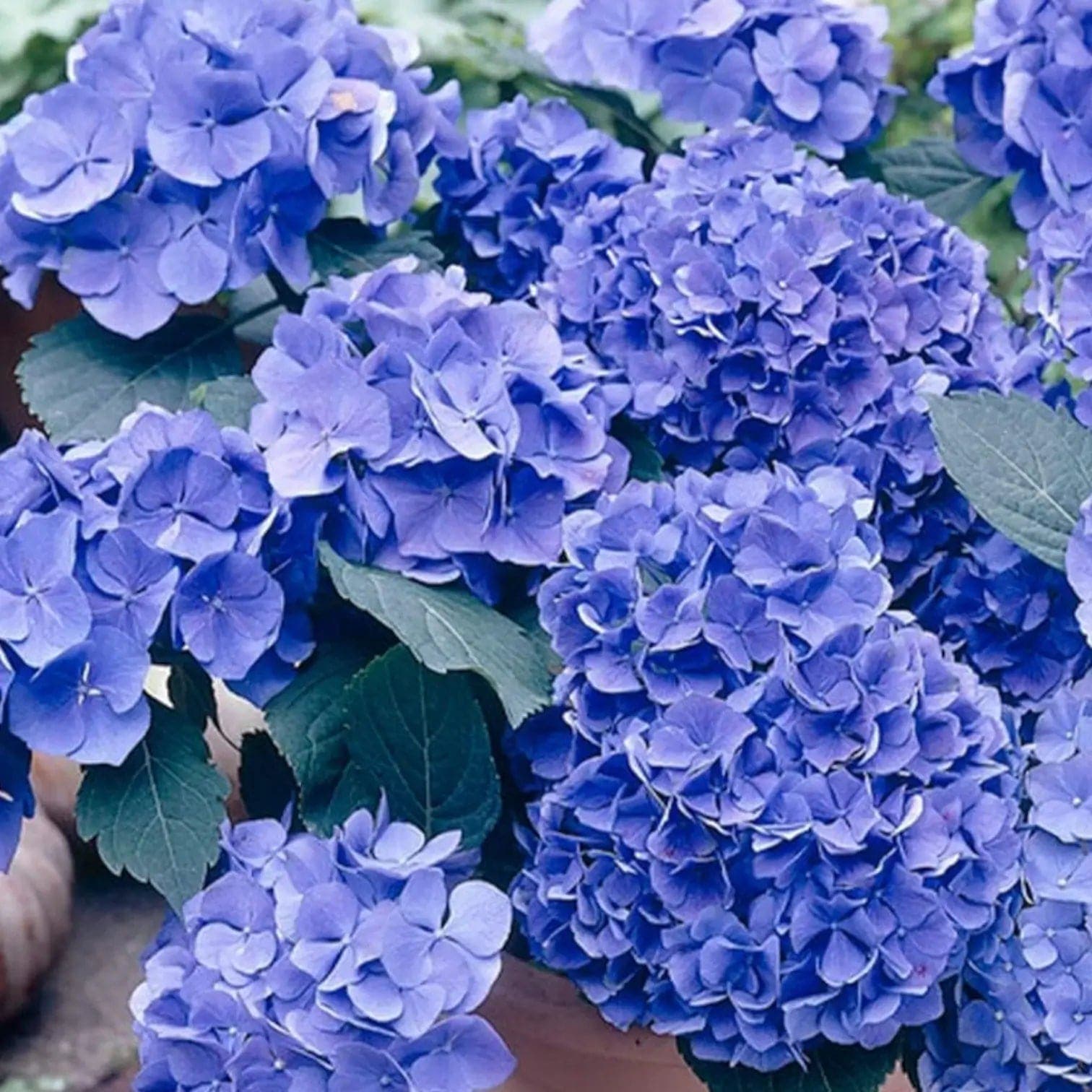
Hydrangea macrophylla 'Early Blue'
17,94 €
Livré chez vous par Jardiplants, un service Renoday.
Description
Hydrangea macrophylla 'Early Blue' - blue mophead hydrangea for long summer colour Hydrangea macrophylla 'Early Blue' is about summer flower heads and a full, leafy shrub shape. Big-leaf hydrangeas react quickly to dry soil: leaves flag and buds can abort in hot spells. Shelter from hot afternoon sun keeps the plant steadier through summer weather. Pruning is usually light: remove dead stems and tidy after flowering so next season’s buds are not sacrificed. If flowering is poor, the common causes are frost damage to buds, hard pruning, or drought in the previous summer. What it looks like through the season Spring: fresh leaves and visible buds on established stems. Summer: large mophead flower clusters, often from June into September depending on weather. Autumn: flowers age and colour softens; foliage may colour lightly before leaf drop. Winter: deciduous framework; flower buds for next year may already be set on older stems. Blue colour: what influences it Blue mopheads are influenced by soil chemistry and aluminium availability. In more alkaline conditions, the same plant can shift towards violet or pink. This is normal and not a health issue. Acidic soils tend to hold bluer tones more easily. Alkaline soils (and chalky ground in particular) often push flowers towards pink/purple. Containers make colour control easier because the growing medium and water source can be managed. Light and exposure Hydrangea macrophylla 'Early Blue' holds its best leaf quality with bright light and relief from intense afternoon sun. Hot, reflected sun and drying wind are what scorch leaves and shorten the display. Morning sun with afternoon shade is a reliable match. Light shade is often kinder during heatwaves. Frost pockets with wet soil are where stems and buds suffer first. Soil and moisture Hydrangeas want a cool, evenly moist root zone. The ideal soil holds moisture without becoming stagnant - structure and mulch matter. Chasing exact numbers plays a smaller role once the basics are in place. Soil: humus-rich, moisture-retentive, and well-drained. Moisture: steady watering during establishment and flowering. Repeated dry-outs often lead to poor vigour the following season. Mulch: helps stabilise moisture and root temperature; keep mulch away from stems. Planting and establishment Plant into a wide, improved area. Water in thoroughly and keep the first season steady so roots spread beyond the original root ball. Deep watering in dry spells supports root expansion and reduces stress scorch. Planting into chalky, fast-drying soil without improving structure first often appears as poor vigour the following season. In pots, choose a large container and watch moisture closely - containers dry faster than beds. Pruning: keeping the flowering wood Most Hydrangea macrophylla flower on buds set on older stems. That means hard pruning in spring can remove flowers. Focus on tidy, selective pruning instead. Remove dead wood and weak stems in spring. After flowering, trim lightly only if shaping is needed. Cutting back into old wood unless a full renovation is intended (and accept fewer flowers that year) often appears as poor vigour the following season. Common problems and quick diagnosis Few flowers: buds lost to frost or spring pruning - choose a sheltered site and prune minimally. Scorched leaves: heat + wind + dry roots - mulch and deep watering stabilise the plant. Colour shifting pink: soil/water is more alkaline - containers offer more control if deep blue is the target. With a cooler root zone, consistent moisture, and light pruning, Hydrangea macrophylla 'Early Blue' becomes a dependable summer shrub - big mopheads and a calm, leafy outline from early summer onwards. Bud protection and winter considerations Macrophylla hydrangeas carry next season’s flower buds on existing stems. That’s why late frosts and heavy spring pruning reduce flowering. Choose a sheltered position away from cold wind funnels and exposed frost pockets. Hard cutting in spring can trigger root stress and patchy growth. At that time of year, focus on dead wood and weak stems and keep the main framework intact. A mulch layer helps buffer root temperature swings (keep it off the stems). Keeping colour blue without turning it into a chemistry project Blue colour is influenced by soil conditions, but practical choices make the biggest difference. Chalky soil, keep moisture steady, and consider containers for more control is a common reason plants stall or fail. Chalky ground often pushes flowers towards pink/purple. In containers, the growing medium and water source are easier to manage. Focus on overall plant health first - strong growth supports fuller flowering and better flower head size. Stress from heat, drought, or tight soil often shows up in smaller or fewer blooms. Spent blooms and shaping Removing spent flower heads can tidy the plant and reduce weight on stems after rain. It also makes it easier to see which stems are carrying buds for next year. Cut spent heads back to the first strong pair of buds below the flower. Deep cutting into old wood unless renovation is intended often triggers root stress and patchy growth. If shaping is needed, do it right after flowering. In spring, heavy cutting can remove flower buds and slow the shrub down. Companion planting ideas Hydrangea macrophylla 'Early Blue' pairs well with plants that keep the root zone cool and the shrub line soft at the base. Ferns and hostas suit shadier, moisture-retentive sites. Heuchera and hardy geraniums suit brighter part shade with good moisture. Spring bulbs give early interest before hydrangea leaf-out. Pot-grown Hydrangea macrophylla 'Early Blue' In a container, the plant often stays smaller and fills out more gradually. In pots, water when the top 25-35% of the pot depth feels dry, then water thoroughly and let excess drain away. A generous container supports steadier blue mophead colour because moisture and root temperature fluctuate less sharply.