
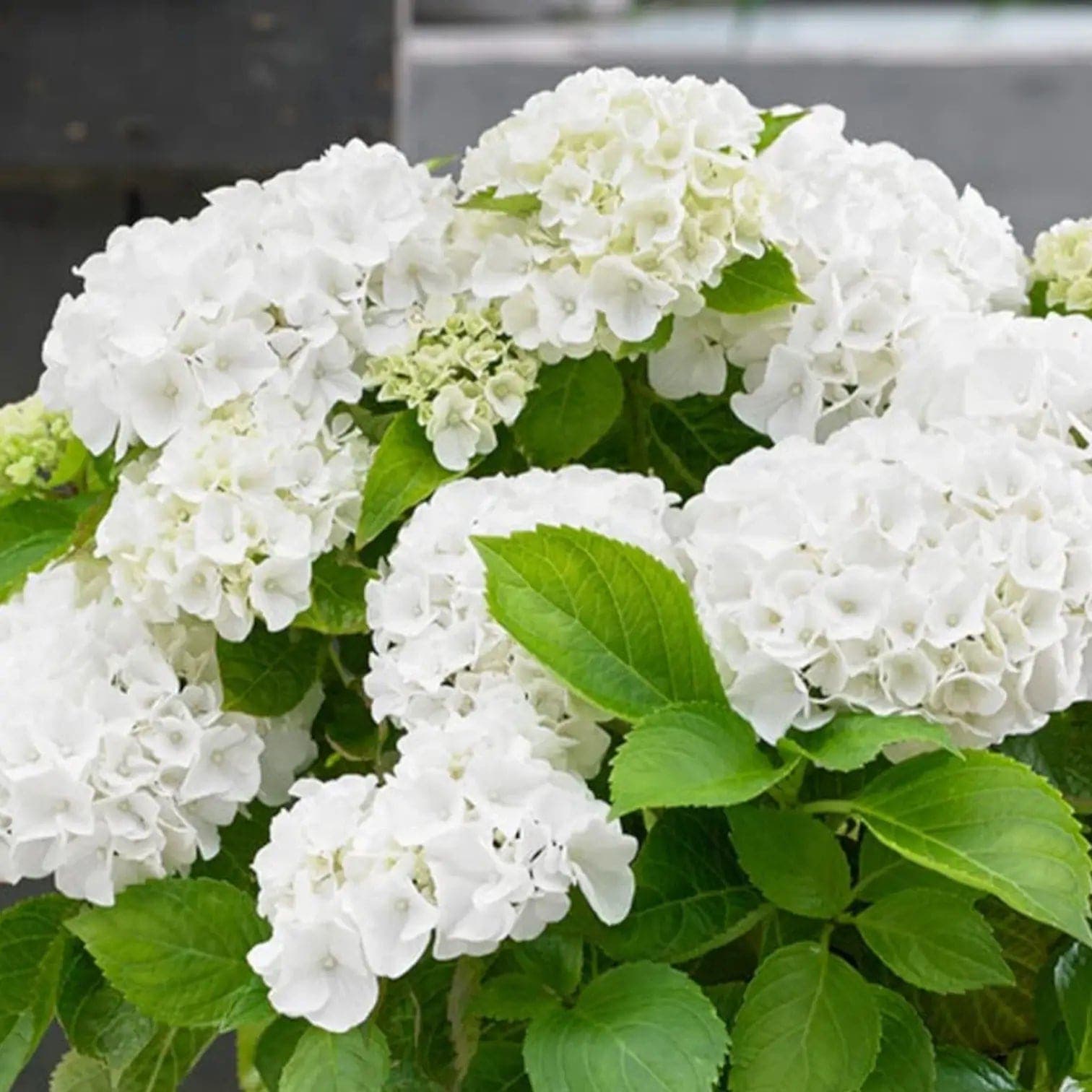
Hydrangea macrophylla 'Wudu White'
17,94 €
Livré chez vous par Jardiplants, un service Renoday.
Description
Hydrangea macrophylla 'Wudu White' - white mopheads that open green and finish crisp white Hydrangea macrophylla 'Wudu White' is about summer flower heads and a full, leafy shrub shape. Big-leaf hydrangeas react quickly to dry soil: leaves flag and buds can abort in hot spells. Shelter from hot afternoon sun keeps the plant steadier through summer weather. Pruning is usually light: remove dead stems and tidy after flowering so next season’s buds are not sacrificed. If flowering is poor, the common causes are frost damage to buds, hard pruning, or drought in the previous summer. Flowering season and colour notes Flowering is typically from early to late summer, with timing and duration shaped by temperature and moisture. The initial greenish cast is part of the cultivar’s seasonal detail; as flowers mature, the display becomes whiter. Opens: white with green-tinted petals/sepals. Matures: cleaner white, holding shape well. Ages: flowers soften in tone and can take on a greenish-white cast again as they mature. Light and exposure Hydrangea macrophylla 'Wudu White' performs best with bright light and some protection from hard afternoon sun. Hot sun, reflected heat, and drying wind are what scorch leaves and shorten the display. Morning sun with afternoon shade is a reliable match. Light shade is often kinder during heatwaves. Where winter cold sits and the ground stays wet, damage shows earliest. Soil and moisture White mopheads need no colour manipulation, but they rely on a steady root zone. Aim for humus-rich soil that stays evenly moist while draining freely - chalky ground and waterlogged winter soil are common sources of poor growth. Soil: moisture-retentive and well-drained, rich in organic matter. Moisture: steady through summer; drought stress quickly dulls leaves and shrinks blooms. Mulch: helps keep roots cool and moisture even; keep mulch off stems. Planting and establishment Plant into a wide, improved area and water in thoroughly. Establishment is mostly about root spread: consistent moisture in year one builds the root system that carries heavy flowering later. Deep watering in dry spells supports deeper rooting. Mulch to reduce evaporation and temperature swings. In containers, choose a large pot; container root zones swing faster than beds. Pruning: protect the flowering framework Most Hydrangea macrophylla set flower buds on older stems. Hard spring pruning removes the buds that carry the main display. Keep pruning selective and light. In spring: remove dead wood and weak, crowded stems. After flowering: trim lightly if shaping is needed. Hard renovation cuts are best saved for deliberate rejuvenation, with fewer flowers expected that year. Common problems and solutions Few flowers: buds removed by spring pruning or damaged by frost - prune minimally and choose a sheltered site. Leaf scorch: heat + wind + dry roots - mulch and deep watering stabilise the plant. Yellowing leaves: often linked to unsuitable soil, poor drainage or drought stress; improve soil structure and keep moisture steady. With steady moisture and careful pruning, Hydrangea macrophylla 'Wudu White' becomes a dependable white hydrangea: big mopheads, clean structure, and a long summer outline. Why flowers start greenish and finish whiter The initial green tint is part of the flower’s development. As the flower head matures, the display looks whiter; later in the season it can take on a greenish-white cast again as blooms age. Early: white with a green tint as flowers open. Mid-season: cleanest white display. Late season: softer tones as blooms age; heads can be left for structure or removed for tidiness. Keeping white blooms clean in summer weather White hydrangeas show marks quickly: muddy splash, scorch, and battered blooms show clearly. On darker flowers, those marks are less obvious; on white blooms, placement matters more. Small choices in placement help. Shelter from heavy wind reduces torn petals and browned edges. Mulch reduces splash-back in rain and keeps roots cooler. Consistent moisture prevents stress scorch that makes whites look tired fast. Container growing Hydrangea macrophylla 'Wudu White' does well in large containers where moisture can be managed and the shrub can be positioned for the best light. Containers also make it easier to keep the plant out of frost pockets in spring. Choose a large, stable pot and keep the root zone evenly moist. Standing water under a pot is damaging because oxygen disappears from the root zone. In winter, keep pots out of standing water and away from cold wind. Aftercare: deadheading and light shaping Deadheading is optional. Removing heads tidies the plant and reduces weight on stems after rain; leaving some heads can add late-season structure. If removing, cut to the first strong pair of buds below the head. Keep pruning light - most buds sit on existing stems. Remove weak, crowded stems to improve airflow through the shrub. Spring bud care If a macrophylla hydrangea has leaves but few flowers, buds were usually removed or damaged. Keeping buds intact is the priority. Feeding supports growth once conditions are right, but it cannot replace bud protection and steady moisture. If the plant wilts in heat, water deeply and then let the surface dry before the next soak. Spring cuts should be limited to clearly dead stems, since removing living framework can reduce flowering. Choose a sheltered site so late frosts are less likely to hit exposed buds. After harsh winters, wait for growth to show which stems are alive before removing anything. Container scale and watering for Hydrangea macrophylla 'Wudu White' When grown in a pot, size stays more contained than it would in open ground. In pots, water when the top 25-35% of the pot depth feels dry, then water thoroughly and let the container drain. Large pots help the white mophead flowers hold longer through warm spells.