
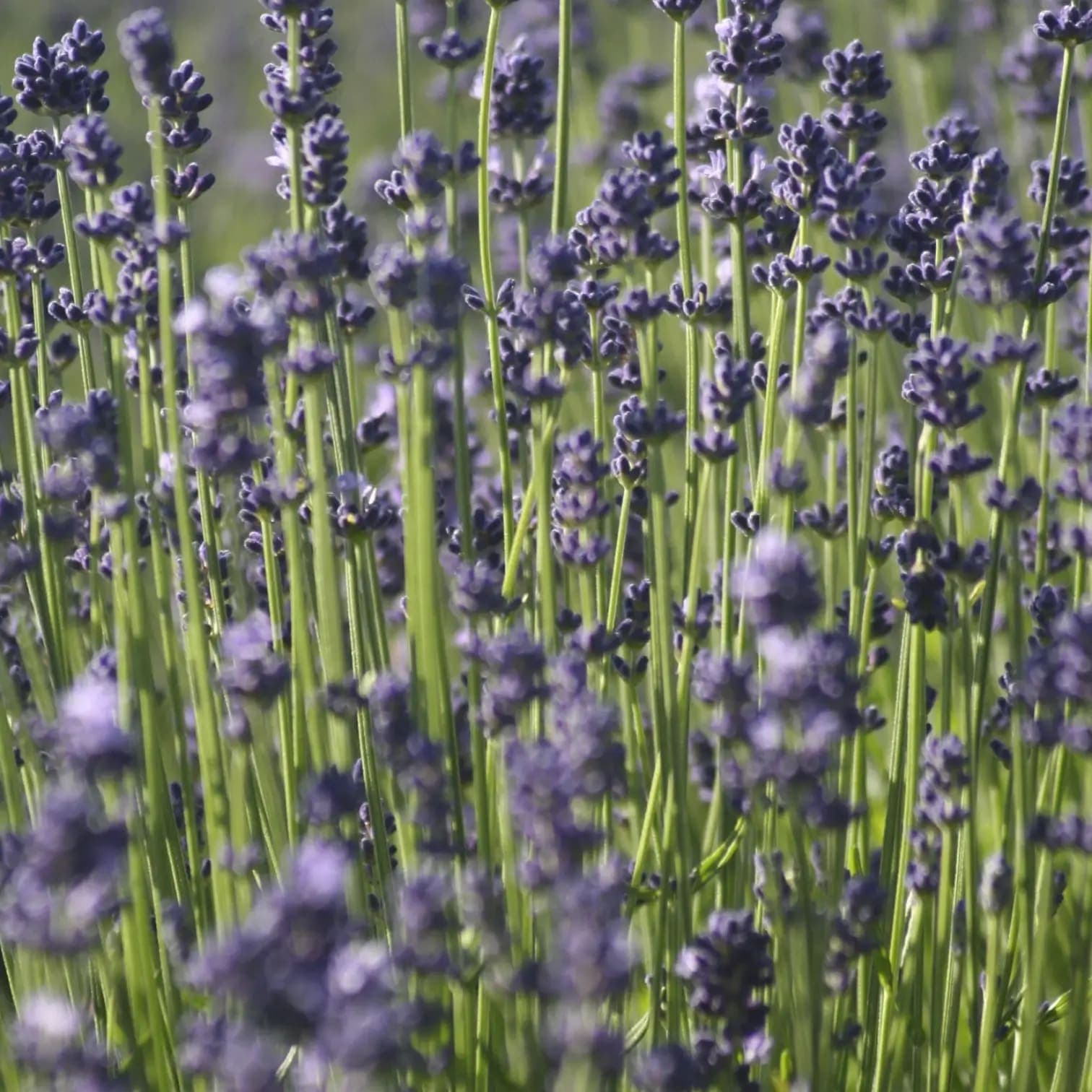
Lavandula angustifolia
13,80 €
Livré chez vous par Jardiplants, un service Renoday.
Description
Classic English lavender for repeated sunny planting Lavandula angustifolia is the classic English lavender: narrow, aromatic foliage on a woody evergreen framework, topped with purple flower spikes in summer. It reads as both plant and structure, which is why it works so well in repeated planting and low lines along paths. Supplied as a 6-plant set, it is easy to create a consistent rhythm rather than a single isolated clump. The foliage stays visually present after flowering, so the planting still looks intentional once the flower stems are trimmed away. Growth habit of Lavandula angustifolia New shoots appear in spring from the woody base, filling out into a rounded mound. Flower stems rise above the foliage in summer, then the plant settles back into evergreen texture through autumn and winter. A mature plant often reaches around 45-60 cm tall with a spread around 60 cm, shaped by pruning and soil texture. In containers, ultimate size is usually more controlled, and the mound can stay tighter for longer. Direct light and sharp drainage Direct light supports firm growth, good scent, and strong flower stems. Drainage is the long-term requirement: lavender prefers a root zone that wets fully, then dries with air moving through it. Chalk, sandy loam, and gritty garden soils are suitable, and lavender can cope across acid to alkaline conditions when drainage is good. Where soil stays wet, improve structure with grit and avoid thick organic mulch at the crown. Watering English lavender in pots Choose a stable pot with clear drainage and a gritty outdoor mix. Water deeply when needed, then let the root zone dry back so it regains air. Checking the top third of the pot is usually enough: if it is dry and the container feels lighter, water thoroughly and allow excess to drain away. In prolonged wet weather, protection from constant rain can be the difference between a long-lived plant and a short-lived one. Yearly pruning for lasting shape Light annual shaping keeps the mound dense and prevents a woody, split outline. Keep cuts in leafy growth where buds are present, so the plant can respond evenly. After flowering: remove spent stems and lightly round the green growth. Spring tidy: clip winter damage once new shoots begin to move. Cut depth: avoid cutting into bare old wood without leafy points. Nutrition: keep feeding modest; firm, compact growth is the aim. English lavender issue signals The most common warning sign is a softening centre, especially in pots after repeated rain. This usually points to poor drainage or a mix that stays wet for too long. Weak flowering tends to be linked to shade, overly rich soil, or pruning that was done too late. If the mound becomes open, earlier shaping and leaner conditions usually restore density. Using a 6-plant set outdoors Six plants allow clear repetition: a low hedge line, a run beside paving, or grouped pots that read as one feature. Lavandula angustifolia also combines easily with thyme, rosemary, salvias, and fine grasses where the shared preference for sun and free drainage keeps the planting coherent.