
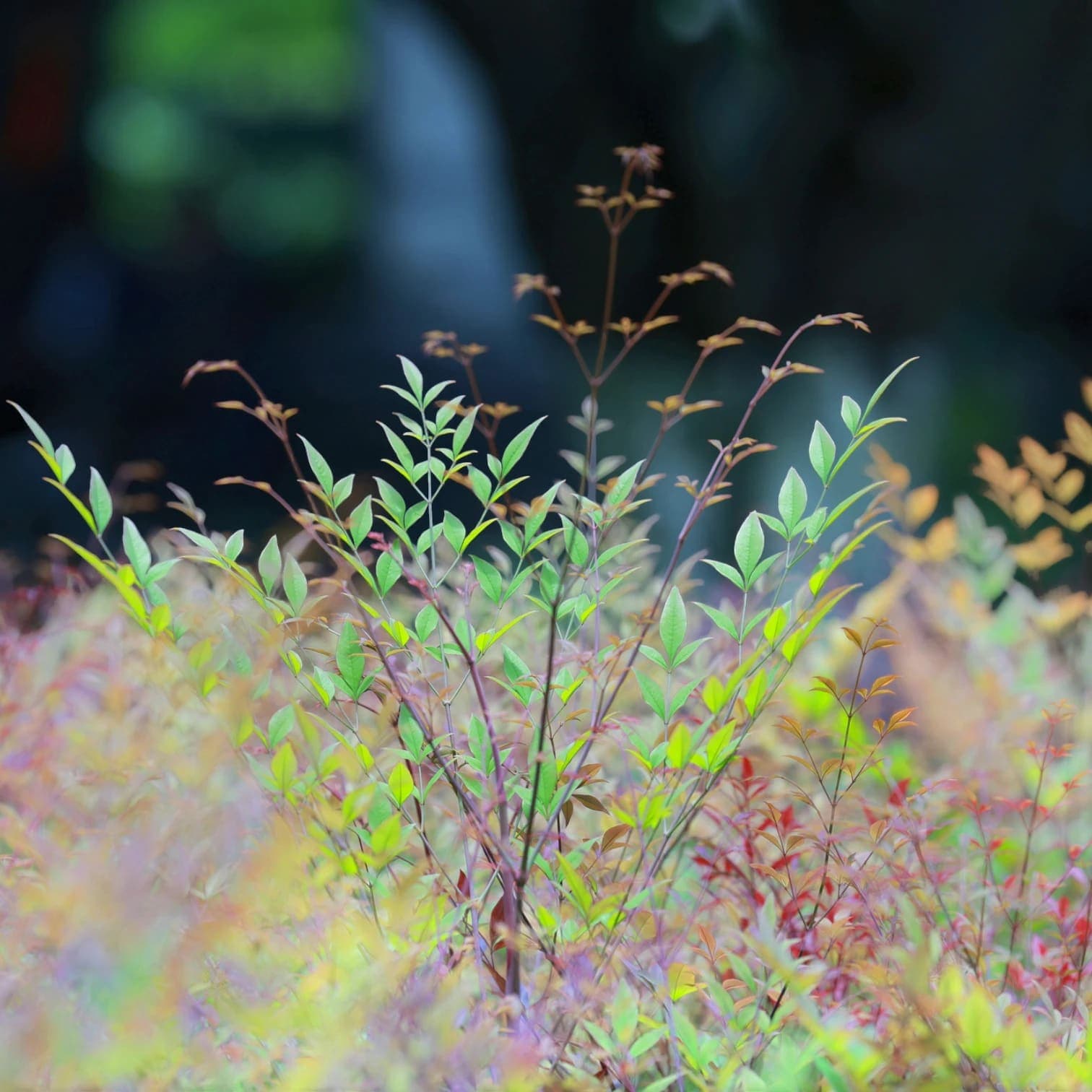
Nandina domestica 'Obsessed'
35,88 €
Livré chez vous par Jardiplants, un service Renoday.
Description
Nandina domestica 'Obsessed' for compact colour in pots and small borders Nandina domestica 'Obsessed' is a compact selection of heavenly bamboo grown for foliage movement through the year. New growth emerges in warm red tones, the summer plant settles into a finer green texture, and cool weather can bring red colour back through young leaves and older growth. The plant stays naturally upright and cane-based, so it gives a small shrub outline with a light, divided leaf texture. It is useful where a border or patio needs year-round planting, but where a large evergreen would soon crowd the space. Mature size is best treated as compact shrub scale. In open ground, expect roughly 50 to 70 cm in height and about 50 to 60 cm in spread when the plant is settled. Containers usually keep plants smaller and slower than open ground, especially when the pot volume is limited or the root zone dries quickly in summer. That compactness is part of the appeal: Nandina domestica 'Obsessed' brings colour and structure and needs only light cutting to stay in proportion. How Nandina domestica 'Obsessed' grows through the year Growth comes from upright canes and keeps a loose, natural framework. Each cane carries fine, divided leaves that give the shrub a light outline even though the plant can look dense from a distance. Spring growth is the brightest moment, with red young leaves held near the shoot tips. Summer is greener and calmer, then cool nights can bring renewed red colour. Small white flowers may appear in midsummer, followed by berries in some seasons, although foliage colour remains the main reason to grow this cultivar. The plant can be evergreen in milder gardens and semi-evergreen in colder winters. A cold spell may mark leaves or thin the plant temporarily, especially in exposed containers. Fresh shoots normally rebuild the outline once temperatures lift and roots are active again. A sheltered site reduces winter leaf damage and keeps the plant looking cleaner for longer. Site choice for Nandina domestica 'Obsessed' Choose full sun to light shade with shelter from drying wind. Full sun gives the clearest red colouring, while light shade can suit warm patios or bright courtyards where reflected heat builds quickly. Shelter matters as much as light. Cold wind and dry summer gusts can mark leaflet edges, slow shoot growth and leave the plant looking tired before the season finishes. Best light: full sun or light shade. Useful shelter: a wall, fence, mixed shrub planting or courtyard edge. Garden fit: front borders, patio pots, small entrances and low evergreen groupings. Soil, moisture and root conditions Nandina domestica 'Obsessed' prefers moderately fertile soil that stays slightly moisture-retentive while still draining freely. Heavy soil can work when it has been opened with organic matter and never sits cold and saturated around the roots. Very dry, shallow soil can also slow the plant, especially during the first summer after planting. Water steadily during establishment, then move to condition-based watering. In the ground, check soil moisture during warm dry spells and water deeply when the root zone is drying. In pots, water when about 30 to 40% of the pot depth has dried, then let excess water drain away fully. This keeps the roots supplied with moisture while reducing the cold, wet root conditions that cause weak growth in winter. Planting and container setup Plant with the rootball level with the surrounding soil. Firm gently and water thoroughly after planting so soil settles around the roots. A light mulch of composted bark or garden compost helps buffer moisture swings, but keep the crown clear so water can move away from the base. For containers, choose a pot with drainage holes and enough volume to buffer summer drying. A small ornamental pot can be used for a young plant, but a larger container gives steadier moisture, more root space and better winter protection. Raise the pot slightly if drainage holes sit flat against paving. Pruning Nandina domestica 'Obsessed' Pruning is simple. This shrub looks best when the natural cane habit is kept. In mid to late spring, remove damaged tips and take out a few older canes at the base if the plant becomes crowded. That renewal method lets younger red shoots replace older stems and keeps light moving through the plant. Clipping across the outside gives a dense shell and can spoil the fine leaf texture. Common growing patterns to watch Leaf edge marking: often linked with wind, sudden dry-out or reflected heat. Loose green growth: usually a low-light or nutrient-rich, soft-growth response. Poor container performance: check drainage, pot size and the winter position first. Sparse spring regrowth: remove damaged cane tips once new buds show clearly. Hardiness and winter handling Nandina domestica 'Obsessed' is best treated as hardy with shelter. In colder inland gardens, a position away from exposed wind is important. Container plants need extra thought because roots in pots experience stronger temperature swings than roots in garden soil. Move pots to a sheltered spot for winter or group them near a wall where the rootball stays steadier through freeze-thaw cycles. Safety and use in planted schemes Plant parts and berries are ornamental only and harmful if eaten. Use Nandina domestica 'Obsessed' where its fine texture and colour can be seen close up: beside a door, along a terrace, at the front of a shrub border or as a calm evergreen partner for grasses and compact perennials. Buy Nandina domestica 'Obsessed' for a small, colourful shrub that holds a tidy shape with modest seasonal care.