
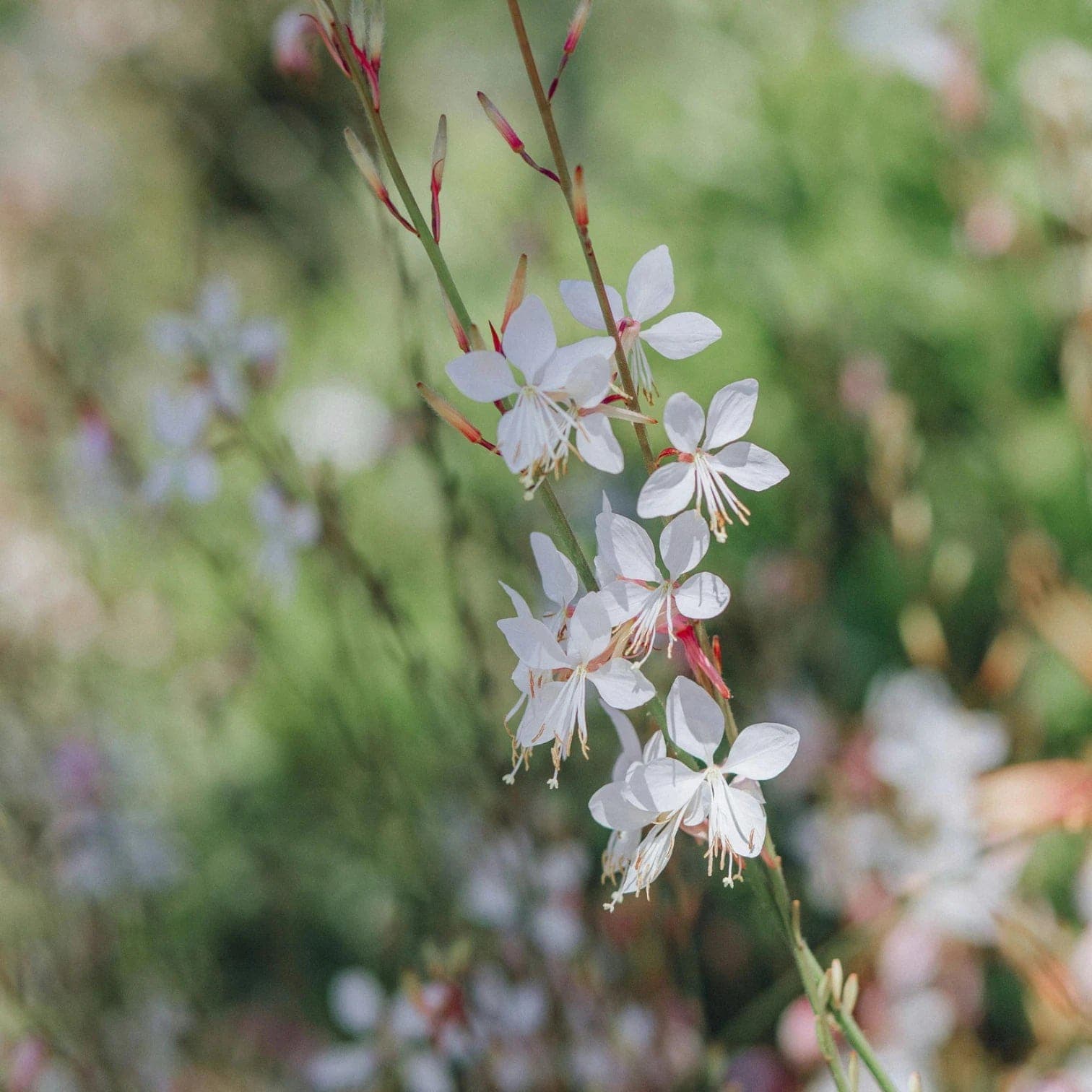
Oenothera lindheimeri
16,56 €
Livré chez vous par Jardiplants, un service Renoday.
Description
Oenothera lindheimeri: the airy perennial that carries summer Oenothera lindheimeri is widely known in gardens as “gaura”. The accepted botanical name has shifted, but the plant itself is the same: a long-flowering perennial from open, sunlit landscapes of the southern USA and Mexico that brings height, movement, and a light, open texture to borders. It produces many small blooms along slender stems, opening over weeks. In a mixed border this creates a relaxed, meadow-like feel even in a small space, because the plant occupies height without becoming visually heavy. Structure, height, and the season it creates In open ground, Oenothera lindheimeri typically reaches about 100-150 cm in height and spreads 50-100 cm as it branches. Narrow leaves sit on upright, wiry stems, and flowers appear from summer well into autumn when conditions are warm. The overall look changes gently through the year: fresh growth builds a loose mound in spring, stems extend and branch through early summer, and then flowering takes over for the second half of the season. After frost, the top growth dies back and the plant rests until spring. Light and exposure: sun with breathing space Full sun brings the strongest flowering and a sturdier habit, especially where the soil drains well. Light shade also works, particularly in hotter gardens where afternoon sun can be intense. In very exposed sites, the stems can lean, which is part of the plant’s natural movement. In borders, that movement looks best when the plant grows through supportive neighbours such as ornamental grasses or other upright perennials. Soil and moisture: fertile, drained, and steady Think “moist but well-drained”: soil that holds some moisture for steady growth, yet drains freely after rain. Loam with added compost fits well, and sandy beds benefit from a little organic matter to buffer moisture. The plant tolerates a wide pH range (acid, neutral, or alkaline) and can grow in various textures, including chalky or clay-based soils when structure and drainage are improved. If your ground is heavy in winter, build drainage into the planting area. A slightly raised planting mound and a gritty amendment keep air moving around the crown, which is the key to longevity in cool, wet winters. Planting steps for strong establishment Timing: Spring planting gives the longest establishment window; early autumn also works in mild regions. Spacing: Give each plant room to branch; around 80-100 cm suits most borders. Planting depth: Set the crown level with the surrounding soil and firm in gently. Watering in: Water thoroughly at planting and keep moisture even through the first growing season. Mulch: A light organic mulch supports steady moisture and reduces competition from weeds. Cut-back and mid-season tidy Oenothera lindheimeri responds well to a tidy-up. If flowering slows mid-season, a trim of the stems by about half can encourage fresh branching and another wave of bloom. In spring, cut the plant back hard before new growth starts, removing last year’s stems to make space for fresh shoots. Growing Oenothera lindheimeri in pots This plant works surprisingly well in containers when the pot is large enough and drainage is excellent. In containers it stays shorter and slower than in open soil, which suits terraces and balconies where a slightly reduced footprint is useful. Container choice: Use a pot with generous drainage holes and enough volume for root run (larger pots dry more evenly). Mix: A gritty, free-draining compost with mineral material supports a healthy crown through winter. Watering: Water deeply, then let the upper layer dry slightly before the next soak; steady moisture during active growth keeps flowering strong. Winter reality: Cold plus standing moisture is the main risk in pots. Elevate the pot, keep drainage holes clear, and shelter from prolonged winter rain. Troubleshooting in real gardens Leaning stems: Common in rich soil or windy spots; planting among upright neighbours or using a discreet ring support early in the season keeps the plant in place. Short-lived clumps: Most often linked to winter-wet soil. Improving drainage and keeping the crown airy typically improves survival. Patchy flowering: Often follows a flush of growth; a mid-season trim can reset the plant into fresh buds and flowers. Where it fits Oenothera lindheimeri suits sunny borders, gravel gardens, prairie-style planting, and mixed perennial beds where you want height with a light touch. It pairs naturally with fine grasses, Echinacea-type summer perennials, salvias, and any planting where movement matters as much as colour. Add Oenothera lindheimeri to your planting plan for long, airy flowering and a border that stays lively deep into the season. Native habitat cues In the wild, this species grows in open, sunny places with plenty of air movement-often in sandy or rocky ground where water drains quickly after rain. That background explains its garden preferences: sunshine, a crown that stays airy, and soil that never sits heavy for long. In mixed borders, it also appreciates a little room around the base so new shoots can rise cleanly each spring. A simple feeding approach Oenothera lindheimeri flowers for months, but it rarely needs strong feeding. A spring top-dress of compost is usually enough on normal garden soil. In very sandy beds, a second light feed in early summer can support repeated flowering, especially if the plant is competing with vigorous neighbours. Good companions Plant it where neighbouring perennials help frame the airy stems without swallowing the base. Ornamental grasses, salvias, echinacea-type daisies, and upright veronicas all make natural partners. For a calmer, greener look, pair it with soft foliage plants such as Alchemilla or low geraniums at the front edge.