
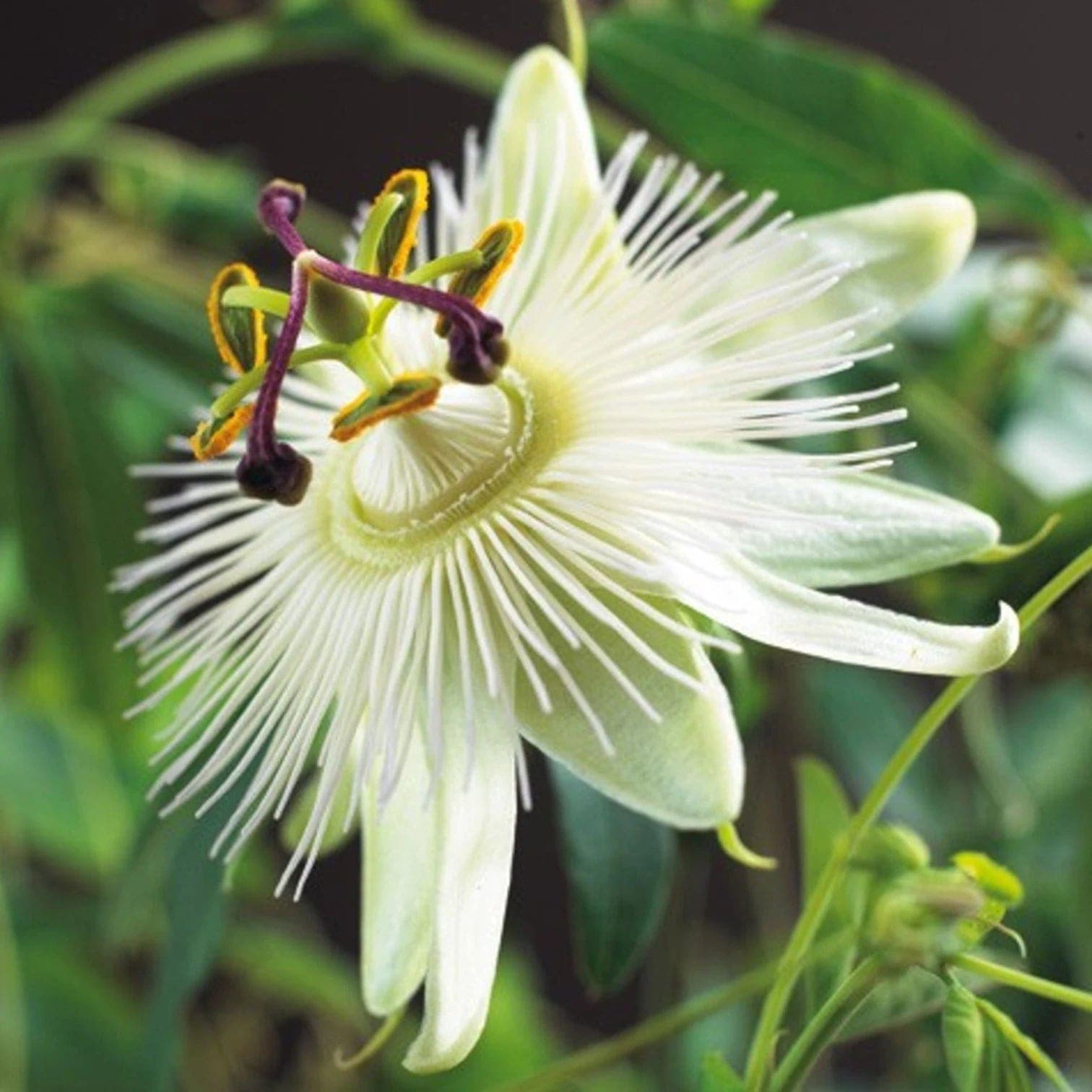
Passiflora caerulea 'Constance Elliott'
16,56 €
Livré chez vous par Jardiplants, un service Renoday.
Description
Passiflora caerulea 'Constance Elliott' for white passion flowers A vigorous white passion flower Passiflora caerulea 'Constance Elliott' is a white-flowered form of blue passion flower, grown for its intricate summer blooms and fast climbing habit. The flowers are the main feature: white petals and sepals surround the central passion flower structure, giving a detailed, exotic look on a hardy garden climber. The plant climbs by tendrils, so it needs a trellis, wires, pergola or open support to grip. This cultivar works best where its flowers can be viewed close up. A sunny seating area, warm wall, arch or pergola edge lets the blooms become part of the summer garden at a comfortable viewing height. In mild areas, the plant may stay evergreen. In colder gardens, it can behave more semi-evergreen and lose more leaves in winter. Mature size and support Passiflora caerulea 'Constance Elliott' is vigorous and can reach 8-12 m high with a spread around 250-400 cm in favourable conditions. It is usually managed by pruning and training to fit the available structure. The support should be in place from planting, because new shoots search quickly for something to grip. Growth in containers is usually smaller and less vigorous than planting into soil. A pot-grown passion flower needs a large container, a warm position and a support fixed firmly to the pot or a nearby wall. Container roots are more exposed to cold, so winter protection around the pot is useful in colder areas. The plant should also be easy to water, because sheltered walls often keep rain away from the compost. Light, soil and shelter Full sun gives the best flowering, though partial shade is tolerated in warm sites. Shelter matters because cold winds can damage soft growth and reduce flowering strength. A south- or west-facing wall is often ideal, especially where the wall stores heat and gives the plant a warmer microclimate. Soil should be moist but well-drained. Chalk, loam and sandy soils can suit the plant when moisture is steady and drainage remains open. In pots, water when the upper 25-35% of pot depth has dried, then soak thoroughly. During hot weather, a fast-growing passion flower can use water quickly, especially when trained against a warm wall. Flowering, fruit and seasonal growth Flowers usually appear from summer into autumn, with the best display in warm seasons. Orange fruits may follow in favourable conditions. These fruits are ornamental and can add late-season colour, but this plant is grown mainly for its flowers and coverage. New shoots are flexible when young, so tie or guide them early before they wander through neighbouring plants. The vine can produce long stems in a single season. Guide the strongest shoots across the support and remove crowded growth in spring. Once the framework is established, trimming flowered shoots after blooming helps keep the plant within bounds and encourages a workable shape for the next season. Using it in the garden Passiflora caerulea 'Constance Elliott' suits pergolas, arches, trellis panels and warm wall wires. It gives a greener, softer effect than a woody wall shrub because the leaves and tendrils create layered coverage. Place it where the support can handle a vigorous climber and where pruning access is possible. At the base, use low planting that leaves room for watering and inspection. Mulch can help maintain moisture, but keep the crown visible. In a mixed climber planting, allow enough space for each plant to receive light and air. A passion flower trained too densely through other climbers becomes harder to prune and flower quality can fall. Cold care and maintenance In colder winters, top growth may be marked even when the root system survives. Wait until spring growth is visible before deciding how far to cut back. Remove dead or crowded stems, then train fresh shoots into the support. In containers, move the pot into a sheltered spot or wrap the root zone during harsher spells. Training and winter behaviour Passiflora caerulea 'Constance Elliott' grows quickly once warm weather arrives, so guide young shoots early while they are flexible. Tendrils can grip a trellis or open wire frame, but the main stems still benefit from occasional tying so the plant spreads evenly across its support. A sheltered wall often gives the longest flowering season because the plant receives reflected warmth and protection from cold wind. In spring, remove dead, tangled or frost-marked stems once fresh growth is visible. Trim flowered shoots to keep the plant inside its allotted space and direct new stems along the support. In colder gardens, winter leaf loss is normal and the plant may restart from older stems or the lower framework. For container growing, use a large pot with a strong frame, steady summer moisture and winter protection around the root ball. Check water by the upper 25-35% of pot depth and water thoroughly when that layer has dried. Containers keep plants smaller and slower than open ground, but the vine still needs enough root volume to support rapid summer growth. Seasonal care is straightforward when the support, warmth and drainage are right. Water deeply in dry periods, tie in new shoots while flexible, and keep spring pruning calm and selective. With a warm wall and enough room, Passiflora caerulea 'Constance Elliott' gives a long season of white flowers and lush coverage.