
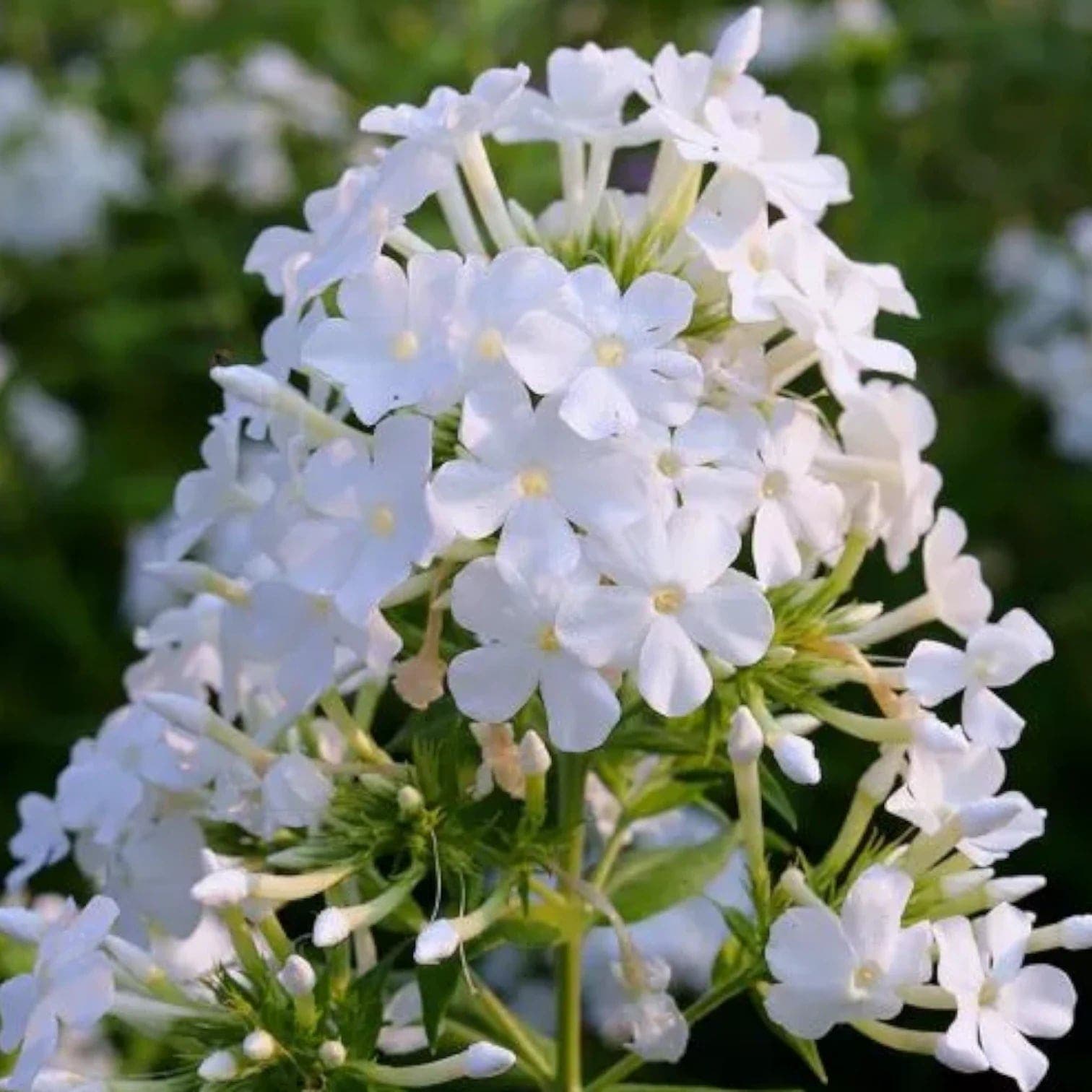
Phlox paniculata 'David'
13,80 €
Livré chez vous par Jardiplants, un service Renoday.
Description
Phlox paniculata 'David': fragrant white garden phlox for summer borders Phlox paniculata 'David' is a tall, upright garden phlox with fragrant white flower heads held above leafy green stems. It brings height and scent to summer borders, cottage-style perennial beds and cut-flower planting. The white flowers are especially useful near purple, blue, silver and deep green planting, where they add clarity during the busiest part of the growing season. This set of 3 gives enough plants to form a small drift, repeat a white note through a border, or fill a generous container with vertical summer growth. Garden phlox is a herbaceous perennial, so the top growth dies back at the end of the season and fresh shoots return from the crown in spring. Phlox paniculata 'David' is known for a strong white display and good garden performance when moisture, airflow and soil structure are right. It suits gardeners who want a flowering perennial with a classic border feel, fragrance and a clear midsummer focus. What Phlox paniculata 'David' adds to planting The plant forms a bushy clump with upright stems and narrow green leaves. Flower clusters open from mid to late summer, usually July into September, depending on weather and site. The blooms are held in rounded panicles at the top of the stems, giving a clean vertical outline. The scent is part of the appeal, especially near seating areas, paths and cutting beds where the flowers are close enough to enjoy. Flower colour: Clear white, easy to combine with cool or soft planting schemes. Habit: Upright clump with leafy stems and terminal flower heads. Season: Summer into early autumn in suitable weather. Use: Border height, cottage planting, cut flowers and scented perennial groups. Light, soil and airflow for Phlox paniculata 'David' Phlox paniculata 'David' grows in full sun or partial shade. Full sun supports generous flowering, while light shade can help in hotter gardens where soil dries quickly. The important point is balance: enough light for flower production, enough moisture for steady growth, and enough air movement around the stems. Airflow matters because garden phlox foliage can mark when leaves remain damp and crowded for long periods. Use fertile, moisture-retentive and well-drained soil. Clay, chalk and loam can all support this plant when the structure allows roots to breathe. Add compost or well-rotted organic matter before planting to improve moisture holding and soil life. Keep the root zone evenly moist through warm spells, especially during bud formation and flowering. A dry root run can shorten the display and weaken the foliage. Planting a set of 3 Phlox paniculata 'David' Use the 3 plants as a loose triangle for a natural clump effect, or run them through a border as repeated white accents. Ultimate height can reach 100 to 150 cm, with an eventual spread up to about 100 cm in open ground. Spacing around 100 cm gives mature plants room to broaden and helps air move between stems. In smaller displays, the plants can start closer while young, then be lifted and divided once clumps fill their space. Plant at the same depth as the nursery pot, firm gently and water thoroughly. A mulch after planting helps keep moisture steady, but leave the crown clear. During the first season, water deeply in dry periods so moisture reaches the root zone. Surface dampness alone gives a false signal; deep moisture is what supports stems, buds and flowers. Container growing and watering cues Phlox paniculata 'David' can be grown in a large container, particularly where a summer display is wanted near a sunny seating area. Choose a deep pot with drainage holes and use a fertile, peat-free outdoor mix with added structure. Container-grown plants tend to mature at a smaller scale than those in the ground. They also dry faster in warm weather, so watering needs closer checking through warm weather. Check moisture by testing the upper 30 to 40% of pot depth; water deeply when that layer has dried and the pot feels lighter. In hot spells, a large container may need regular checking because tall flowering stems use water quickly. Feed lightly during active growth to support new shoots and flower production, then let the plant slow naturally as autumn arrives. Seasonal care for Phlox paniculata 'David' Pinching young shoots in late spring can create a bushier plant with more flowering stems, although it can shift flowering slightly later. Deadhead faded clusters to keep the plant tidy and encourage further bloom where conditions allow. At the end of the season, cut stems down to the base in late autumn and clear old leaves from around the crown. This keeps the planting clean and gives fresh shoots an open start in spring. Established clumps can be divided in spring or autumn when growth becomes crowded. Replant the strongest sections into refreshed soil and water them in well. Division keeps flower quality strong and gives the plant renewed root space. In a mixed border, pair Phlox paniculata 'David' with grasses, salvia, echinacea, sedum, hardy geraniums or late summer daisies for a layered display. Problem patterns to watch on Phlox paniculata 'David' Short flowering: Usually linked to dry soil during bud development or heat stress in a pot. Leaf spotting: Often increases where air movement is low and foliage stays wet. Stem lean: Can happen in low light or very rich soil; open sun and sensible feeding help stems stay firmer. Small flowers: Often improves after feeding, watering and division of congested clumps. Phlox paniculata 'David' is a strong choice for white summer flowers with fragrance and height. Plant this set of 3 where the roots can stay evenly moist, give each clump room, and the flowers will become a clean midsummer anchor in the border.