
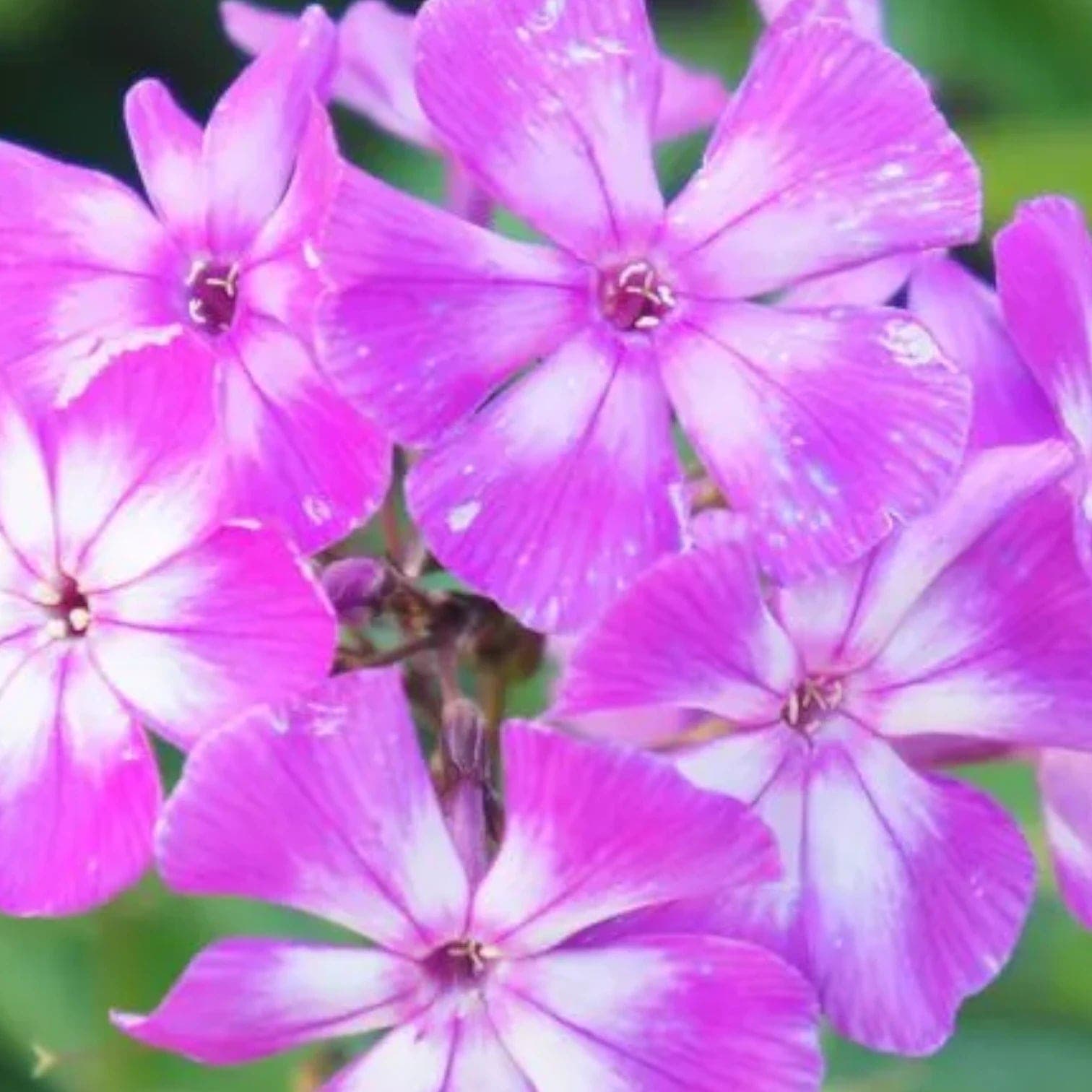
Phlox paniculata 'Laura'
13,80 €
Livré chez vous par Jardiplants, un service Renoday.
Description
Phlox paniculata 'Laura': purple summer phlox with a pale eye Phlox paniculata 'Laura' is a garden phlox with upright stems, fragrant purple flowers and a lighter eye at the centre of each bloom. It has the classic summer phlox shape: leafy growth rising from a herbaceous crown, then rounded flower clusters carried above the foliage. The colour is rich but still easy to place with blues, silvers, white flowers, ornamental grasses and soft pink perennials. This set of 3 gives enough plants for a compact drift, a repeated colour note, or a strong container display near a seating area. The plant works well in perennial borders where summer height and scent are needed. It brings vertical colour at a point in the season when many spring plants have finished and late autumn plants are still building. Because it is herbaceous, old stems are removed after the growing season and fresh growth returns from the base in spring. Flower and foliage detail on Phlox paniculata 'Laura' The foliage is green, simple and held along upright stems. Flower clusters form at the stem tips, opening in summer and often carrying on into early autumn when moisture remains steady. The purple petals and pale centre give each cluster definition from close up, while the overall plant still has a soft cottage-garden feel. The fragrance is gentle and works best where the plant is placed near a path, patio edge or cutting bed. Colour: Purple flowers with a pale eye for clear detail. Habit: Upright clump, usually around 70 to 90 cm tall. Season: Main flowering from July into September. Use: Summer borders, scented planting, cut stems and large pots. Where Phlox paniculata 'Laura' settles best Choose full sun or partial shade. A sunny site supports generous flowering, while partial shade can help flowers last in hotter gardens. Plant it in fertile soil that holds steady moisture and drains freely. Phlox paniculata 'Laura' relies on steady root-zone moisture for leafy stems and flower clusters, with enough oxygen around the crown for healthy growth. Compost worked through the planting area helps both moisture holding and soil structure. Airflow is important. Give each plant enough space so stems can dry after rain and leaves have room around them. This is especially useful in humid summer weather, when garden phlox foliage can mark if stems are packed tightly. A site with morning sun and open movement of air is often a good balance for healthy leaves and reliable flowering. Planting the 3 Phlox paniculata 'Laura' plants Water each pot before planting and place plants at the same depth as they were growing in the nursery pot. Firm the soil gently around the roots, then water deeply. A spacing of about 60 cm suits this cultivar and gives a planted group that looks full once established. In a border, set the 3 plants in a staggered group among grasses, geraniums, salvias, echinacea or late summer daisies. In a pot, use one plant as the central flowering feature in a deep container, or group all 3 in a very broad planter. During the first season, water whenever the root zone begins to dry. Once established in open ground, Phlox paniculata 'Laura' still appreciates deep watering in warm dry periods, especially while buds are forming. A surface sprinkle rarely reaches the active roots, so water slowly and thoroughly when conditions are dry. Container notes and watering rhythm Phlox paniculata 'Laura' can grow well in a large pot with drainage holes and a fertile, peat-free outdoor mix. When grown in a pot, size stays more contained than it would in open ground. They also put the whole root system within a limited volume of mix, so moisture can rise and fall quickly in hot weather. A deep pot gives generous root space and steadier moisture for summer flowering. In pots, test the upper 30 to 40% of pot depth and water thoroughly when that section feels dry and the container feels lighter. Let excess water drain away fully. A light feed during active growth helps support stems and flowering, especially where the same plant stays in a container for several seasons. Refresh the top layer of compost in spring and divide the clump when growth fills the pot tightly. Seasonal care for Phlox paniculata 'Laura' Pinching the growing tips in late spring can create a bushier plant with extra flowering stems. Deadhead faded flower clusters during summer to keep the plant tidy and encourage further buds when weather allows. In late autumn, cut stems down to the base and remove fallen leaves from the crown area. New shoots then emerge cleanly in spring. Established clumps can be divided in spring or autumn. Lift the plant, split it into strong sections with roots and shoots, then replant into refreshed soil. Division keeps old clumps vigorous and helps maintain good flowering. It also gives an easy way to repeat Phlox paniculata 'Laura' through a border for a linked summer colour theme. Problem patterns on Phlox paniculata 'Laura' Leaf marks: Usually linked to still air, damp foliage and crowded stems. Fewer flowers: Often linked to low light, dry soil or an older congested clump. Floppy stems: Usually linked to shade, very rich feeding or exposed gusts during wet weather. Container wilt: Often means the pot dried below the visible surface. Phlox paniculata 'Laura' is a strong summer perennial for colour, scent and border height. Plant this set of 3 in fertile soil, give the stems space, and it will bring a purple midsummer display with a clean pale eye.