
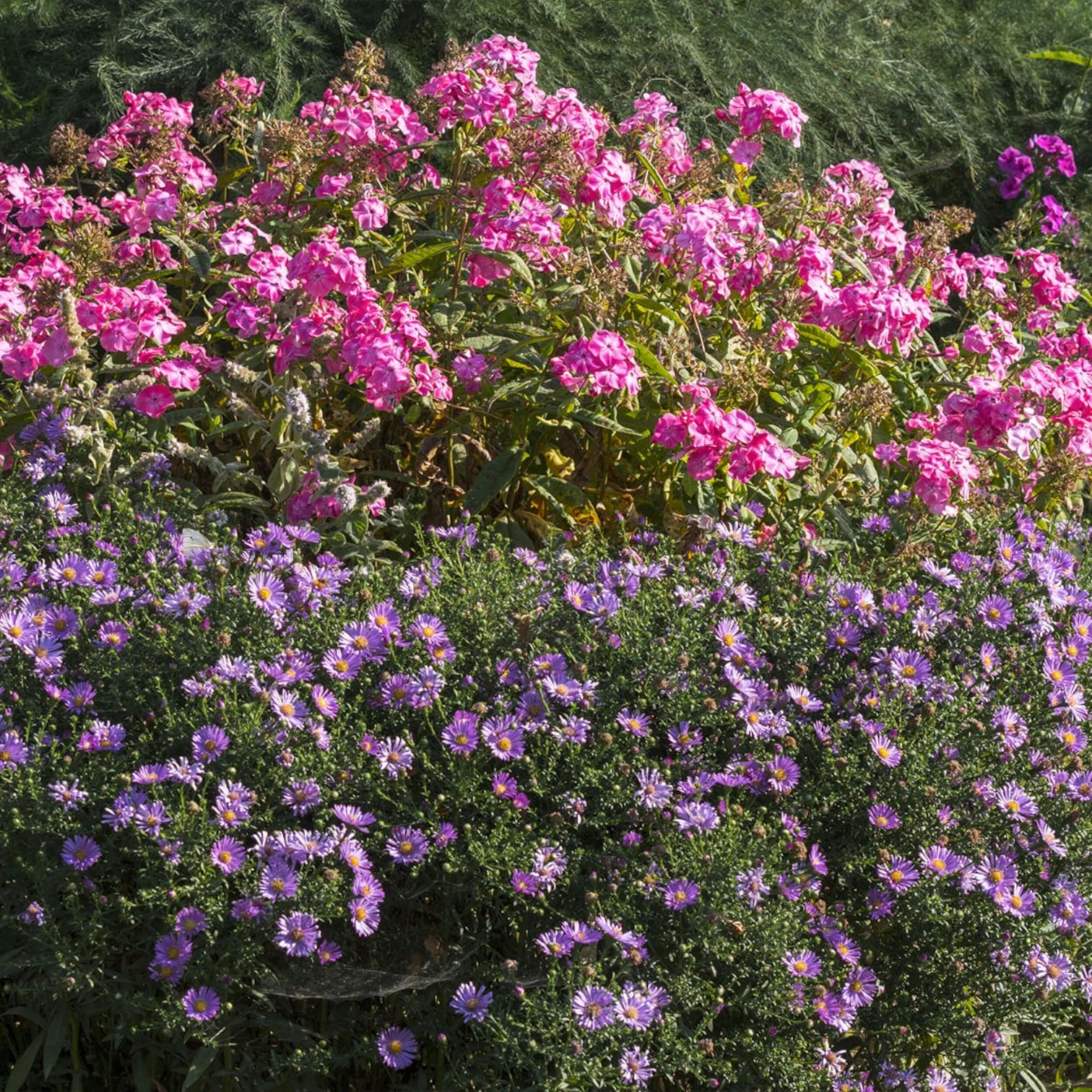
Symphyotrichum dumosum 'Professor Anton Kippenberg'
9,66 €
Livré chez vous par Jardiplants, un service Renoday.
Description
Symphyotrichum dumosum 'Professor Anton Kippenberg' for violet-blue autumn colour Symphyotrichum dumosum 'Professor Anton Kippenberg' is a compact, bushy autumn aster with violet-blue daisy flowers and a rounded clump-forming habit. It brings late colour into sunny borders, patio pots and perennial groups at a time when many plants are slowing down. The flower colour sits especially well with grasses, silver foliage, dark sedums and soft yellow autumn tones. This cultivar is valued for staying relatively low and full. It gives a traditional Michaelmas daisy effect in a size that fits small gardens and containers. The plant grows from a herbaceous crown, pushes up leafy stems in spring, builds a mound through summer and then flowers in September and October. In a mixed border, it helps extend interest without needing the height of taller aster types. Growth and size of Symphyotrichum dumosum 'Professor Anton Kippenberg' Mature plants usually reach around 30-45 cm tall and 30-50 cm wide. The clump is upright and softly branched, with many stems carrying narrow green leaves. Buds form in late summer, followed by violet-blue flowers with yellow centres. The compact habit makes the plant useful along sunny paths, at the front of borders, in raised beds and in wide pots where its rounded outline can be seen clearly. In containers, Symphyotrichum dumosum 'Professor Anton Kippenberg' stays smaller and grows more slowly than plants in open ground. A pot also makes summer watering more important because root volume is limited. A broad container gives the crown room to widen and gives the flowered stems a balanced outline when the rootball stays evenly moist. Sun, soil and spacing Full sun supports the best flower count and a dense mound. A position with at least several hours of direct light is important for strong stems and good bud set. Soil should be fertile, evenly moist and well-drained. The plant appreciates moisture while making buds, yet the crown also needs air and drainage around the roots during winter. Space plants at about 50 cm when planting for a mature clump. This gives room for airflow and reduces crowding around the foliage. In small mixed borders, place it near plants with a lighter structure so the mound can expand naturally. For patio displays, combine it with grasses or foliage plants that share the same sunny, well-drained but evenly watered conditions. Height: around 30-45 cm. Spread: around 30-50 cm. Light: full sun for compact flowering growth. Soil: fertile, evenly moist and open-textured. Season: violet-blue flowers in autumn. Watering, feeding and container rhythm Water newly planted Symphyotrichum dumosum 'Professor Anton Kippenberg' regularly while roots settle. Established clumps in open ground need extra water during prolonged dry spells, especially from midsummer onward when buds are forming. A thin spring mulch of compost helps retain moisture and feeds the soil gently. For planters, water when the upper 25-35% of the pot depth feels dry. Soak the compost fully, then allow the surface to settle before watering again. Aster foliage can suffer when the rootball swings repeatedly between dry and wet, so aim for an even rhythm during warm weather. Refresh the top layer of compost in spring or move the plant into a larger pot when roots fill the container. Pruning, pinching and renewal Pinching soft shoot tips in early summer can make Symphyotrichum dumosum 'Professor Anton Kippenberg' denser and more rounded. This is especially useful in pots or exposed sites. Once flowering has finished, old stems can remain briefly for seasonal texture, then be cut down in late winter before new shoots rise. Older clumps benefit from division when growth becomes congested. Lift in spring, separate vigorous outer pieces and replant them into fresh soil. This keeps the plant productive and prevents the centre from becoming tired. In containers, division also restores root space and makes watering easier. Useful checks through the season Weak flowering usually points to shade, drought during bud formation, or an overcrowded crown. Mildew can appear when roots dry, air is still or plants are packed tightly together. Leaning stems are often linked to overly rich conditions or a lack of early pinching. These patterns are easy to read because the plant responds directly to light, moisture and spacing. Use Symphyotrichum dumosum 'Professor Anton Kippenberg' where autumn colour needs to be close to the viewer. It is a good plant for the edge of a sunny path, a front-of-border pocket, a seasonal patio pot, or a small perennial group with grasses and late flowers. With steady moisture and open light, it gives a polished late-season display in a compact footprint. Container and border rhythm for Symphyotrichum dumosum 'Professor Anton Kippenberg' This cultivar works well where late colour needs a low, rounded shape. Plant it near the front of a sunny border, repeat it between ornamental grasses, or use it in a broad patio pot with plants that share steady moisture. The violet-blue flowers are small individually, but the display becomes strong when the clump is allowed to build width through summer. In pots, use a wide container that gives the crown room to spread. Water when the upper 25-35% of the pot depth feels dry, checking more often during hot weather and bud formation. Containers keep plants smaller and slower than open ground, which can help this autumn aster stay proportionate in a patio arrangement. Aftercare for strong autumn flowering Cut back old stems after flowering or leave them until late winter if the border benefits from extra texture. New shoots emerge from the base in spring. Divide congested clumps in spring and replant vigorous outer pieces into refreshed soil with space for air movement around the stems.