
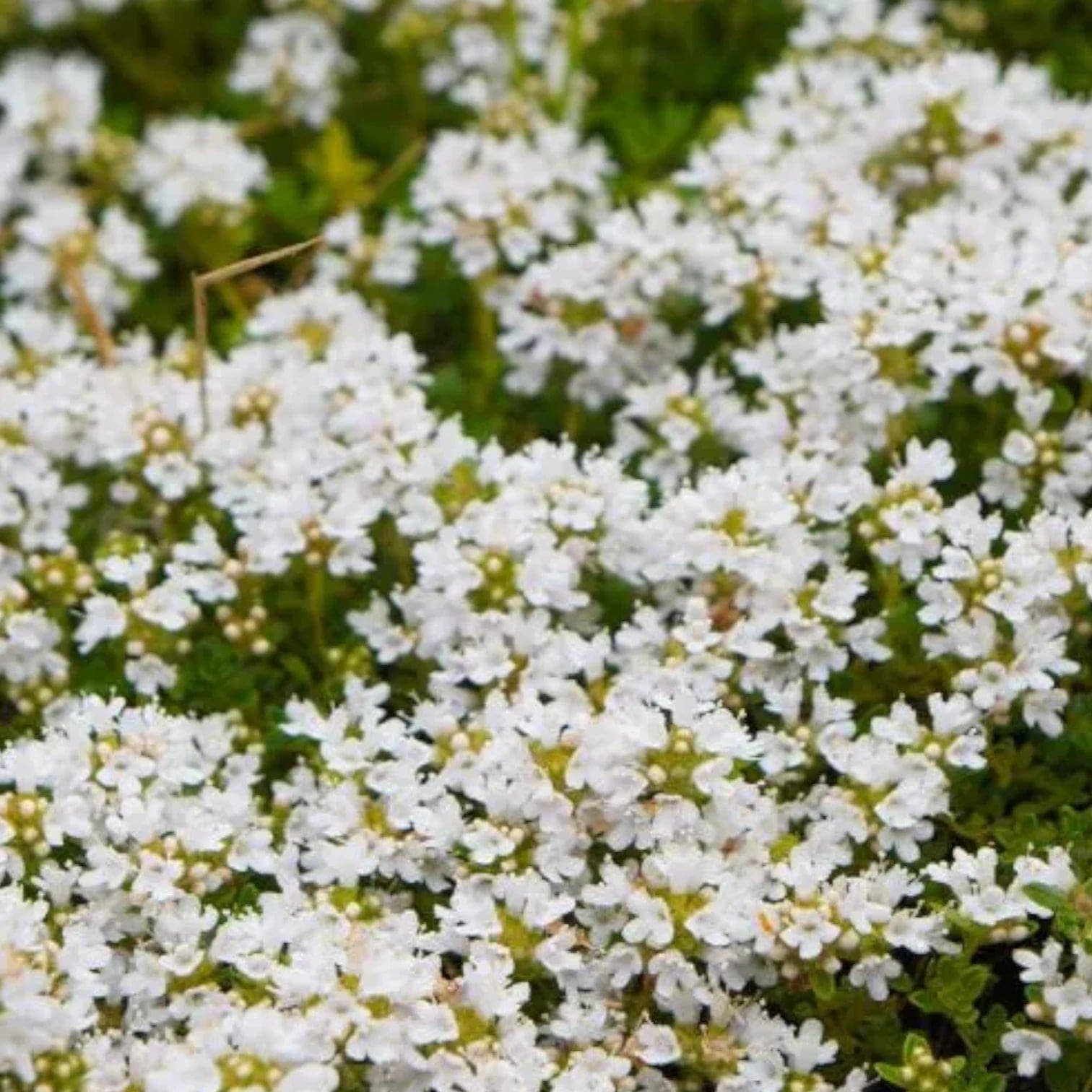
Thymus praecox 'Albiflorus'
13,80 €
Livré chez vous par Jardiplants, un service Renoday.
Description
Thymus praecox 'Albiflorus' in sunny dry planting Thymus praecox 'Albiflorus' is a low evergreen thyme for warm, open sites where drainage matters. It forms a dense, mat-forming carpet with light green foliage and a softer flower colour than red or purple creeping thymes. It gives small aromatic leaves all year and white flowers in summer. It suits pale gravel pockets, low bowls and the front edge of a sunny bed where white flowers can brighten the surface. The value is in scale. Mature plants usually stay under 10 cm tall and can spread gradually across 10 to 50 cm of open ground. Its low stems sit close to stone and soften small container edges while keeping the outline light. Containers keep this white creeping thyme smaller and slower than open ground, which helps maintain a tidy mat in troughs and bowls. Where Thymus praecox 'Albiflorus' settles well This white creeping thyme settles best where sun reaches the crown and rain drains away fast. The tiny aromatic evergreen leaves keep the white-flowered mat tidy in grit, raised pockets and shallow troughs. Bright open exposure keeps growth firm, and leaner soil keeps stems from becoming soft. A mineral root zone helps the white flowering stems remain short and close to the crown. Use Thymus praecox 'Albiflorus' for white-flowered edging, pale gravel planting, sunny troughs and narrow gaps at the front of a border. It also fits troughs and shallow bowls where its low habit keeps the rim visible. A visible mineral surface around the crown helps the plant sit cleanly after rain and keeps the planting visually crisp. Soil, pH and drainage for Thymus praecox 'Albiflorus' Neutral to alkaline soil suits thyme, especially when the structure is open. Chalk, sandy loam, gravelly beds and gritty potting mixes are good starting points. In clay gardens, raised pockets and troughs give the roots the sharper drainage they prefer. Open drainage matters more than rich fertility. A white-flowered carpet looks especially clean against pale gravel, terracotta or dark stone. A small amount of organic matter is fine for establishment, but the long-term root zone should stay open and low in water retention. Dense compost produces lush shoots, weak scent and a crown that ages faster. Top-dress with fine gravel after planting to keep stems lifted from wet soil. Watering Thymus praecox 'Albiflorus' in pots and beds For containers, water only when the upper 35 to 45% of pot depth feels dry. Then water evenly and let the pot drain. Newly planted thyme needs a short settling-in period with regular checks, but established plants prefer a dry rhythm between rain or watering. In winter, sharp drainage is the main form of protection. In open ground, water during establishment and then rely on the site to do most of the work. Between stones, give each plant enough open surface for stems to root and spread naturally. A plant that wilts in dry heat usually perks up after deep watering, while a plant with blackened inner stems often points to poor drainage around the crown. Flowers, scent and seasonal rhythm Brushing the tiny leaves releases a bright, herbal thyme scent. Its scent is fresh and herbal, strongest on warm days when leaves are brushed. Flowering usually comes in late spring to summer, depending on the cultivar and local weather. The flowers are small, but a wide mat can create a visible colour sheet for several weeks, especially when planted in groups. Evergreen foliage means the plant still marks the bed in winter. Growth slows in cold weather, and older inner stems can look woody with age. Replanting small divisions or rooted pieces every few years keeps a dense patch going where a crisp carpet is important. Trimming and renewal for Thymus praecox 'Albiflorus' After the main flowering period, shear or pinch lightly to remove faded stems and keep the mat dense. Cut into leafy growth and leave the woody base intact. Spring tidying can remove winter-worn tips, while summer trimming keeps paths, trough rims and edging lines neat. Fresh shoots then fill the top of the plant with a cleaner texture. Harvest lightly because this form is mainly an ornamental creeping thyme. For occasional culinary use, cut clean young tips and allow the mat to regrow before taking more. Creeping selections shine most as edging, flower and scent plants, while upright thyme remains the simpler harvest herb. Thyme growth checks Patchiness in this cultivar often begins where damp soil meets older woody stems. Yellowing, patchy dieback or a hollow centre usually comes from wet roots, heavy soil, old woody growth or too much shade. Brown edges after winter often mean the plant sat wet during cold weather. Lift the crown, improve drainage, trim lightly after flowering and keep nearby plants from covering the mat. Thymus praecox 'Albiflorus' is a small plant, so placement matters. It works best at the front of a bed, in a trough, near steps, along a dry path edge or in a sunny herb planter. Give it sun, air and lean drainage, and it becomes a neat scented layer as a neat low-maintenance scented layer. For small containers, use a shallow bowl with several drainage holes and a gritty surface mulch. The white flowers are easiest to read against darker stone, terracotta or grey gravel, while the evergreen mat keeps the planting useful outside the flowering weeks. Replant tired sections by lifting a small rooted edge piece and setting it into fresh mineral mix, then keep it evenly moist only until new roots grip.