
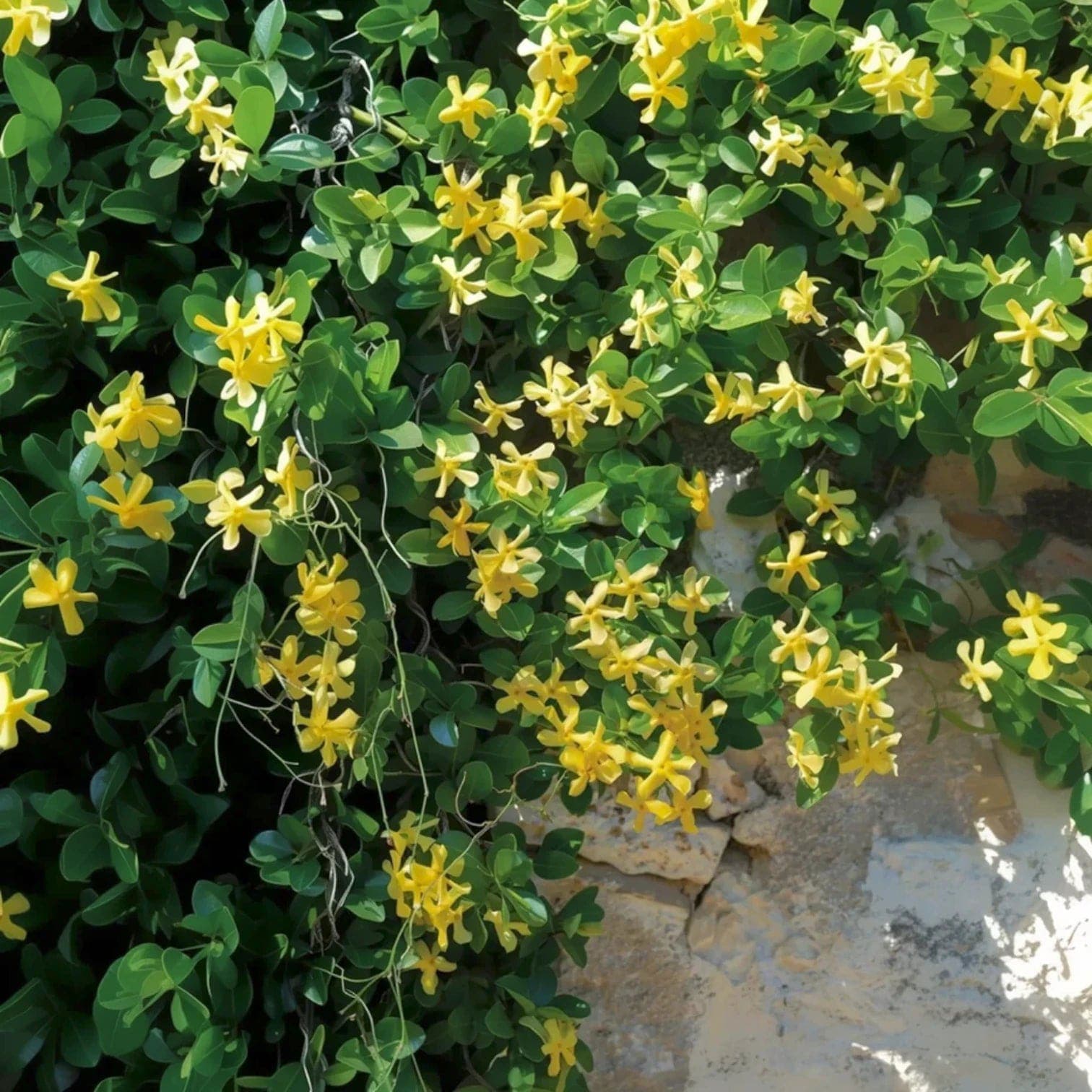
Trachelospermum jasminoides 'Star of Toscana'
16,56 €
Livré chez vous par Jardiplants, un service Renoday.
Description
Trachelospermum jasminoides 'Star of Toscana' as a fragrant evergreen climber Trachelospermum jasminoides 'Star of Toscana' is a woody evergreen climber grown for glossy leaves, twining stems and pale yellow star-shaped flowers. The flowers carry a warm sweet fragrance, especially in warm sheltered air. It is a plant for a protected wall, pergola, large container or conservatory-style outdoor space, with the strongest performance where roots drain freely and stems receive warmth for this yellow star jasmine. Ultimate size is recorded at 8 to 12 m high with a 2.5 to 4 m spread in favourable ground, though managed garden plants can be kept smaller. Trachelospermum builds a woody framework slowly at first, then gains strength once roots are settled for this yellow star jasmine. Containers keep 'Star of Toscana' smaller and slower than open ground, helping keep the yellow-flowered climber within a terrace framework. This makes pot culture practical for colder areas, where the plant can be moved or protected during harsh weather for this yellow star jasmine. Training Trachelospermum jasminoides 'Star of Toscana' on support Set wires or trellis before the stems lengthen, then guide the main shoots in a fan. Young stems twine and need wires, trellis, an obelisk or another narrow support to follow for this yellow star jasmine. Start training early, because loose stems can tangle and create bare sections at the base for this yellow star jasmine. Tie in the main shoots gently, then allow side shoots to fill the cover for this yellow star jasmine. A fan of several stems usually gives better leaf cover than one congested strand for this yellow star jasmine. On a wall, plant away from the base so rain can reach the rootball and the roots are not trapped in a dry strip for this yellow star jasmine. In a large container, set the support before planting and check that the pot is stable enough for a leafy climber in wind for this yellow star jasmine. A warm wall, fence line or sheltered balcony gives the best balance of heat and protection for this yellow star jasmine. Light, shelter and flowering for Trachelospermum jasminoides 'Star of Toscana' Full sun gives the strongest flowering in many climates, while partial shade can work when the site remains warm and bright. Cold wind is the main stress factor for evergreen foliage for this yellow star jasmine. A sheltered position reduces winter leaf scorch and helps flower buds develop on ripened growth for this yellow star jasmine. Warmth also improves scent, so placement near seating, doors or paths gives the plant a practical reason to be noticed for this yellow star jasmine. Flowering time varies with cultivar, site and weather for this yellow star jasmine. A plant in a warm wall position can flower more heavily and over a longer window than one in a cool exposed pocket for this yellow star jasmine. Good summer moisture supports growth, but the soil still needs oxygen after watering for this yellow star jasmine. The root zone should hold some moisture in active growth, then drain cleanly after rain for this yellow star jasmine. Soil, pH and watering Trachelospermum jasminoides 'Star of Toscana' Fertile, well-drained soil is the safest starting point. Chalk, loam or sand-based soils can work when drainage is reliable and the plant is sheltered for this yellow star jasmine. In pots, use a peat-free loam-based compost with added mineral structure and a wide drainage path for this yellow star jasmine. Keep the crown clear of heavy mulch and make sure the container can shed winter rain for this yellow star jasmine. For containers, water when the upper 25 to 35% of pot depth feels dry, then water deeply and let the pot drain for this yellow star jasmine. During establishment, check more often because a newly planted climber has a smaller active root system for this yellow star jasmine. In winter, reduce watering and keep the rootball just lightly moist during protected storage for this yellow star jasmine. Pruning and shaping Trachelospermum jasminoides 'Star of Toscana' Use early spring pruning for framework control, with light summer tidying after the main flower display if needed. A light annual trim keeps the framework tidy and encourages side shoots for this yellow star jasmine. Remove winter-marked tips in spring, guide new stems back onto support, and shorten long whips once the plant has finished its main flowering for this yellow star jasmine. Regular guiding gives a fuller shape and keeps the base from becoming bare for this yellow star jasmine. Heavy renovation is possible on established plants, but it can pause flowering while the framework rebuilds for this yellow star jasmine. For a container plant, a yearly trim is easier than waiting until the climber has outgrown its support for this yellow star jasmine. Young 'Star of Toscana' plants respond well to early tying because the yellow-flowered framework is easiest to set while stems are flexible. Winter behaviour and protection It is hardy with shelter, with the safest performance on a warm wall and in well-drained soil. Evergreen leaves can bronze in winter wind, especially on exposed walls that receive bright low sun. Fresh spring growth usually restores the greener look. Stress builds where wet roots, cold wind and compacted container mix meet. In colder districts, move potted plants into shelter or insulate the container around the rootball. In open ground, this yellow-flowered star jasmine needs a warm wall, drainage, shelter and enough soil volume for roots. Raise large pots on feet so winter rain drains through the mix and away from the base. Keep the lower stems airy and tie the framework so leaves are held clear of damp surfaces. Using Trachelospermum jasminoides 'Star of Toscana' well Place it where summer scent, evergreen cover and yellow flowers can be enjoyed along a wall, pergola or large container support. It suits spaces where fragrance, evergreen screening and a yellow summer flower note all matter. Plant near a seating area, doorway or path so the warm flower scent can be enjoyed at close range. A starter plant may spend the first season rooting before it climbs with more confidence. Growth signals on Trachelospermum jasminoides 'Star of Toscana' Leaf scorch and sparse flowering usually indicate cold wind, low light, dry root runs beside walls or a pot that has become too tight. Yellow leaves usually indicate cold wet roots, old potting mix or a short feed supply. Dry brown leaf edges often follow wind exposure or repeated summer dry-down in a pot. Light flowering usually links to cool shade, low summer warmth or trimming after buds are set. Check warmth and light first, then refine watering, training and trimming time. Trachelospermum jasminoides 'Star of Toscana' rewards patience. It gives evergreen structure with a scented yellow flower season that lifts a warm wall or patio support. With warmth, drainage and firm support, it can build into a long-lived climber for a sheltered wall or broad patio pot.