
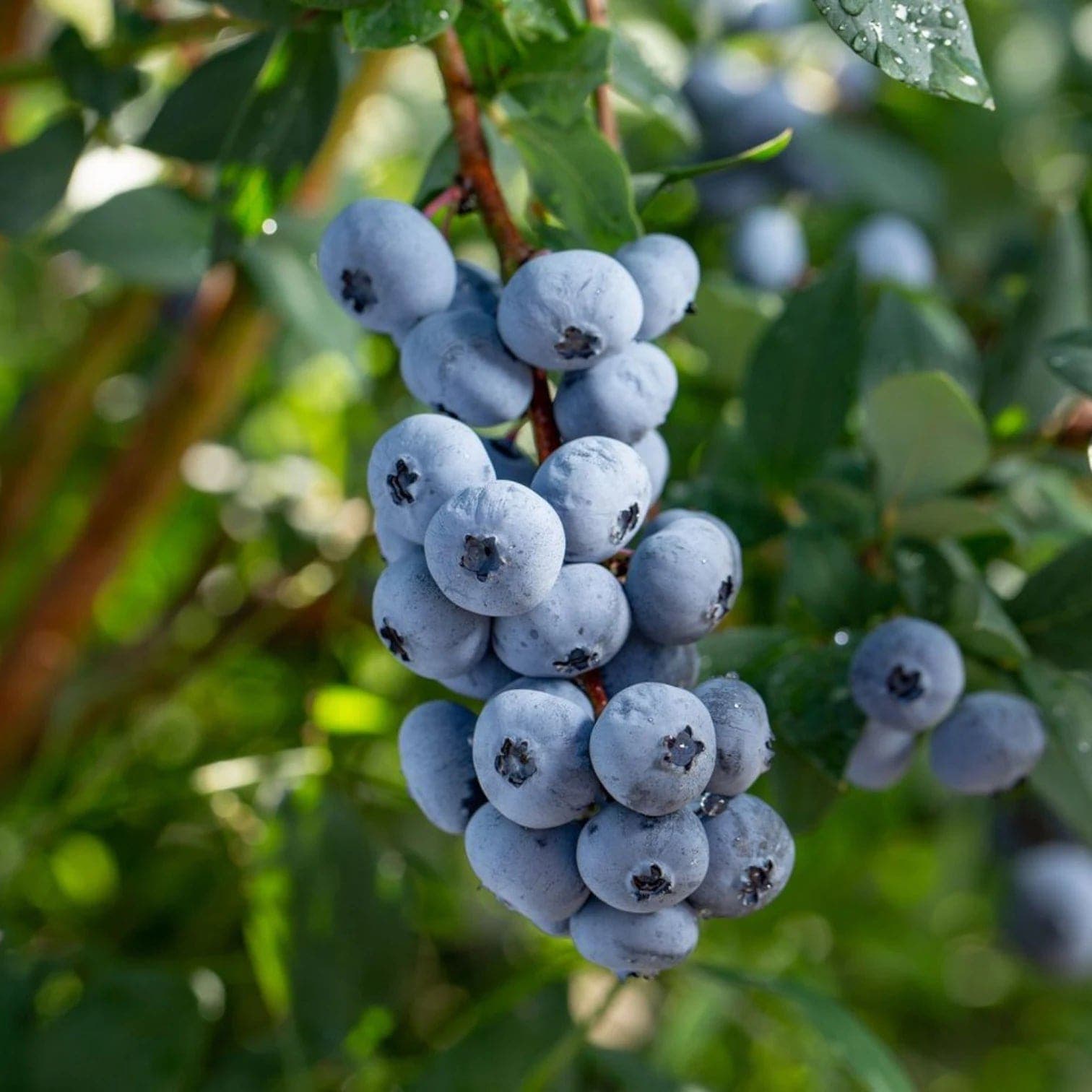
Vaccinium corymbosum 'Goldtraube'
13,80 €
Livré chez vous par Jardiplants, un service Renoday.
Description
Vaccinium corymbosum 'Goldtraube' for blueberries, flowers and autumn colour Why grow Vaccinium corymbosum 'Goldtraube' Vaccinium corymbosum 'Goldtraube' is a highbush blueberry for gardeners who want an edible shrub with real seasonal value. It starts with small bell-shaped flowers in spring, develops blue fruit in summer, then finishes the year with strong autumn leaf colour. The plant has a tidy upright shape, so it can sit in a fruit garden, a mixed edible border, a large patio container or a dedicated acid bed. The main point with blueberry growing is soil chemistry. 'Goldtraube' needs acidic conditions for healthy leaf colour, steady growth and reliable fruiting. In neutral or alkaline ground, grow it in a raised bed or large pot filled with peat-free ericaceous compost. In suitable acidic soil, it can be planted directly into open ground with organic matter worked through the planting area and a mulch to help conserve moisture. Size, shape and spacing In open ground, Vaccinium corymbosum 'Goldtraube' usually reaches about 150-200 cm in height with a spread around 150 cm. Growth is upright when young, then becomes more branched as fruiting wood builds. The shrub needs enough room for light to reach the centre and for air to move through the stems, so a spacing of about 150 cm is a practical guide for a single row or mixed fruit planting. A pot will generally keep final size more compact than planting into a bed. A pot-grown blueberry can still crop well, but it needs a large container, steady moisture and renewal of ericaceous compost over time. Choose a pot that will remain stable when the shrub is in leaf and fruit. Small decorative pots dry quickly and give little insulation during winter cold. Acid soil and watering The best soil is acidic, moisture-retentive and well-drained, with a pH around 4.5-5.5. The root system is fibrous and shallow, so the plant likes even moisture but needs oxygen around the roots. A bark-based ericaceous mulch helps protect the root zone from drying and reduces temperature swings near the surface. In pots, rainwater is useful where tap water is hard. Use the root zone as the watering guide. Water when the upper 25-35% of pot depth has dried, then water thoroughly so the root ball is evenly moist. During fruit swelling, uneven moisture can reduce berry size and add stress to the plant, especially in warm weather. Fruit, pollination and harvest 'Goldtraube' can fruit on its own, but harvests are often stronger when another blueberry cultivar flowers nearby. Spring flowers are followed by green berries that colour through summer. Pick berries when they are fully blue and release easily from the cluster. A berry that still grips tightly usually needs more time to develop sweetness. Netting may be needed when berries begin to colour, especially in gardens with heavy bird activity. Use a structure that holds netting away from the fruit and check it regularly. The shrub also works well near other acid-loving edible plants if the soil conditions match, but keep enough space for pruning and harvest access. Pruning mature blueberry shrubs Young blueberry shrubs need very little pruning beyond removing dead, damaged or crossing stems. Once the plant is established, winter pruning keeps a balance between fresh shoots and productive older wood. Remove a few of the oldest stems at the base and keep well-placed younger shoots that will carry future crops. The aim is an open shrub with light reaching the fruiting branches. Pruning is usually done from November to March, with late winter useful because fruit buds and leaf buds are easier to distinguish. Fat buds carry flowers and fruit, while slimmer buds form leafy shoots. A simple annual tidy is enough for most garden shrubs. Heavy renewal can be staged across two winters so the plant keeps both growth and cropping strength. Container care and seasonal checks Container blueberries need extra attention because the root zone is limited. Use peat-free ericaceous compost, keep moisture even, and top-dress or refresh part of the mix as it settles. A sheltered winter position helps reduce freezing around the pot. The plant is hardy, but roots in containers experience sharper cold than roots in the ground. Acid soil management for steady cropping Vaccinium corymbosum 'Goldtraube' depends on an acidic root zone, so the planting setup matters as much as sun and watering. In open ground, prepare a wide planting area with acidic organic matter and keep lime-rich materials away from the roots. In a container, choose a large pot with generous drainage holes and fill it with peat-free ericaceous compost. Rainwater is useful for regular watering in hard-water regions, especially during flowering, fruit swelling and warm spells. Mulch helps the shallow root system stay cool and evenly moist. Pine bark, leaf mould from acid-loving planting or an ericaceous mulch can be refreshed in a thin layer each year. Once the shrub is established, winter pruning should keep a mix of young productive shoots and older framework. Remove tired stems at the base, open the centre lightly and keep the strongest new shoots. Netting may be useful when fruit starts to colour. In containers, check moisture by the upper 25-35% of pot depth and water fully when that layer has dried. Pale leaves with green veins usually signal pH or nutrient access issues. Dry leaf edges during summer can come from drought in the root ball, especially after a windy spell. Soft growth with weak fruiting can follow low light or too much nitrogen. With the right acid root zone and steady watering, Vaccinium corymbosum 'Goldtraube' is a useful fruit shrub that also earns its place visually through three seasons.