
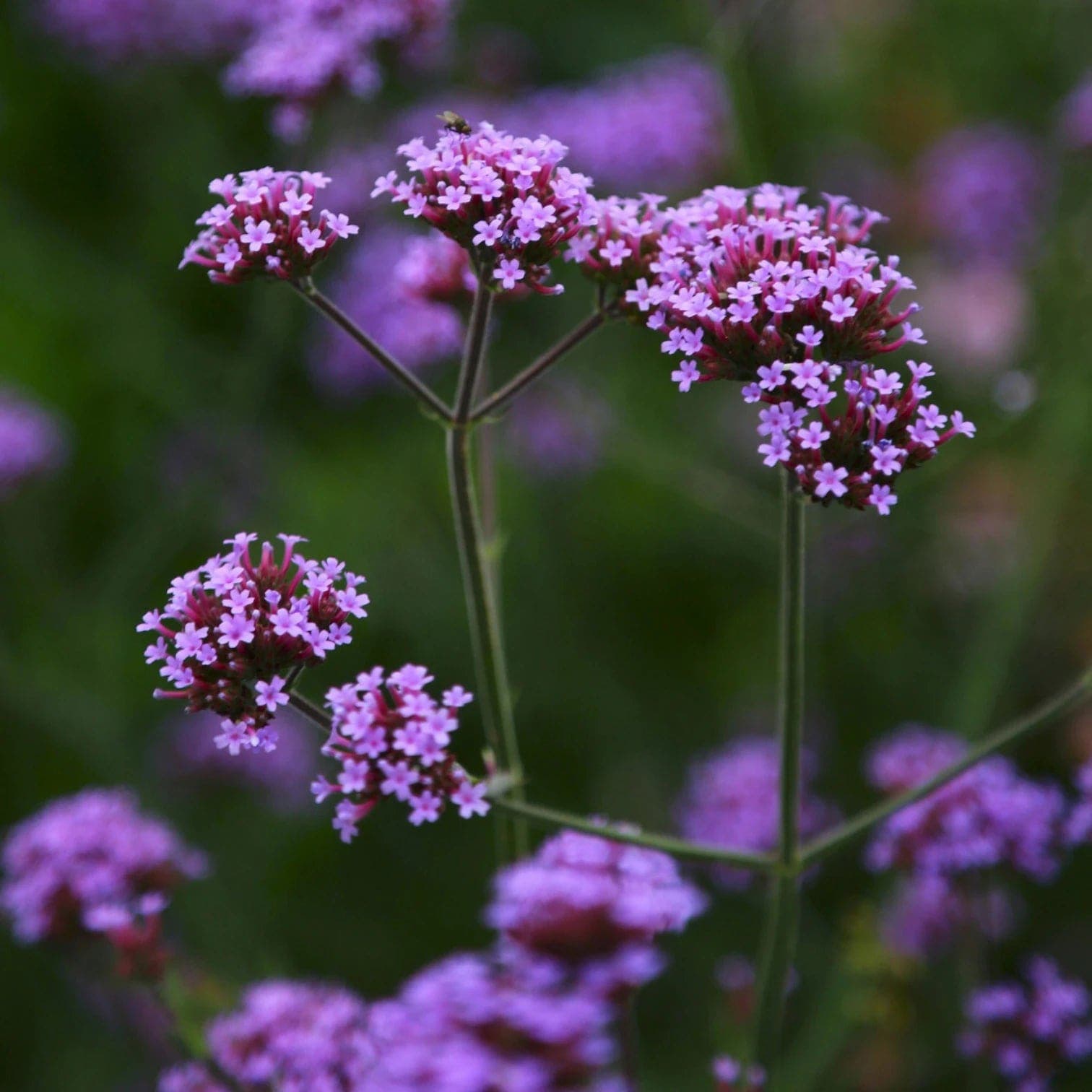
Verbena bonariensis
13,80 €
Livré chez vous par Jardiplants, un service Renoday.
Description
Verbena bonariensis for tall, airy purple flowers in sunny planting Verbena bonariensis is a tall, open perennial grown for slender stems topped with small purple flower clusters from summer into autumn. It brings height while keeping a light outline, so surrounding plants remain visible through the stems. This makes it especially useful in naturalistic borders, gravel planting, prairie-style schemes and large patio containers where vertical flower points are needed. The plant has a distinctive habit. Narrow stems rise from a basal clump, branch near the top and hold flowers above neighbouring perennials and grasses. The flower heads are small but numerous, creating a floating effect across a sunny border. Verbena bonariensis is also valued for its long flowering period and its appeal to bees, butterflies and other visiting insects during warm weather. Growth habit and garden role Verbena bonariensis usually reaches around 1.5-2 m tall in good conditions, with a spread around 45 cm. The stems are wiry and open, so the plant takes visual space without forming a dense screen. It can be planted in small groups through a border, repeated among grasses, or grown in a large container where the height can rise above lower seasonal planting. In containers, Verbena bonariensis stays smaller and grows more slowly than plants in open ground. Pot-grown plants can still flower well, but they need a deep container, good drainage and regular watering during heat. The airy habit works well in a large pot near lower plants, where the stems can rise above the rim and catch light. Sun, soil and wind exposure Full sun is important for strong flowering. Verbena bonariensis likes warmth and well-drained soil, with moderately fertile ground giving steady growth. It copes with average to dry conditions once established, but new plants need water while roots move into the soil. In very windy gardens, a sheltered site helps keep tall stems upright and reduces snapping. Drainage is especially important in winter. The plant is often short-lived in colder, wetter gardens, yet it can persist well where the crown stays open and the soil dries between wet periods. Gravel gardens, raised beds and sunny borders with free-draining soil are strong fits. In fertile, damp soil, growth can become taller and looser. Height: around 1.5-2 m in good conditions. Spread: about 45 cm. Light: full sun for flowering and firm stems. Soil: moderately fertile and well-drained. Season: purple flowers from summer into autumn. Watering and container care Water regularly after planting until new roots establish. Once rooted, Verbena bonariensis has good dry-spell tolerance when the soil is open and the plant has had time to settle. Water deeply during long hot periods if flowering slows or leaves flag in the afternoon. For pots, water when the top 30-40% of the pot depth feels dry. Use a container with enough depth for the root system and enough weight to balance tall stems. A free-draining peat-free compost with added mineral structure helps roots stay active. During hot weather, container plants may need watering more often because height and leaf area increase water demand. Cutback, self-seeding and winter behaviour Verbena bonariensis is often grown as a short-lived perennial. In mild, free-draining sites it may return from the crown, and it can also self-seed where seed heads are left to mature. Seedlings are usually easy to identify and move when small. Leaving some stems through winter gives texture and can help seed fall naturally. Cut old stems back in late winter or early spring once the worst cold has passed and new basal growth is visible. In colder gardens, take cuttings in late summer or allow seedlings to develop, giving continuity if mature plants decline after winter. Deadheading can reduce self-seeding, while leaving seed heads gives a more natural, loose planting style. Placement and common issues Verbena bonariensis works well among grasses, salvias, echinacea, gaura, achillea and other sun-loving perennials. It can sit through a planting without casting heavy shade. In containers, use it as the tall element in a simple sunny arrangement with lower drought-tolerant plants around the base. Weak stems are usually linked to shade, overly rich soil, or exposure to strong wind. Poor overwintering often follows cold wet soil around the crown. Sparse flowering can mean the plant is too shaded or repeatedly drying out before it has established. Give Verbena bonariensis sun, drainage and enough root space, and it becomes one of the easiest ways to add height, movement and late colour to a sunny garden. Planting rhythm for Verbena bonariensis Verbena bonariensis is strongest when repeated through sunny planting in small, loose groups. Three to five plants can make a light vertical rhythm among grasses, low perennials and gravel plants. The stems rise high, but the base remains relatively narrow, so it can be threaded through existing planting where the soil drains well and the position receives full sun. In containers, choose a deep pot with weight at the base, because tall stems catch wind. Water when the upper 30-40% of the pot depth feels dry, then water thoroughly so the full rootball is reached. Containers keep plants smaller and slower than open ground, which can be useful where the height is wanted but the plant needs to stay controlled on a terrace. Cutback and self-seeding notes Old stems can stand into autumn if they still add texture. Cut them down in spring once the worst cold has passed and new basal growth is visible. Seedlings may appear in open soil after mild winters, especially in gravelly beds. Keep the strongest young plants where more airy height is useful and lift extras while small.