
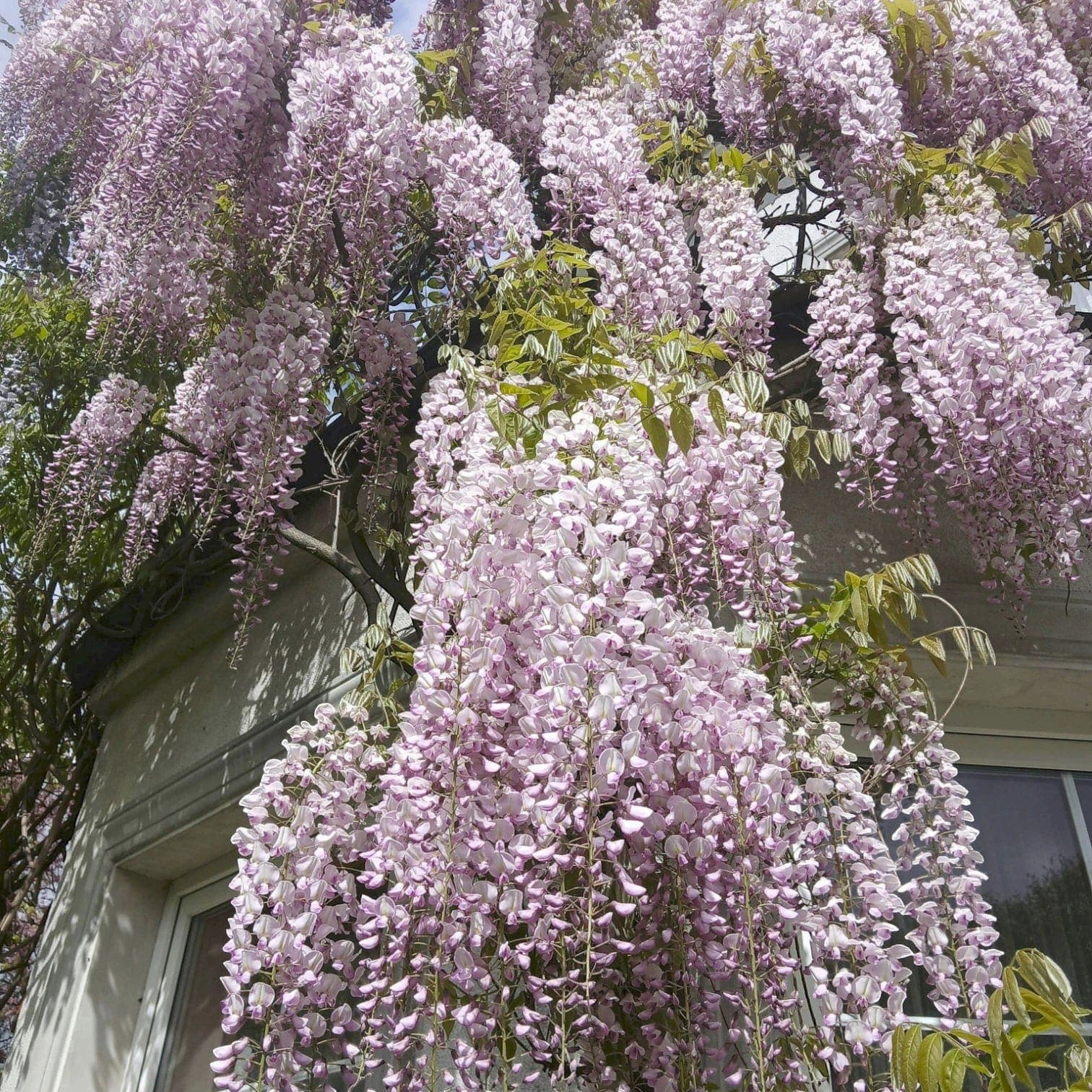
Wisteria floribunda 'Rosea'
22,08 €
Livré chez vous par Jardiplants, un service Renoday.
Description
Wisteria floribunda 'Rosea' for pink hanging racemes Soft colour on a strong climber Wisteria floribunda 'Rosea' is a pink Japanese wisteria grown for long hanging flower racemes and a romantic spring effect. The plant is vigorous, deciduous and twining, building a woody framework over time. Its flowers are best appreciated where the racemes can hang freely, such as from a pergola beam, arch or open wall-trained frame. This is a long-term structural climber. It suits gardens where the support can remain in place for many years and where pruning access is straightforward. The soft pink flowers combine well with pale stone, weathered timber, brick and simple evergreen planting. Once the spring display finishes, the plant carries compound green leaves through summer and a bare trained structure in winter. Mature size and support choice Wisteria floribunda 'Rosea' is usually managed at about 4-8 m tall with a spread of 250-400 cm, depending on the support and pruning routine. Japanese wisterias are especially effective when trained overhead because the racemes can hang down cleanly. A pergola, arch or strong horizontal wire system suits the plant well. In a container, the plant often stays smaller and fills out more gradually. In a very large pot, wisteria can be trained as a standard or onto a compact frame, but moisture and support become critical. Water when the upper 25-35% of pot depth has dried, then soak the whole root ball. A small or light container gives poor stability for a woody climber. Light, soil and establishment Full sun produces the best flowering, though light partial shade is possible in warm gardens. A bright south- or west-facing position helps ripen the wood and supports bud formation. Soil should be fertile, moist but well-drained and workable around the planting hole. Chalk, clay, loam and sand can all suit wisteria when structure and drainage are suitable. Plant slightly away from walls and fences so the roots can access moisture. Water thoroughly after planting and continue during dry spells while the plant establishes. Tie young stems to the support early, guiding them into the permanent shape. The first years are about structure as much as flowers. Summer and winter pruning Wisteria floribunda 'Rosea' needs regular pruning in summer and winter. Summer pruning shortens the long leafy shoots and keeps the framework open. Winter pruning then reduces those shoots again to flowering spurs. This two-stage rhythm helps control size and encourages a reliable flower display on accessible wood. The aim is a clear framework with short flowering spurs along the trained stems. If growth is allowed to tangle unchecked, flowers can be hidden and pruning becomes harder. Work gradually with young plants and keep the strongest stems tied in the direction you want the mature plant to follow. Using Wisteria floribunda 'Rosea' Place this cultivar where the racemes have room below them. A pergola over a path, a high arch, a seating area frame or a wall with horizontal wires can all show the flowers well. The plant also suits cottage-style planting when the support is strong enough and the surrounding planting stays low around the base. Allow enough ground-level space for watering, feeding and tying in new shoots. Underplanting can look attractive, but keep the crown visible and accessible. A clear base makes it easier to notice dry soil, damaged ties or shoots that need redirecting. Seasonal care notes Flowering can take a few years while a young plant builds its framework. Low light, weak pruning rhythm or very rich feeding can reduce bloom. Use balanced soil care, steady watering during establishment and the regular summer-winter pruning cycle. Once the plant is mature, maintenance becomes predictable. Training pink racemes where they can hang Wisteria floribunda 'Rosea' shows its flowers best when the racemes can hang below a beam, arch or open wall frame. Give the plant a support that suits the mature climber, then establish the main stems patiently. The first years are about framework, root growth and balanced side shoots. Flowering improves once the plant has mature wood, good light and a regular pruning cycle. Prune in summer by shortening long new shoots, then prune again in winter to refine flowering spurs. Keep ties checked as stems thicken, and guide new growth before it becomes woody. During establishment, water deeply in dry spells and keep the root zone evenly moist. For a container-grown plant, choose a very large pot and a permanent frame from the start. Check water by the upper 25-35% of pot depth and water thoroughly when that layer has dried. Container-grown plants tend to mature at a smaller scale than those in the ground. Container roots also need winter care, because freezing and drying can affect the root ball sooner than garden soil. All parts of wisteria should be treated as harmful if eaten, so plan placement with that in mind. With a permanent support, bright position and consistent pruning, Wisteria floribunda 'Rosea' becomes a long-lived feature climber with soft pink spring racemes and strong seasonal structure.