
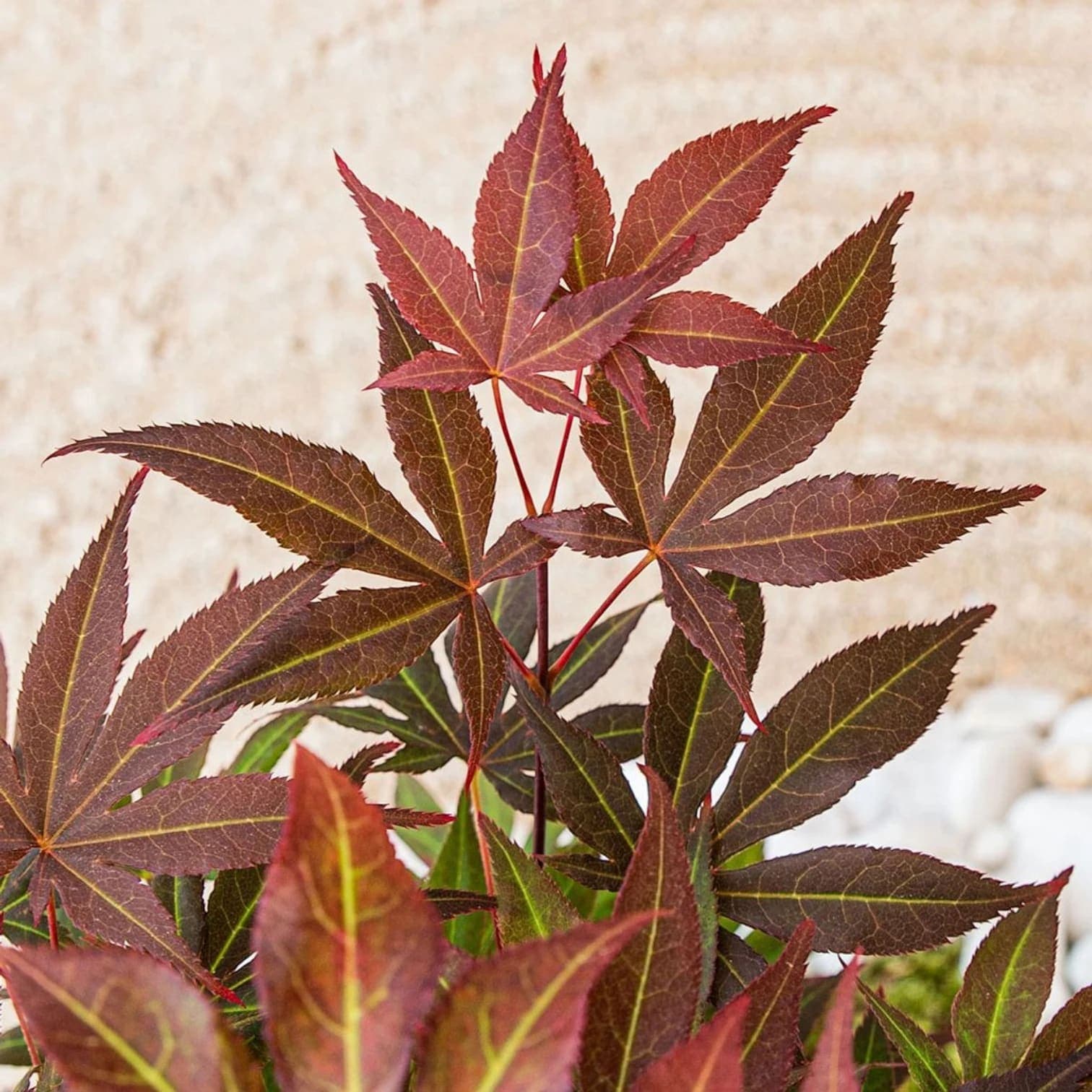
Acer palmatum 'Atropurpureum'
20,70 €
Livré chez vous par Jardiplants, un service Renoday.
Description
Acer palmatum 'Atropurpureum' is a classic purple Japanese maple for gardens, courtyards and generous containers where seasonal leaf colour matters from spring to leaf fall. New foliage opens red-purple, shifts to deep burgundy through summer and turns warmer crimson before autumn drop. The leaves are finely cut into palmate lobes, so the canopy feels light and layered even as the branching framework becomes more pronounced with age. In winter, the branching structure remains visible and gives the plant a calm outline long after the leaves have fallen. Acer palmatum is native to Japan and Korea, with a natural link to cool temperate woodland, open woodland edges and mountain slopes. That background explains why this purple form performs best with bright light, even soil moisture and protection from drying exposure. It is fully hardy in the ground, but its fine foliage responds best to a position where heat, wind and dry roots are kept in balance. In a European garden, this usually means morning sun with light shade later in the day, or a bright courtyard position with filtered overhead light. Deep purple colour with a refined garden shape This cultivar is valued for a rich, wine-coloured canopy that gives depth to planting schemes, even in periods with fewer flowers. The colour is strongest on healthy spring growth and remains attractive through much of the season, although very hot, exposed sites can soften the leaf tone by late summer. Autumn colour varies with temperature and light, often moving through red, scarlet and copper before the leaves drop. The habit is upright to broadly rounded, with a naturally branching outline that becomes more characterful each year. Young plants look neat and shrubby; older plants develop a small-tree presence with layered side branches and a clear seasonal rhythm. In practical garden use, it suits large patio planters, sheltered entrance areas, courtyard borders, Japanese-inspired planting, mixed shrub beds and calm focal points near seating areas. Seasonal interest: purple spring growth, deep summer colour, warm red autumn tones and winter branching. Growth style: slow to moderate, woody, deciduous and naturally structured. Best visual role: a dark-leaved anchor for light greens, grasses, ferns, pale flowers and gravel tones. Container use: suitable for large, stable pots with consistent moisture and a free-draining substrate. Mature shape and long-term garden presence Given time in open ground, this purple Japanese maple can develop into a small tree with real stature. In a settled, sheltered planting spot with deep soil, mature plants can eventually reach roughly 4-8 m in height and a similar spread, building a broader crown as the framework thickens. In containers the pace is slower and the final size stays smaller, especially when root room is limited. With a large pot and steady care, many plants remain in a more compact small-tree range for years, while still offering the same seasonal leaf colour and winter branching. Plan space for the canopy as well as the trunk. A little breathing room around the crown helps leaves dry quickly after rain, reduces stress in hot spells, and lets the dark foliage read clearly against lighter planting. Position, light and summer protection Bright light supports good colour, but the finest foliage stays cleaner where afternoon heat is moderated. Morning sun with light shade after midday is a strong setup in many gardens. Open shade can also work, especially in reflective courtyards or spaces with pale paving, provided the position is still bright. Very dark shade reduces colour intensity and gives looser growth, while exposed heat and wind can dry leaf edges during summer. Choose a site with a calm microclimate. Walls, hedges, fencing, neighbouring shrubs and taller perennials can all soften wind while leaving enough light for healthy growth. In containers, position matters even more because potting mixes warm and dry faster than open ground. A large pot placed where roots stay evenly moist will give better results than a small decorative container in full afternoon glare. Good light: morning sun, light shade, bright courtyards or filtered overhead light. Strong protection: calm positions away from drying wind and reflected heat. Container placement: use a heavy pot with drainage holes and keep the root area cool in hot spells. Leaf scorch prevention: steady moisture and gentle exposure matter more than frequent feeding. Soil, planting and root establishment A humus-rich, loamy soil with reliable drainage is ideal. The root area should hold moisture between watering but allow excess water to move away after rain. Heavy clay can be improved with organic matter and careful planting on a slightly raised area where winter saturation is less likely. Very sandy soil benefits from composted organic matter that buffers moisture and nutrients around the fine roots. Plant at the same depth as the nursery pot, keeping the stem base clear and firming the soil gently around the rootball. A broad watering basin helps moisture soak in during the first season. Mulch with bark, leaf mould or composted material around the planting area, leaving a small clear ring around the trunk. Mulch helps moderate root temperature, slows evaporation and supports gradual soil improvement while keeping the stem base clear. Watering, feeding and container care Consistent moisture is the key to good leaf quality. Newly planted maples need careful watering while roots move into surrounding soil. During dry weather, water deeply so moisture reaches the full rootball and nearby soil, then allow the surface to settle before watering again. Shallow sprinkling encourages surface rooting and gives poor resilience during heat. In pots, check moisture more often from late spring through summer. A free-draining, loam-based or woody container mix with added mineral structure helps balance water and air. The pot should be large enough to buffer temperature swings and prevent rapid drying. Feeding can be modest: a balanced slow-release fertiliser or gentle organic feed in the growing season is usually enough. Strong feeding can push soft growth that marks more easily in hot or windy weather. Pruning, seasonal care and long-term maintenance Pruning is best kept light. Remove dead, damaged or crossing wood, and make small adjustments during dormancy or late summer. The natural branching pattern is a major part of the plant’s value, so careful, selective cuts keep the silhouette elegant. Large cuts are slow to hide on Japanese maples and can interrupt the layered outline. Autumn leaf drop is normal. Fallen leaves can be cleared from pots, crowns and paved areas to keep the base tidy. In winter, container-grown plants benefit from a position where the pot is protected from repeated freeze-thaw cycles. In spring, watch new shoots as they open, because this is the stage most sensitive to drying wind and late frost in exposed sites. Seasonal fit and planting partners Space: allow for a broad small-tree outline over time, especially in open ground. Moisture: water deeply through the first growing season and during dry summer spells. Soil: aim for fertile, moisture-retentive ground with clean drainage after heavy rain. Exposure: give bright light with moderated heat for stronger leaf colour and fewer dry edges. Style fit: pair with shade-tolerant grasses, ferns, evergreen shrubs, pale perennials or stone surfaces. Maintenance: use light pruning only, mainly to refine structure and remove damaged growth. Long-lived leaf colour is the draw here: Acer palmatum 'Atropurpureum' keeps gardens rich from spring flush to leaf fall, then leaves a branching outline that stays attractive through winter.