
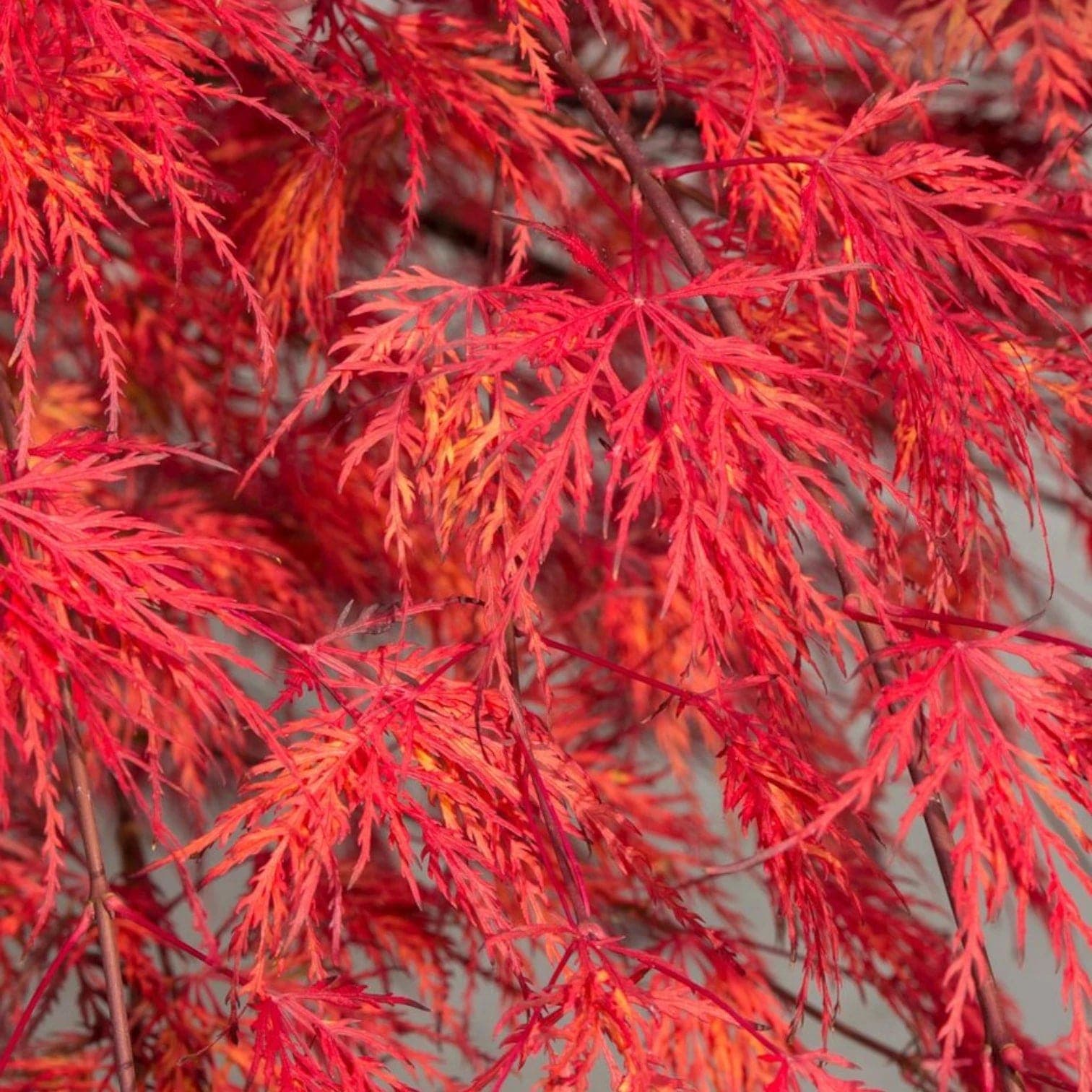
Acer palmatum 'Emerald Lace'
40,02 €
Bij u geleverd door Jardiplants, een dienst van Renoday.
Beschrijving
Acer palmatum 'Emerald Lace' is a green laceleaf Japanese maple with finely divided foliage, a spreading framework and vivid autumn colour. Spring leaves open bright and fresh, summer growth holds a cool green tone, and autumn can bring orange, red and burgundy shades as temperatures fall. The canopy feels airy and layered, giving gardens a refined focal point with strong seasonal movement. Acer palmatum has its native range in Japan and Korea, and this laceleaf selection reflects that woodland ancestry in its fine-textured growth. Its natural background is woodland and mountain-edge terrain, where roots are buffered by organic matter and leaves receive light softened by surrounding vegetation. In cultivation, 'Emerald Lace' follows the same pattern: it rewards a bright but calm position, cool roots, and soil that stays lightly moist while draining cleanly after rain. Emerald green laceleaf texture for sheltered planting 'Emerald Lace' has a finely cut leaf shape that gives the whole plant a feathery texture. The green colour is fresh in spring and calm through summer, which makes the autumn display feel especially intense. As the season closes, foliage can shift through orange-red and burgundy tones, with the strongest colour usually appearing after a healthy summer and cooler autumn nights. The habit is spreading and elegant, with branches that build a layered canopy over time. It sits well beside paths, terraces, water bowls, low walls, gravel planting and mixed borders where its fine texture can contrast with broader leaves. Because the canopy eventually becomes wide, it deserves enough space to show its outline from more than one angle. Foliage: deeply divided green leaves with a soft, lace-like texture. Autumn colour: orange, red and burgundy tones in favourable conditions. Habit: spreading, layered and slow to moderate in growth. Garden role: a feature plant for patios, sheltered borders and reflective garden corners. Long-term spread and garden presence Over the long term in open ground, this finely dissected maple can build into a substantial small tree. Mature plants can eventually reach roughly 2.5-4 m in height and spread, with arching branches that widen the crown and emphasise the fern-like texture. In containers, growth is slower and the plant tends to stay smaller, especially when the pot is refreshed gradually; very large jumps in pot size can slow root recovery. A large container still allows a satisfying crown, but the final outline remains more compact and easier to place near seating or along paths. Think of it as a texture plant with real presence. A clear viewing line to the canopy, plus some open space around the crown, helps the fine green leaf-cut stand out from heavier shrubs and bold perennials. Light, shelter and clean leaf edges 'Emerald Lace' prefers bright exposure with protection from intense afternoon heat. Morning sun, open shade or filtered light through nearby planting all work well. The delicate leaf segments can dry at the tips in hot wind, so calm air movement is valuable. A bright, softened position with shelter from harsh heat usually gives the best balance of growth, leaf quality and autumn colour. Good microclimates include east-facing borders, terraces softened by surrounding planting, pondside areas with cool soil, and sheltered courtyard beds. In a pot, place the plant where roots are shaded from strong heat and the canopy receives plenty of light. Reflected heat from paving can increase watering needs, so container-grown plants should be monitored during warm spells. Light: morning sun, partial shade or bright filtered light. Air movement: gentle airflow is useful, while drying wind can mark fine leaves. Heat control: cooler roots support cleaner foliage through summer. Best viewing: raised edges, low walls and containers show the spreading canopy well. Soil, drainage and planting details A humus-rich, loamy soil is ideal. The root area should remain evenly moist during active growth, yet free enough to drain after heavy rain. Compacted ground can limit root function, while constantly wet soil can weaken plants over winter. Improve the wider planting area with composted organic matter, then plant at the same depth as the pot. Water thoroughly after planting and mulch the surrounding soil with bark, leaf mould or composted organic material. Keep a small clear space around the stem base. Mulch helps protect shallow roots, reduces moisture swings and gradually improves soil texture. For container growing, choose a deep, stable pot with excellent drainage and a structured mix that combines moisture retention with air space. Watering and feeding through the growing season The most important care point is regular moisture during establishment and dry spells. Water slowly and deeply so the rootball and surrounding soil are evenly moistened. Newly planted maples should be checked often in the first growing season, especially during warm weather or when planted near walls, paving or other heat-retaining surfaces. Container plants need closer attention because potting mixes dry faster than garden soil. Water until excess drains freely, then allow the upper layer to begin drying before the next deep watering. Feeding should be modest. A balanced slow-release fertiliser in spring or a gentle organic feed during active growth supports steady growth and helps keep shoots firm. A yearly topdress in containers helps refresh the upper root area. Establishment: keep moisture consistent while roots move into surrounding soil. Summer: increase watering during dry heat, especially for pots and newly planted specimens. Feeding: light, balanced nutrition is usually enough for firm seasonal growth. Containers: use generous pot volume and refresh the top layer as the mix settles. Pruning and seasonal rhythm Pruning is mainly about refinement. Remove dead, damaged or crossing stems and keep the natural layered framework intact. Small cuts are preferable, because Japanese maples build their beauty through fine branching and slow structure. A good initial position reduces the need for heavy correction later. Spring brings fresh green foliage that can be sensitive while young. Summer care focuses on steady moisture and clean leaves. Autumn colour is the main seasonal highlight, with tones changing quickly once cool nights arrive. In winter, the plant rests leafless and the branch structure remains as a quiet garden feature. Seasonal use and planting combinations Highlights: fine green texture, broad layered form and strong autumn colour. Give it: bright softened light, fertile soil, reliable drainage and consistent moisture. Allow for: a wider mature canopy than many upright Japanese maples. Use it with: ferns, grasses, low evergreens, stones, gravel, water features and quiet perennials. Care rhythm: deep watering, mulching, light feeding and selective pruning. Container suitability: strong in large planters where watering can be managed carefully. Airy foliage and a graceful spread define Acer palmatum 'Emerald Lace', a laceleaf maple that stays cool-green through summer and can light up in orange-red tones in autumn.