
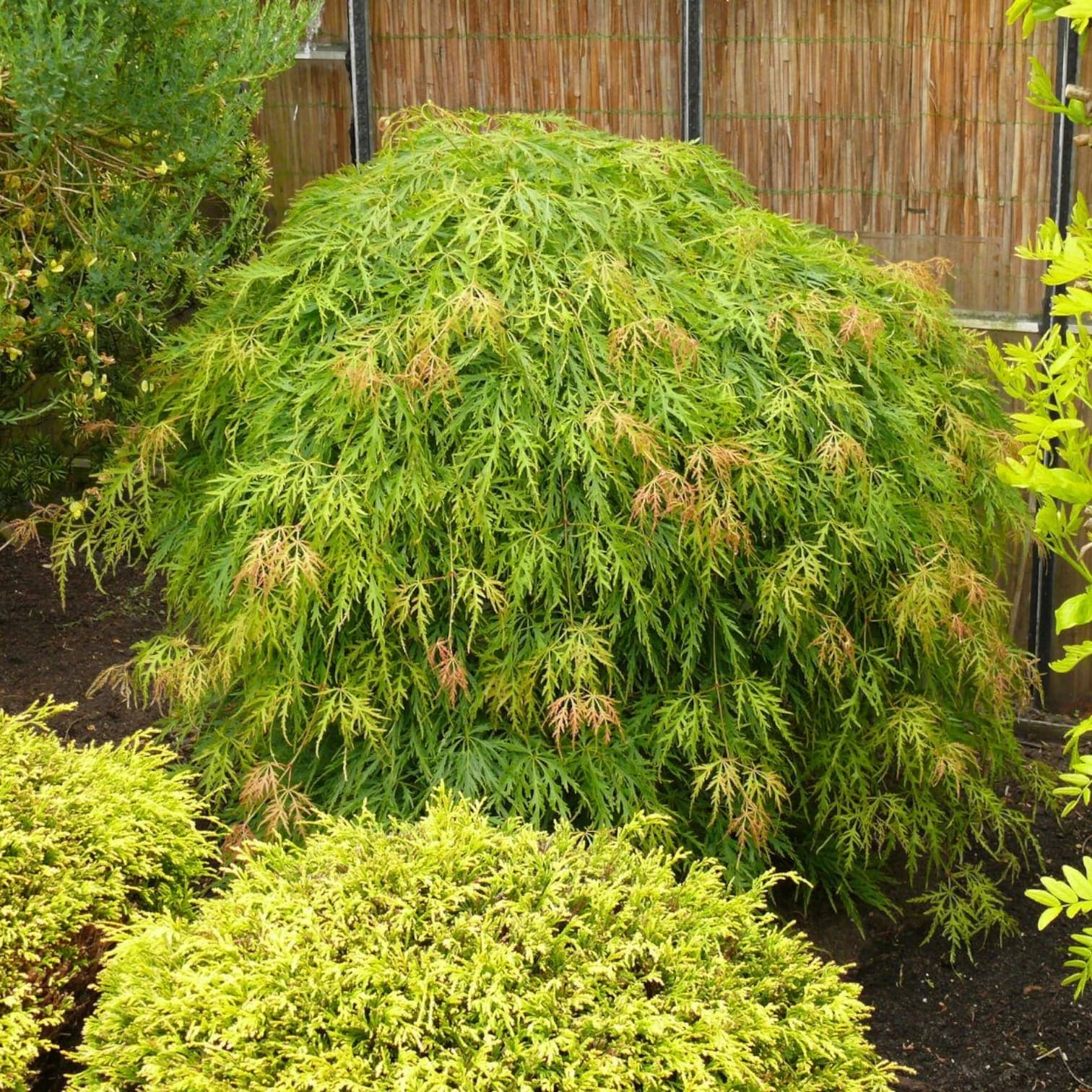
Acer palmatum 'Dissectum'
40,02 €
Delivered to you by Jardiplants, a Renoday service.
Description
Acer palmatum 'Dissectum' is a green laceleaf Japanese maple with deeply divided leaves and a broad, layered habit. The foliage opens fresh green in spring, forms a soft textured canopy through summer and turns yellow, orange or red in autumn depending on weather and site. Its low, spreading structure makes it especially useful as a feature near paths, ponds, patios, gravel gardens and sheltered front borders. Acer palmatum is native to Japan and Korea, where cool woodland conditions and sloping ground shape the species' preference for filtered light, steady moisture and well-drained soil. 'Dissectum' carries that woodland character clearly. It looks delicate, but it is fully hardy in suitable ground and can live for many years with calm exposure, a cool root area and light pruning. The fine leaf segments simply ask for more thoughtful placement than broad-leaved shrubs. Laceleaf texture with a naturally spreading outline The main feature of 'Dissectum' is its finely cut foliage. Each leaf is divided into narrow segments that give the canopy a fern-like texture. As branches extend, they arch gently outward and downward, creating layered tiers. This shape works especially well where the plant can be viewed from above or from the side, such as beside steps, raised beds, terraces or water features. The green foliage has a calm effect during spring and summer, pairing easily with stone, mossy surfaces, ferns, grasses, hostas, low evergreens and pale flowers. Autumn brings the strongest colour shift, often moving through golden yellow, burnt orange and red before the canopy clears. After leaf fall, the branching pattern remains attractive and shows the slow-built form of the plant. Leaf style: deeply dissected green leaves with a soft, feathery texture. Habit: low, broad, layered and naturally architectural. Seasonal interest: fresh spring growth, textured summer foliage and warm autumn colour. Best use: feature planting for sheltered patios, pond edges, gravel areas and small gardens. Low branching and long-term spread This laceleaf maple matures as a low, spreading mound with softly arching branches. In open ground it can eventually reach around 1.5-2.5 m in height and a similar width, forming a broad dome that presents as structure first and foliage second. In containers, the same shape develops at a smaller scale and at a slower pace. A wide pot supports the natural spread, while the reduced root run keeps the plant more compact for many years, making it a strong choice for patios and sheltered steps. Give it room to drape. When the outer branches are allowed to extend, the canopy looks more layered, the leaf texture is clearer, and the plant keeps its calm, waterfall outline. Choosing light and shelter for fine leaves Fine laceleaf foliage performs best in bright but softened light. Morning sun with light afternoon shade is often ideal. Open shade also suits many gardens, especially where surrounding surfaces reflect light. Strong afternoon heat, dry wind and reflected warmth from paving can crisp the narrow leaf segments, so a calm microclimate gives the most reliable display. Useful positions include an east-facing bed, a courtyard protected by walls, a pondside planting with cool soil, or a sheltered border backed by shrubs. The site should feel bright, open and gently protected. If light is too low, growth can become thin and autumn colour may be weaker. If exposure is too harsh, the leaf tips can dry before the season has fully developed. Good placement: bright shade, morning sun or filtered light through taller planting. Leaf quality: steady moisture and moderated heat keep the narrow segments fresher. Wind protection: walls, hedges and neighbouring shrubs can soften drying air movement. Viewing angle: raised beds, slopes and terrace edges show the layered habit especially well. Soil preparation and planting for strong roots A loamy, humus-rich soil with dependable drainage is the best foundation. The soil should hold moisture around fine roots, then release excess water after heavy rain. On heavier ground, plant slightly proud of the surrounding level and improve the wider area with composted organic matter. On lighter ground, organic matter helps moisture remain available during dry weather. Plant at the same depth as the pot and water thoroughly after planting. A broad mulch layer helps keep the root area cool and evenly moist. Keep mulch away from direct contact with the stem base so the crown stays clean. During the first year, water slowly during dry spells so moisture reaches the lower rootball and the surrounding soil. Watering, feeding and growing in containers 'Dissectum' is a strong candidate for a large container because its low, sculptural shape works well on patios and terraces. Use a pot with drainage holes, enough volume to buffer moisture and a stable base that stays secure as the canopy widens. A structured, loam-based mix with bark or mineral aeration supports both moisture retention and oxygen around the roots. Water deeply whenever the upper mix begins to dry during active growth. In summer, container plants may need more frequent checks than plants in the ground. Feeding should be moderate, usually with a balanced slow-release fertiliser in spring or a gentle organic feed. Aim for steady, firm growth that holds leaf quality through the season. In the ground: water during dry spells until roots are established into surrounding soil. In pots: check moisture regularly in warm weather and water until excess drains away. Nutrition: light, balanced feeding supports healthy leaves and keeps growth firm. Mulch: renew a thin organic layer to protect shallow roots and reduce evaporation. Pruning, shape and seasonal care The natural shape is one of the strongest reasons to grow this cultivar, so pruning should be selective. Remove dead, damaged or crossing shoots and shorten only what interrupts the layered outline. Late summer or dormant-season pruning is usually easiest. Small, clean cuts preserve the fine framework and keep the plant balanced. Spring growth is tender while it expands, so late frost and cold drying wind can mark new leaves. Summer care is mostly about moisture and exposure. Autumn colour improves with healthy growth and cool nights. In winter, the plant rests leafless, and the branching tiers become part of the garden structure. Best garden uses for this laceleaf maple Width: allow for a broad canopy and outward branch extension. Light: choose bright shade or morning sun for clean laceleaf growth. Moisture: keep roots evenly moist, especially during establishment and summer heat. Drainage: use soil or compost that releases excess water freely after rain or watering. Style: combine with ferns, low grasses, mossy stones, small evergreens and quiet groundcover plants. Care level: low once established, with attention mainly to watering, mulch and light pruning. For a low, cascading laceleaf canopy and calm summer texture, Acer palmatum 'Dissectum' makes a strong feature plant that ages into a broad, layered structure and finishes the season with glowing autumn colour.