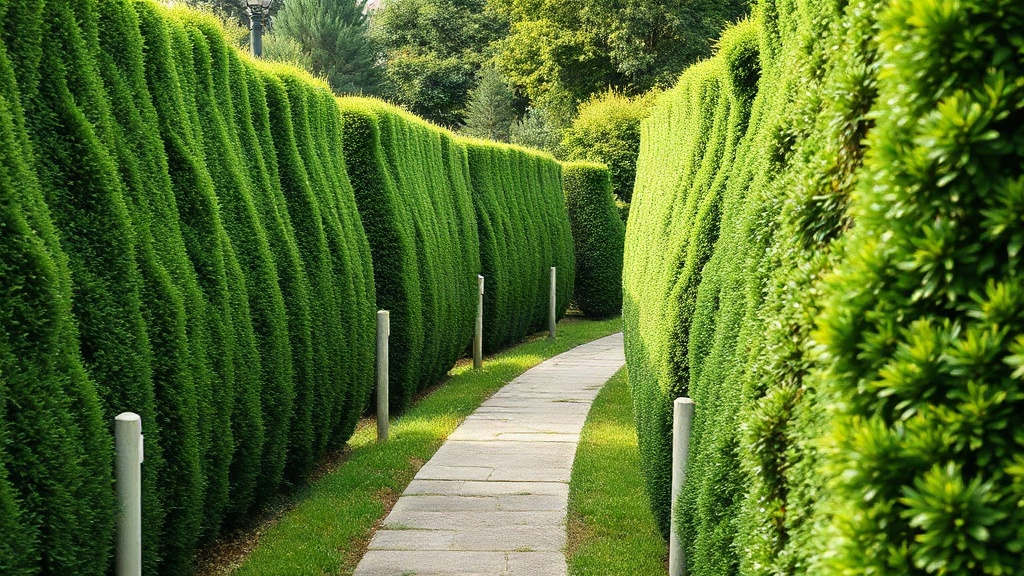
The spacing between hedge plants determines both how quickly it becomes opaque and its long-term health — too tight, and the plants compete for light and water; too spread out, and the hedge takes years to close up.
The general rule: 3 to 4 plants per meter
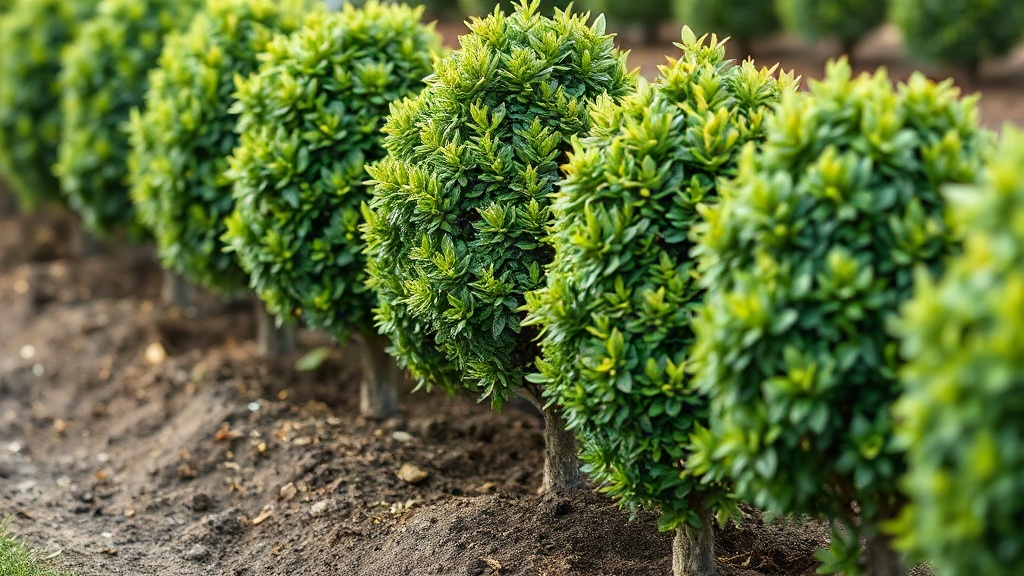
For a low to medium hedge (up to 1.5-2 m), most common species in Belgium — yew, cherry laurel, privet — are planted at a rate of 3 to 4 plants per linear meter in a single row, meaning 25 to 33 cm between each plant. That's the density that gives a continuous "green wall" effect within a few years without excessive competition between plants.
Adjusting for the species' vigor and the target height
A vigorous species that grows wide at maturity (such as some cherry laurel varieties) can be planted a bit more spaced out, around 2 to 3 plants per meter, without losing density over time — it will fill the gap as it grows. Conversely, for a low, tightly trimmed hedge (a border, a short divider), you can space plants a little tighter, keeping in mind that more frequent pruning will be needed to contain growth.
In multiple rows
For a windbreak or privacy hedge in two rows, space the rows themselves about 40 to 50 cm apart, staggered (the plants in one row offset from the other), which densifies the result without multiplying the number of plants per linear meter in each row.
Distance from the property line
In Belgium, the legal planting distances from a property boundary depend on the region and the hedge's expected height at maturity — they vary from one municipality to another. It's worth checking with your local council before planting, independently of the planting density itself.
Every product page in our shrubs category lists the supplier's recommended planting density when available, so you can match the quantity to order directly to your target hedge length.