The choice between an evergreen and a deciduous hedge is rarely a matter of pure taste — it mostly depends on what the hedge needs to achieve: screening a view year-round, filtering wind, or simply structuring the garden without the constraint of winter privacy.
Winter privacy: the main advantage of evergreen
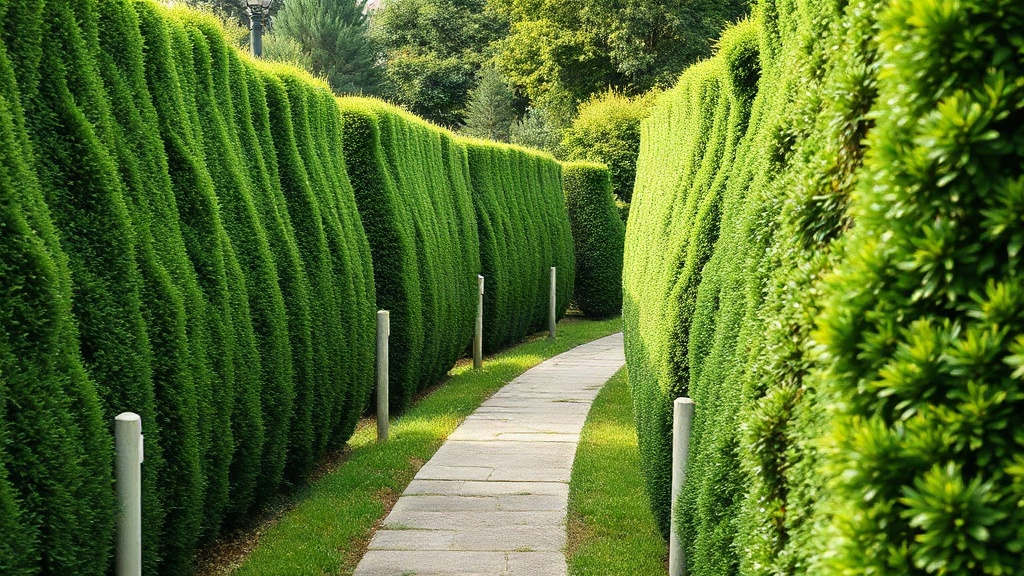
An evergreen hedge (yew, cherry laurel, privet in mild-winter areas) keeps its foliage year-round and so stays opaque in winter, exactly when neighboring gardens are most exposed to view. That's the deciding factor if the primary goal is to screen a view or cut the wind in every season.
What a deciduous hedge offers in return
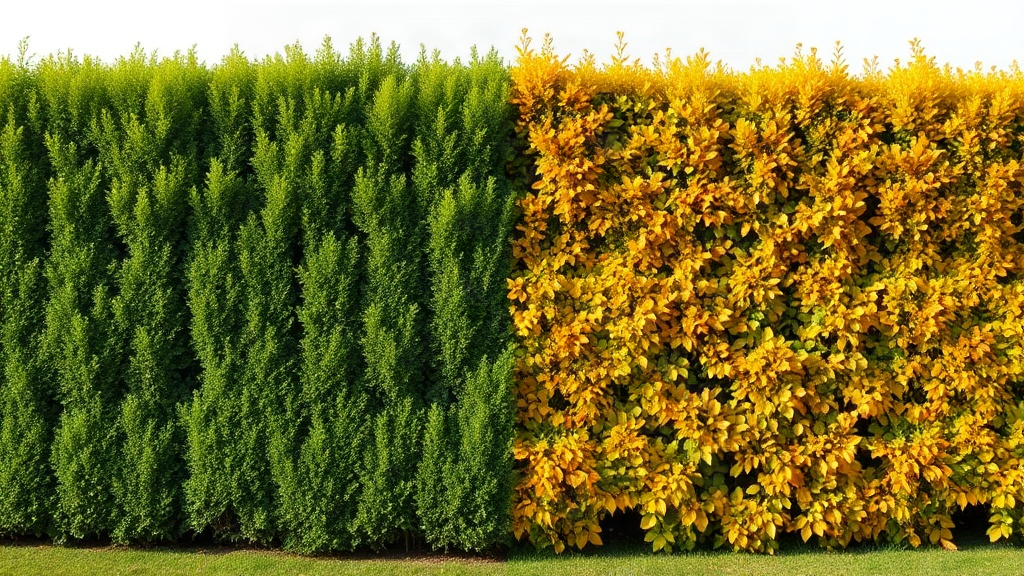
A deciduous hedge (hornbeam, beech) sheds its leaves in autumn, letting in more light in winter — a real advantage against a facade that needs sun in the cold season. Hornbeam and beech have a useful additional trait: their dead leaves often stay attached to young branches for much of the winter, limiting the typical "bare" look of deciduous hedges.
Growth and upkeep: real differences
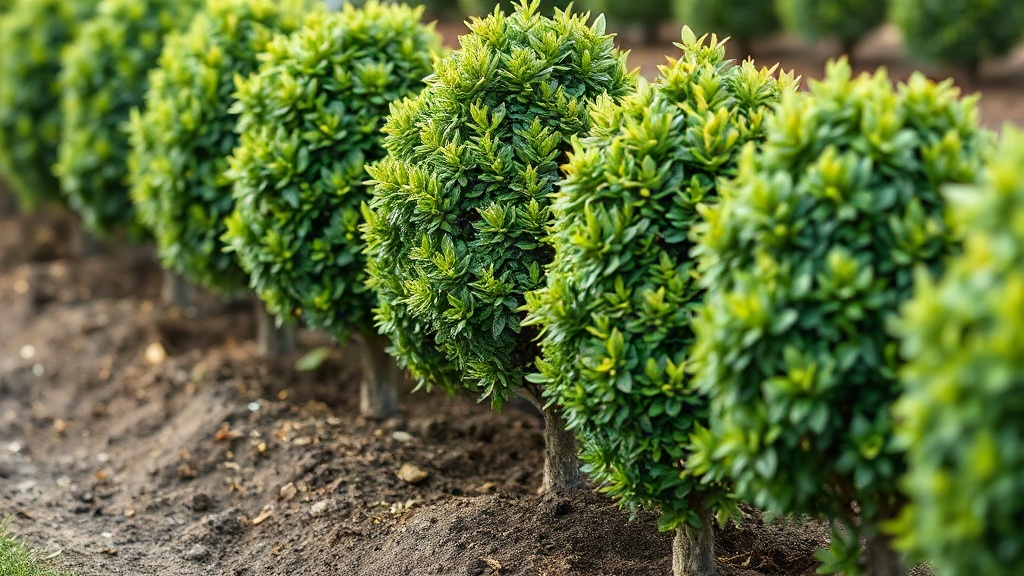
Deciduous hedges like hornbeam or beech generally tolerate heavy soils and harder pruning better than some evergreens. Evergreens, on the other hand, often need more regular pruning to keep an even density, or they can thin out at the base over time.
A possible compromise: mixing both
Nothing stops you from alternating evergreen and deciduous sections along the same garden boundary, or backing a deciduous hedge with a row of evergreen shrubs to keep a minimum of winter privacy without giving up the light that deciduous foliage lets through in the cold season.