Watering garden plants properly: frequency and best practices
Published on September 19, 2026
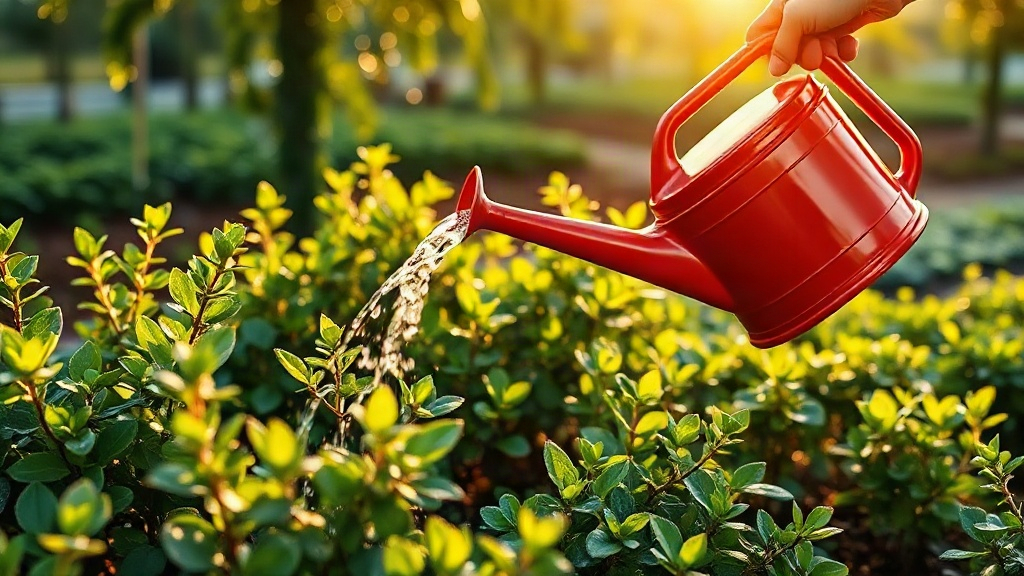
Watering is the most common cause of decline in a newly planted shrub — in either direction. Too much water drowns the roots and encourages rot; too little prevents them from establishing properly. The right frequency depends mostly on how recently the plant was installed, the soil type and the weather, not a fixed schedule.
The first year: the most critical period
A freshly planted shrub doesn't yet have deep roots capable of reaching moisture below the surface. In the weeks following planting, a generous watering once or twice a week (rather than a little every day) encourages the roots to grow downward in search of moisture, instead of staying near the surface.
How to tell if the soil actually needs water
The most reliable test is manual: push a finger a few centimeters into the soil at the base of the plant. If it's still moist, there's no need to water — excess water on already saturated soil deprives the roots of oxygen just as much as drought would. The surface can look dry while the deeper layers, where the roots are, are still moist.
Recognizing overwatering or underwatering
- Underwatering: dull, limp foliage that curls in on itself, slowed growth.
- Overwatering: leaves turning yellow while veins stay green, a blackening stem base, a rotting smell at the roots.
- When in doubt, cut back on watering rather than increasing it: a plant in overly wet soil doesn't recover by watering it more.
Saving water without hurting the plant
Watering early in the morning or in the evening limits evaporation compared to watering in peak heat. Mulching at the base of plants keeps the soil moist longer and noticeably reduces the watering frequency needed, especially for beds in full sun. Once well established (usually after one to two seasons), most hardy species no longer need regular watering outside of prolonged droughts.