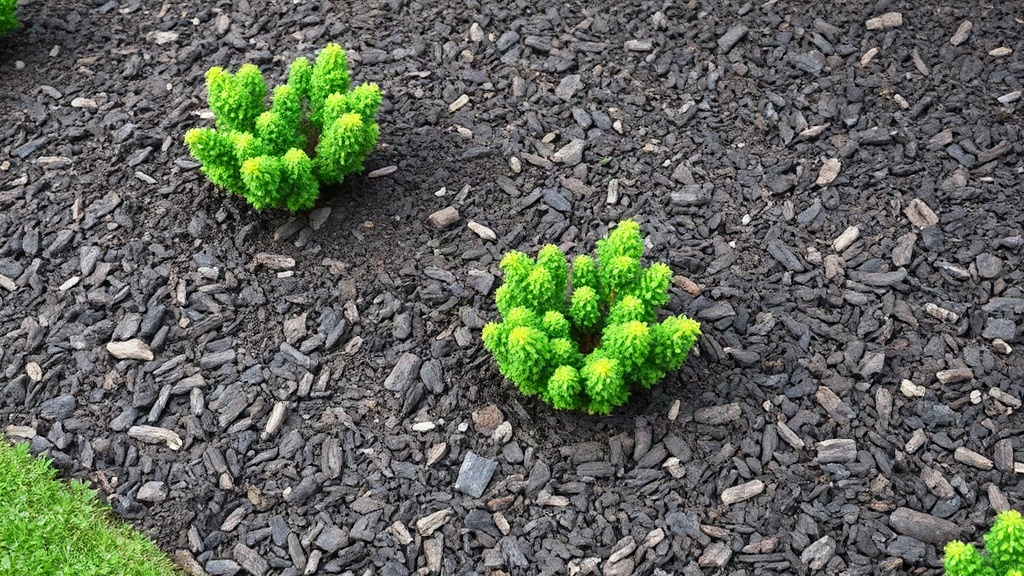
A layer of mulch at the base of plantings isn't just about looks: it limits weed growth, keeps the soil moist longer and protects roots from temperature swings — three concrete benefits for less upkeep over time.
What mulching actually changes
Mulched soil holds its moisture noticeably longer than bare soil, which reduces how often you need to water — an especially clear advantage in full sun, where soil heats up and dries out quickly. Mulch also limits weed seed germination by blocking light at ground level, and cushions temperature swings between day and night.
Organic or mineral mulch: two different approaches
Organic mulch (pine bark, straw, dried grass clippings, dead leaves) breaks down gradually and enriches the soil with organic matter, making it a good choice for most beds. Mineral mulch (gravel, lava rock, crushed slate) doesn't break down and suits plants that dislike standing moisture at the crown, such as certain Mediterranean or rock-garden plants better.
How to apply it properly
- Weed and water the soil before mulching — mulch preserves the soil's condition, it doesn't fix it.
- Spread a layer 5 to 8 cm thick for organic mulch, enough to block light without smothering the soil.
- Leave a few centimeters of space around the plant's crown (the base of the stem), to avoid standing moisture there encouraging rot.
- Refresh organic mulch once or twice a year, as it breaks down and thins out.
Mulching is especially useful in the first year after planting, when young roots are most sensitive to fluctuations in soil moisture.