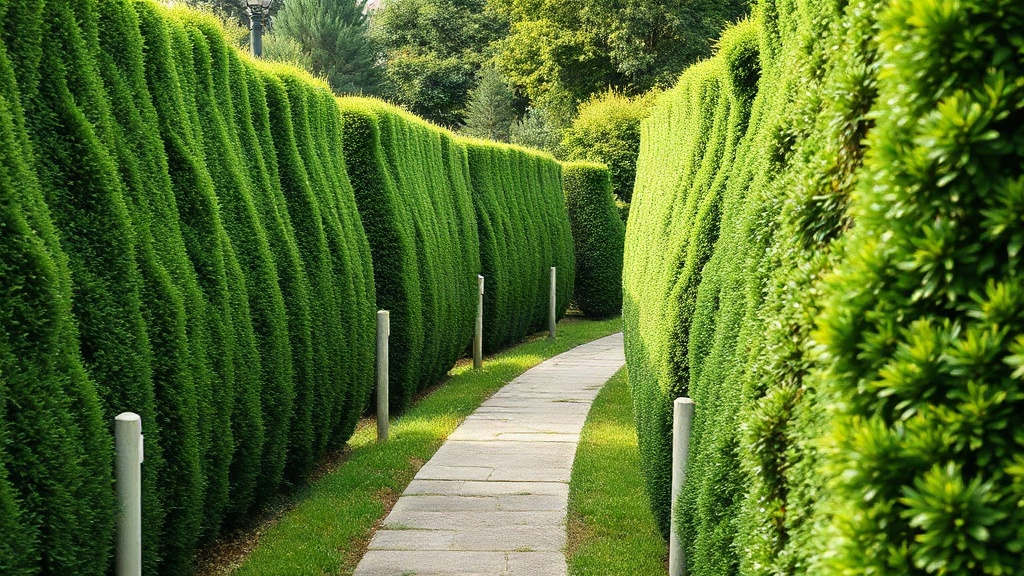
A well-chosen hedge serves several purposes at once: a privacy screen, a windbreak, a garden divider, or simply visual structure. The choice of species depends mostly on what you expect from it in winter, the exposure available, and how much time you're willing to spend pruning.
Evergreen or deciduous: the first question to settle
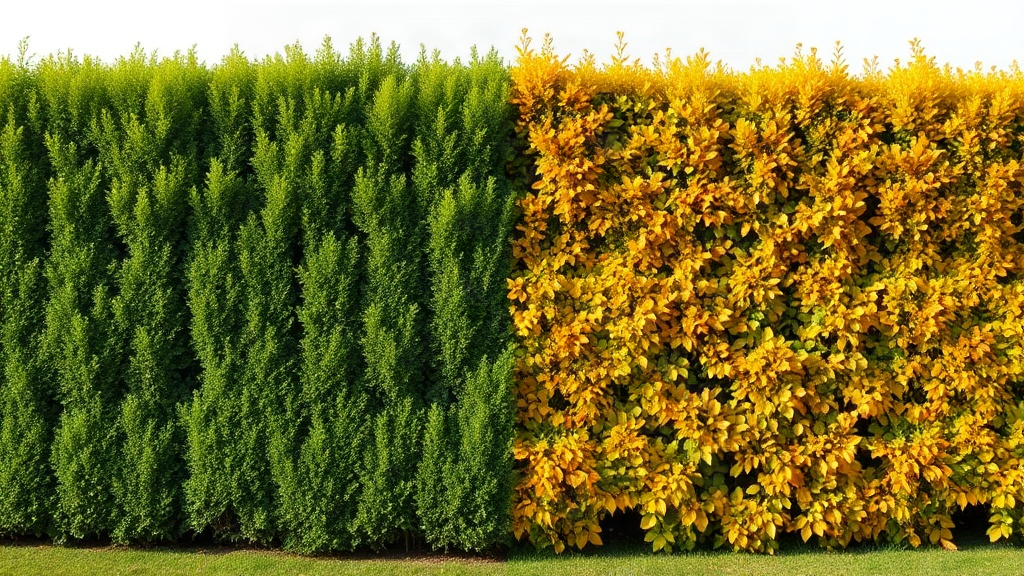
An evergreen hedge keeps its foliage year-round — it stays opaque in winter, which matters if the goal is to block a view or cut the wind in every season. That's the case with species like yew (Taxus baccata) or cherry laurel. A deciduous hedge sheds its leaves in autumn: it lets in more light in winter, which can be an advantage against a facade, but offers less privacy between November and April. Hornbeam (Carpinus betulus) and beech (Fagus sylvatica) are classic deciduous choices in Belgium, with a useful trait: their dead leaves often stay attached to young branches for much of the winter, limiting the "bare" look.
Exposure and soil: check before choosing, not after
Each species has a different tolerance for sun, partial shade, or shade — and for soil type. Yew tolerates both full sun and shade, while other species require a more specific exposure. Our product pages list the recommended exposure and soil type whenever the supplier specifies it, to avoid planting a hedge that declines within two years for lack of the right spot.
When to plant
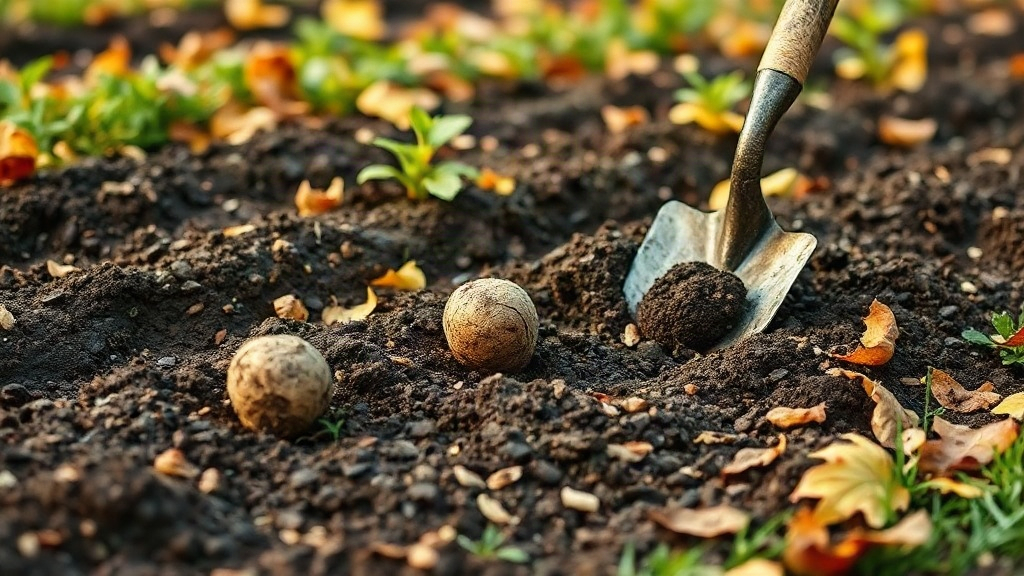
In Belgium, the most favorable planting window for most hedges runs from September to May, outside frost periods. Planting during this window gives the roots time to settle before summer heat arrives, which sharply reduces the watering needed in the first season.
What planting density to use
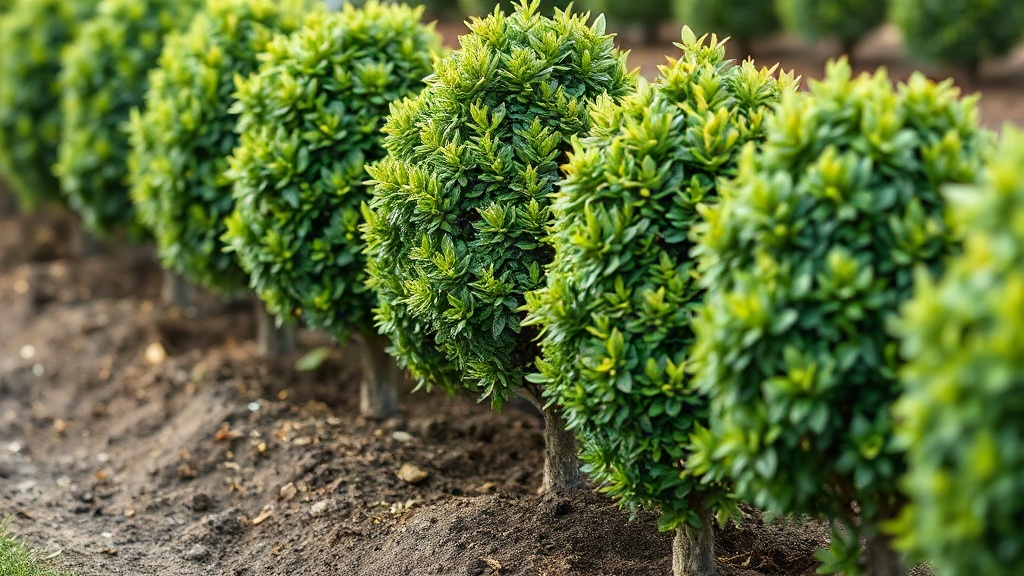
For a dense hedge from the first few years, the usual guideline is 3 to 4 plants per linear meter in a single row. A lower density gives each plant more room to develop but delays the continuous "green wall" effect by a few years.
You'll find this detail, plant by plant, directly on our shrubs category's product pages, along with a selection of evergreen plants if year-round privacy is your priority.